Canon PowerShot G1 (2000)
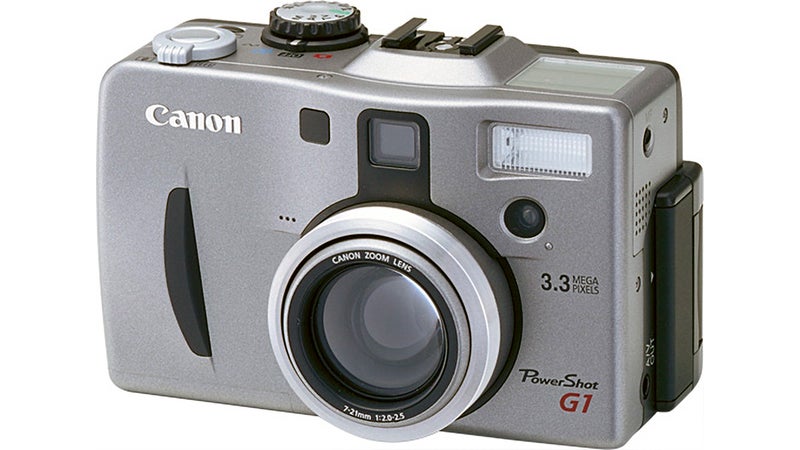
Although I obsessively followed the digital camera market for years and poured over the ever-improving specs of the latest and greatest models announced, it wasn’t until the ‘90s would draw to a close that I was finally convinced that consumer-level digital cameras had actually grown up. I’ve written about the Canon PowerShot G1 before, which paired a 3.3MP sensor with a 3X optical zoom lens and full manual controls—the one feature I cared about most.
The Canon PowerShot G1 replicated most of what an expensive DSLR could do (minus swappable lenses) in a camera that was small enough to carry everywhere. And it came with a price tag of just over $1,000, which the mortgage-less younger version of myself was able to justify as being a real bargain. The PowerShot G1 also ended up being my crash course in photography, and I shot thousands of photos with it while experimenting with its advanced capabilities.
The PowerShot G1 was an incredibly successful and popular model for Canon, and it didn’t take long for most consumer digital cameras, even those from Canon’s competitors, to start to look a lot like it. Even Nikon eventually abandoned the unique pivoting design of the CoolPix 900 for a more traditional camera body a few years later, and the mirrorless Sony I shoot with today still shares a lot of the design details of the PowerShot G1, including a highly articulated LCD screen on the back. It was iconic, and it did for digital cameras what the iPhone did for smartphones; helping define digital photography for years to come.