Invading Fish
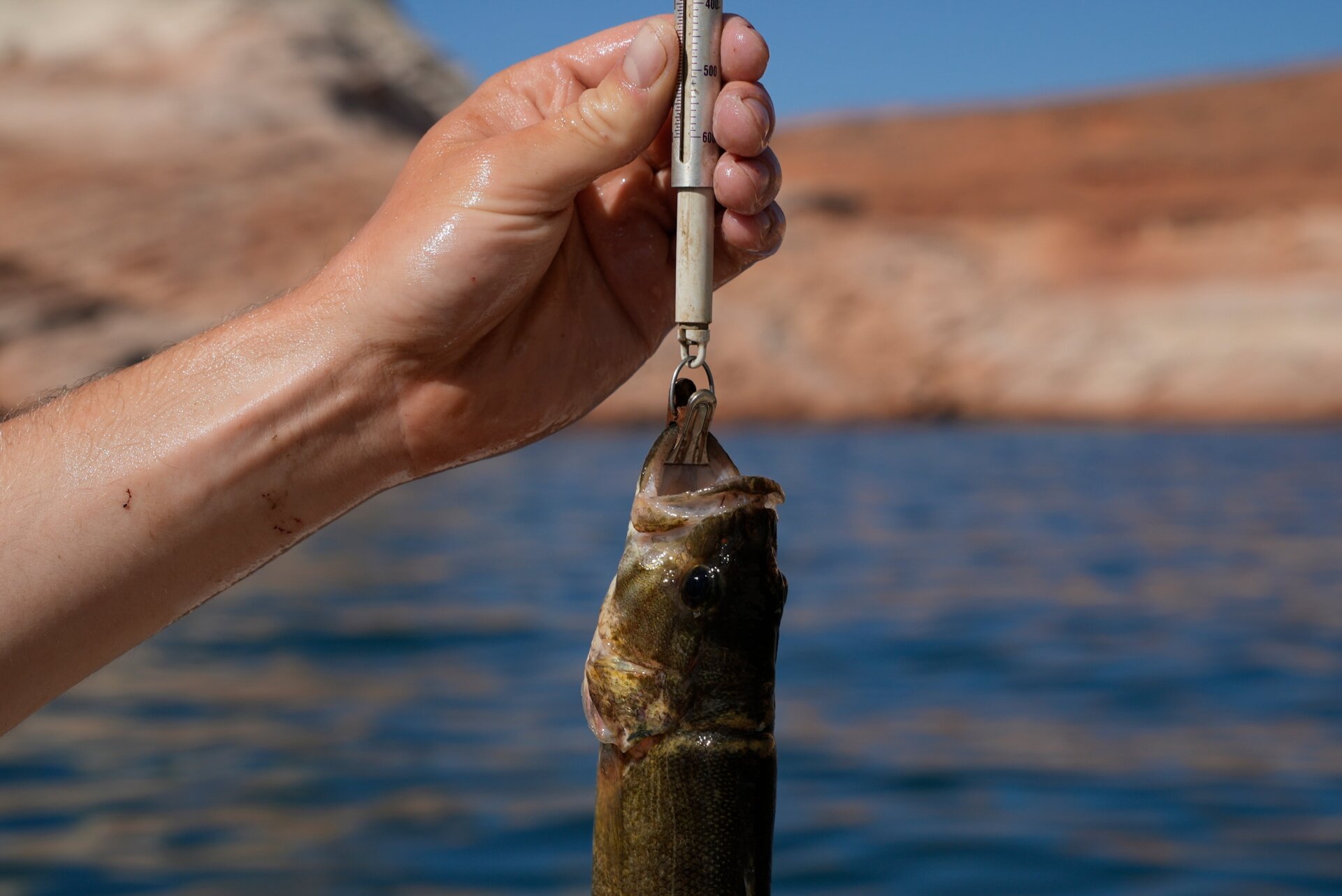
It seems like less water should be bad news for fish all around. But in the drought-stricken, record-low Colorado River, at least one species is counterintuitively getting a boost. Smallmouth bass, considered locally invasive, are starting to expand their range.
Prior to this year, the bass were confined to the upper portion of the Colorado River, held back by Glen Canyon Dam that forms Lake Powell. But now water levels in Lake Powell are so low that the invasive fish are being spotted below the dam in the lower river. Worse that that, they’ve started spawning there, too, indicating the entire Colorado River could soon contain a breeding population of the fish, according to a report from the Associated Press.
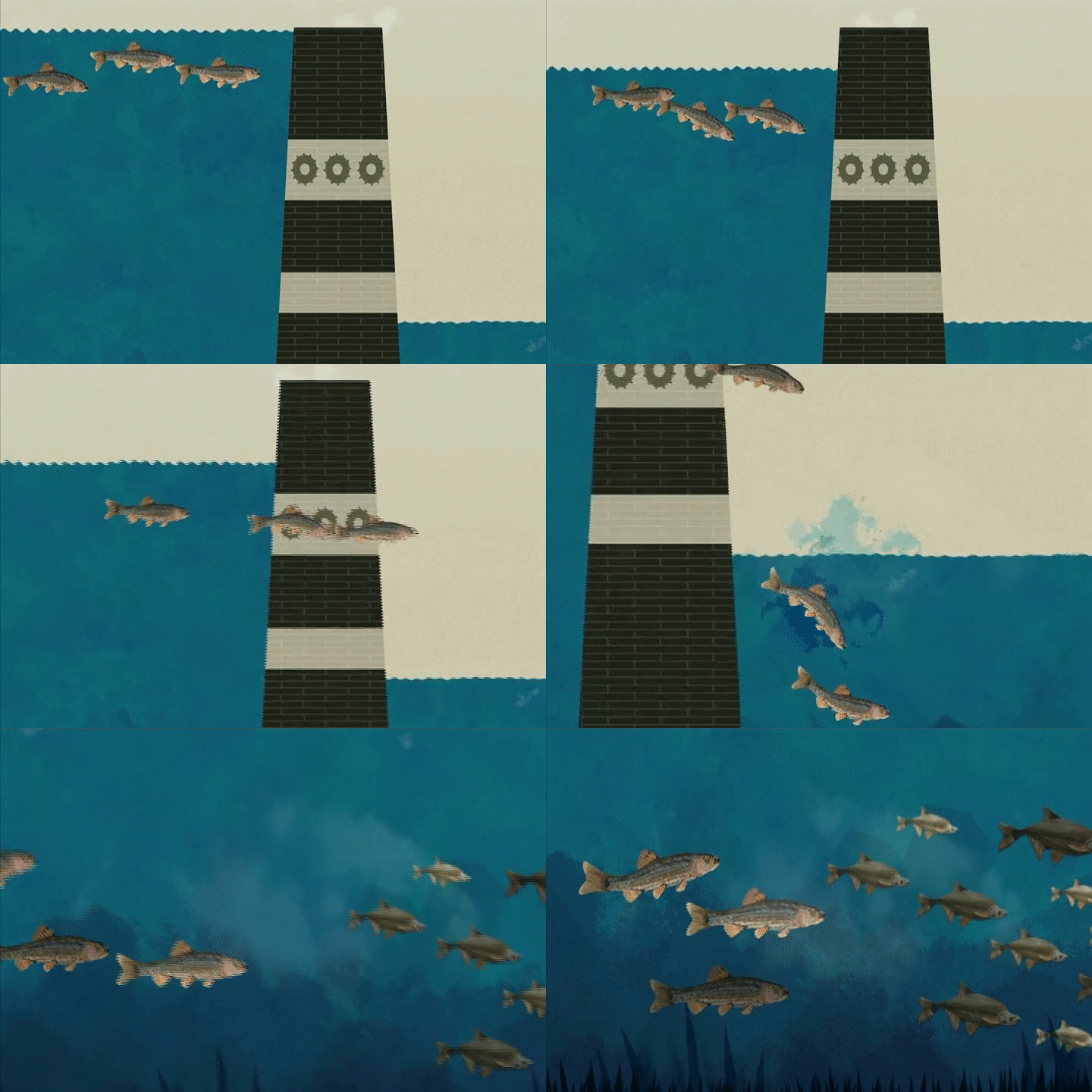
Smallmouth bass prefer to stay in the warm waters closer to the surface of the reservoir. Up there, the dam is an effective barrier. But as water levels have dropped, the surface has gotten closer to the turbines and intake tubes that move water from the reservoir to the lower river, and the fish are following.
The bass are voracious predators of the many other species, including the threatened humpback chub. The chub was previously federally listed as endangered, but thanks to conservation efforts in the lower Colorado, the species’ numbers had started to bounce back. It was just downgraded from “endangered” to “threatened” last year.