Legal? Sure. Unconstitutional? Probably.
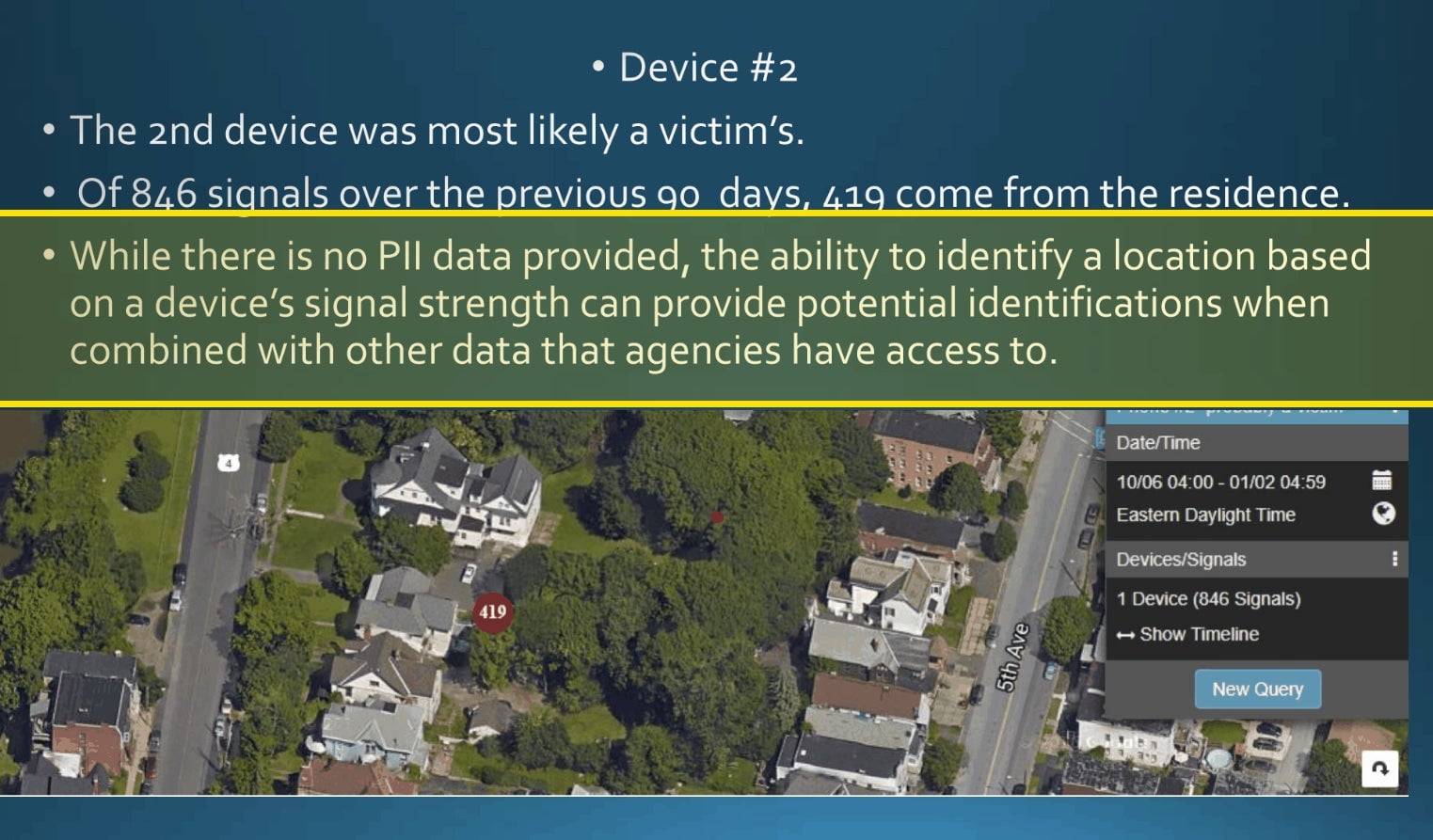
Fog Reveal relies on commercially available data to track people’s movements rather than information obtained directly from cellphone service providers. This is a widely recognized loophole that’s raised concerns among privacy advocates and scholars and lawmakers on Capitol Hill. Without some kind of legal device — namely, a warrant — there’s a variety of business records police cannot access on demand. But privacy laws, particularly at the federal level, are antiquated. At the time they were passed, few envisioned the sociotechnical paradigm under which we live today.
Point of fact: Cellphones, as we recognize them today, did not exist the last time Congress took concrete steps to shield Americans from invasive monitoring. The idea that basically everyone would wittingly carry around tracking devices and consent to the collection of the data they produce by hundreds, if not thousands of companies, might have seemed insane at the time. So while laws exist to prevent police from demanding access to your location, there is no law really specifying that companies can’t simply sell the information to police instead.
Of course, many constitutional lawyers — including those working at the Electronic Frontier Foundation — would tell you that’s nonsense, and that the Fourth Amendment itself prohibits this kind of activity. In a recent post, the EFF said the same 2018 Supreme Court ruling that requires police to acquire a warrant before seizing location data should naturally apply here.
“Warrantless purchase of this data also violates the First Amendment, because police can use it to identify people who attend protests, which can discourage people from attending,” the organization argues.