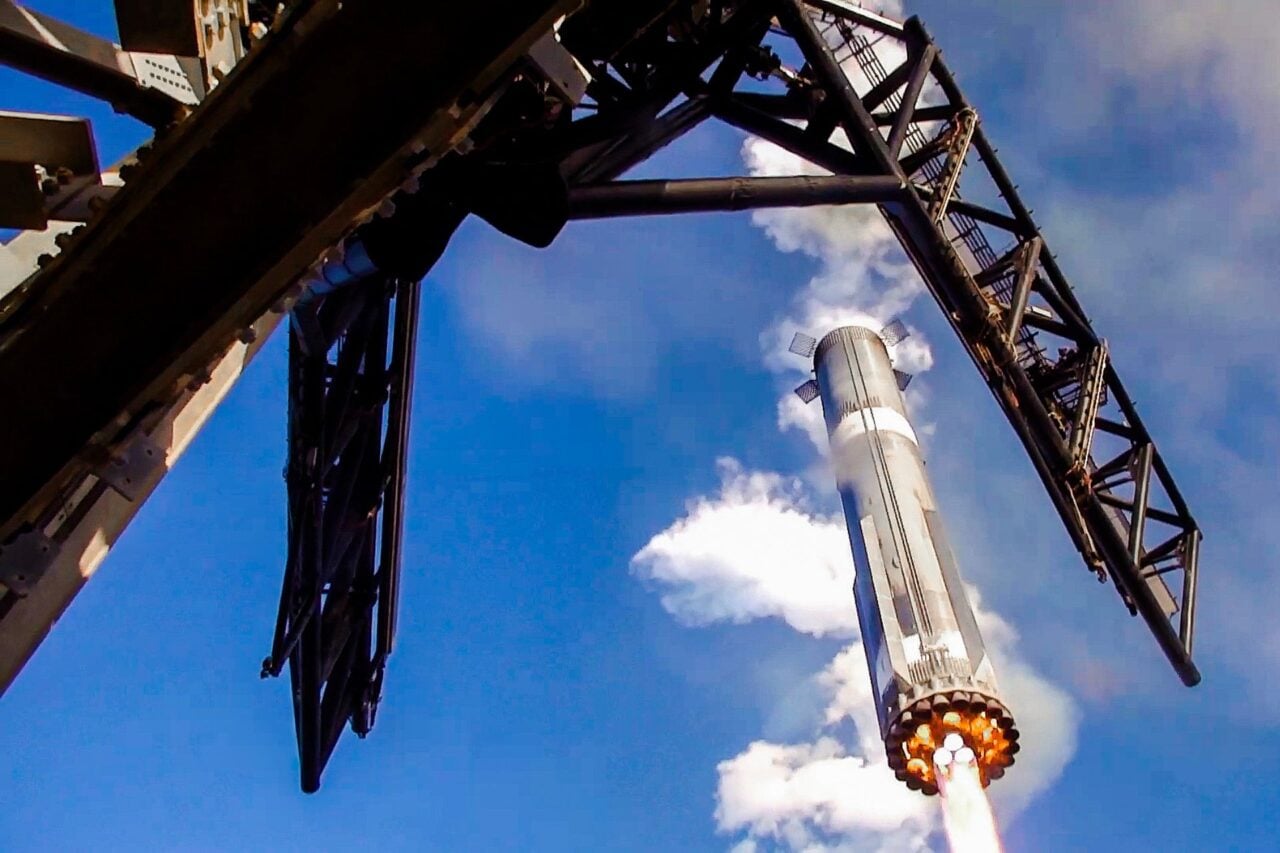
4. The mission will test a bunch of new technologies
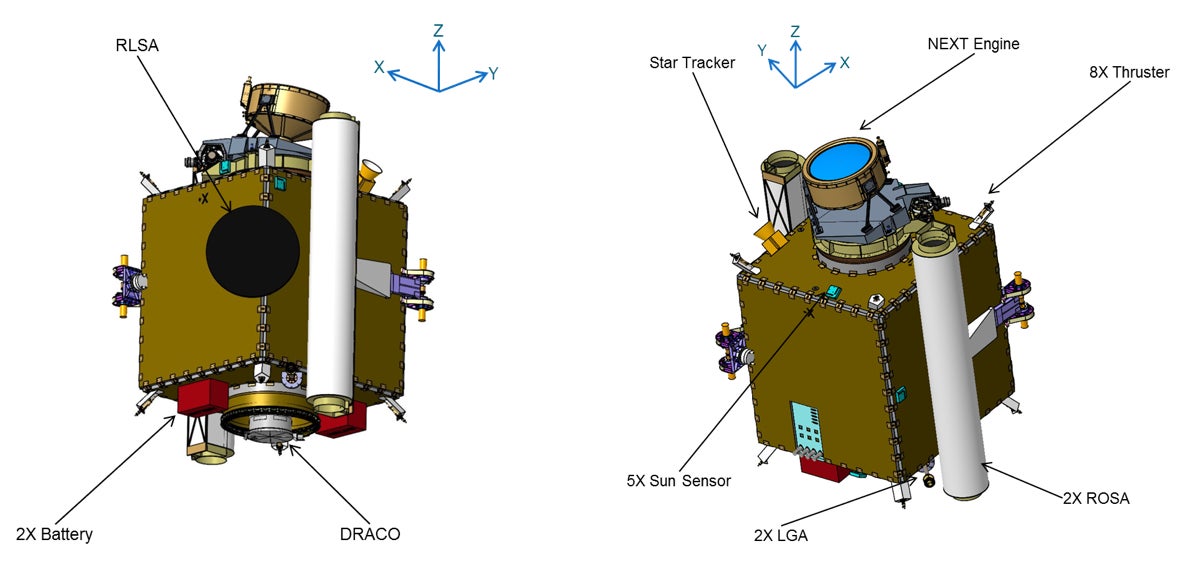
Once in space, DART will deploy its Roll Out Solar Arrays (ROSA) which it will use to powerNASA’s Evolutionary Xenon Thruster (NEXT). ROSA’s high-efficiency solar cells and reflective concentrators will provide three times more power than conventional solar arrays, while NEXT—a cutting edge solar-powered propulsion system—could represent a new class of engine technology. Both the solar panels and the ion thruster will be demonstrated during the mission, and DART is not wholly dependent on these systems to reach Didymos.
DART will be equipped with a lone scientific instrument named Didymos Reconnaissance and Asteroid Camera for Optical navigation, or DRACO for short. The camera will perform double duty, however, capturing images of the binary pair and providing support for the spacecraft’s autonomous optical navigation system.