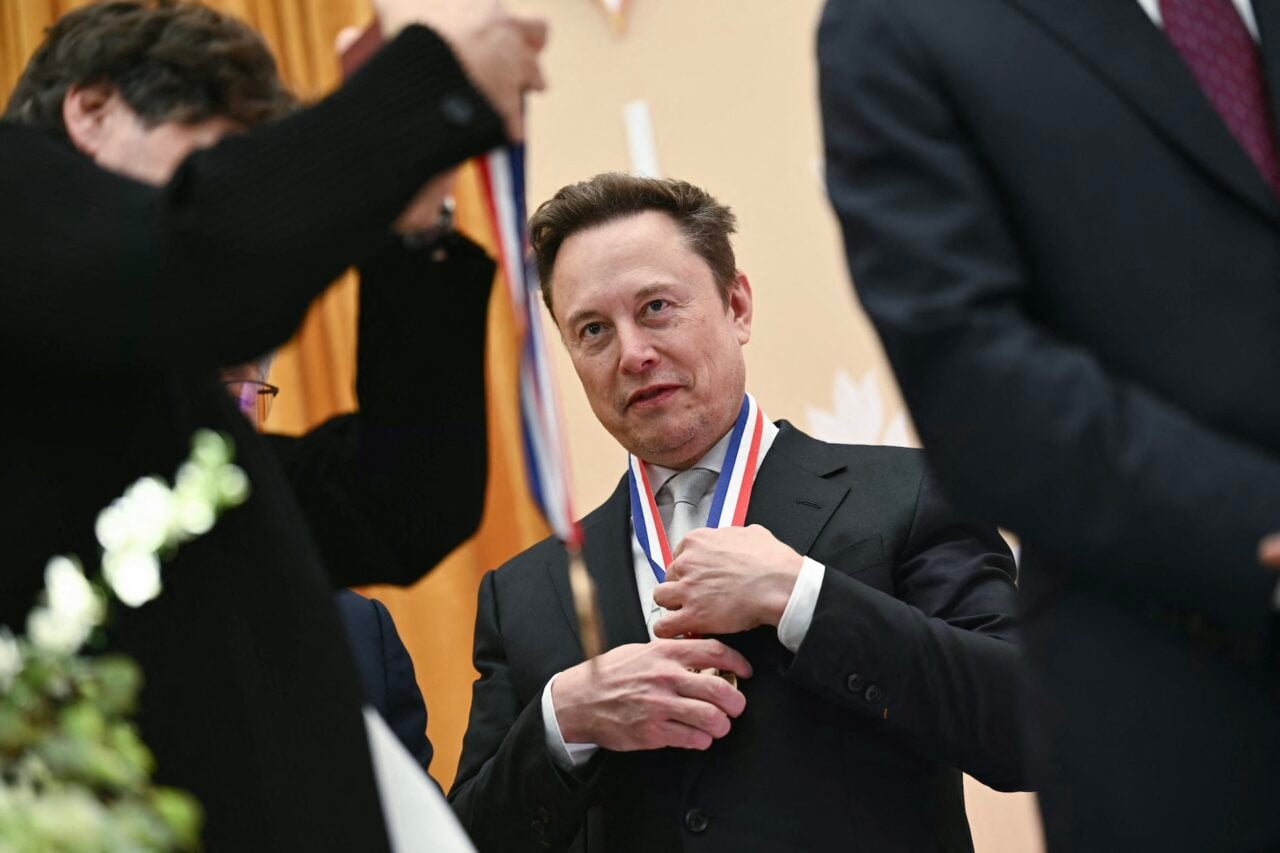
What if you were the CEO of one company, and all you had to do to receive the equivalent of $1 trillion were to have that company buy another company you also happen to be CEO of? According to the Wall Street Journal, that hypothetical may just approximate the system of incentives and rewards currently on the table for a certain businessman named Elon Reeve Musk.
Musk, the world’s first ex-trillionaire, was shown a nice, juicy carrot by the Tesla board of directors last year: the approval of a long-term pay package that included a potential payout in company shares that could, if all went according to plan, award him the equivalent of about $1 trillion. But the carrot in this metaphor was meant to be attached to an incredibly long stick at the other side of a very difficult maze.
Tesla theoretically needs to hit a valuation of $8.5 trillion inside of ten years—about eight times more than it was worth when the package was approved. Tesla also has to hit some “Operational Milestones,” according to the deal: the 20 millionth Tesla vehicle delivered, the millionth Tesla robotaxi, and the millionth Tesla Optimus humanoid robot. It admittedly does sound tricky to accomplish all this production while steadily increasing the company’s valuation rather than, say, tanking it.
Ah, but if we consult the 2025 CEO Performance Award Agreement for Tesla Inc, we find an important bit of fine print (emphasis Gizmodo’s):
“Notwithstanding Sections I, II and III above, in the event of a Change in Control, the Operational Milestones shall be disregarded and the Market Capitalization shall equal the product of (a) the total number of outstanding Shares immediately prior to the effective time of such Change in Control, as reported by the Company’s transfer agent, and (b) the greater of (i) the most recent closing price per Share immediately prior to the effective time of such Change in Control, as reported by the Primary Exchange (or other reliable source selected by the Administrator if the Primary Exchange is not reporting a closing price for that day), and (ii) the per Share price (plus the per Share value of any other consideration) received by the Company’s shareholders in the Change in Control.”
According to the Journal’s Theo Francis and Andrew Mollica, the gibberish sentence above “declares half the targets are as good as accomplished if Tesla is acquired or otherwise taken over.”
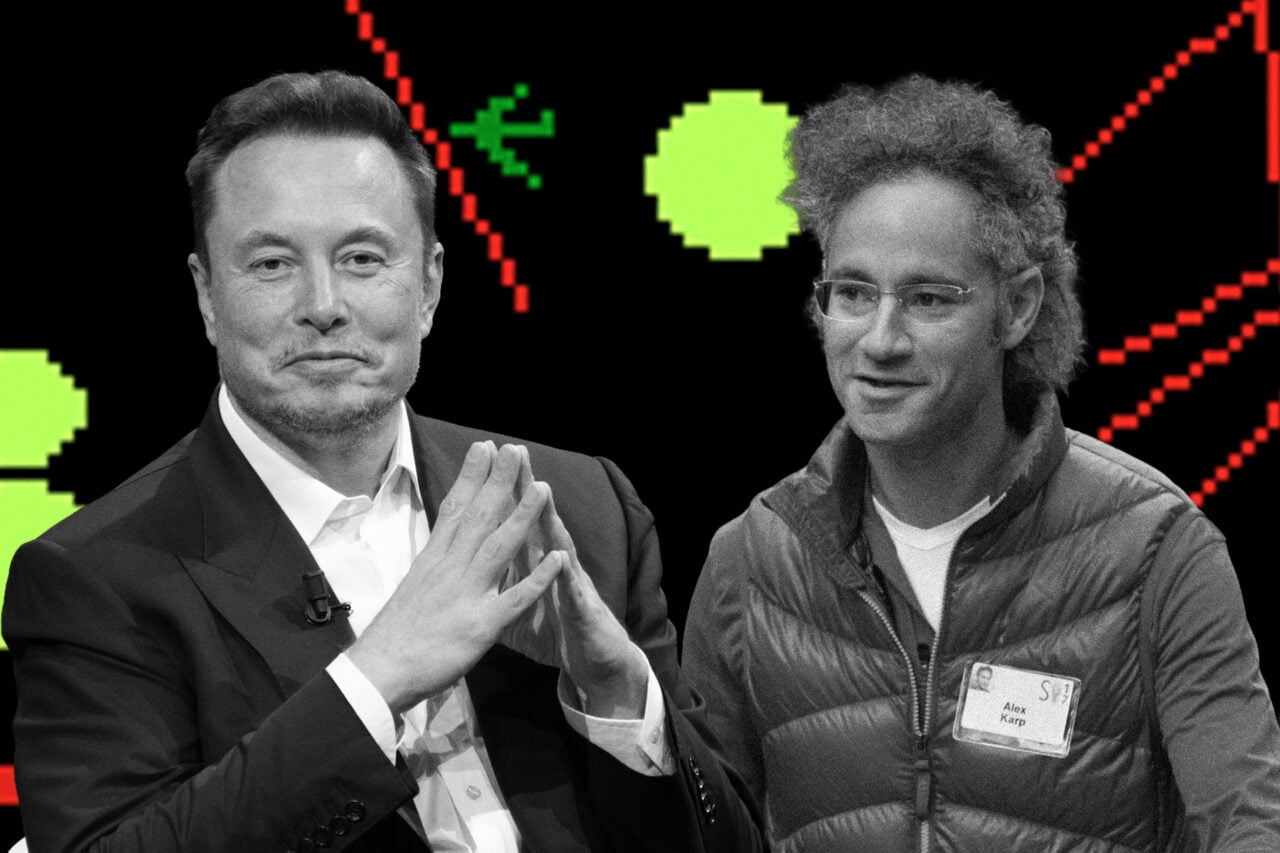
In recent days, Musk has not ruled out the possibility of an eventual SpaceX-Tesla merger. When asked about such a move on a recent earnings call, he provided reasons why he apparently believes combining SpaceX and Tesla might be a good idea, but said, “obviously, you know, we can’t talk about combining companies, that kind of thing, on earnings calls.”
From my reading of the Journal’s analysis, the best reason of all—for Musk personally—is what it would do to Tesla’s valuation: potentially drive it up to the heights necessary to trigger Musk’s enormous payout. Here’s the Journal:
“Every $500 billion added to the deal price would deliver as many shares again, up to $7.5 trillion. An $8.5 trillion acquisition—more than six times Tesla’s recent market value—would deliver the pay package’s full 424 million shares. That is the number of shares that would have clinched the maximum $1 trillion stock award for Musk.”
The Journal also spoke to a Boston College accounting professor and executive pay expert named Mary Ellen Carter who told them that while the $1 trillion thing “was supposed to be a stretch,” in reality “it isn’t really that hard. All you have to do is be bought.”
Last October, Musk addressed investor concerns about the giant pay package, claiming that it wasn’t about increasing his already super-colossal fortune, but about maintaining and tightening his grip on the company’s reins by owning more shares. “It’s just, if we build this robot army, do I have at least a strong influence over that robot army, not current control, but a strong influence? That’s what it comes down to in a nutshell. I don’t feel comfortable wielding that robot army if I don’t have at least a strong influence,” Musk said.
But there is some good news for the trillionaire critics out there, according to the Journal. Apparently due to the recent issuance of new Tesla stock, the trillion-dollar pay package can never be a trillion-dollar pay package anymore. The full payout would apparently now be a mere $824 billion.