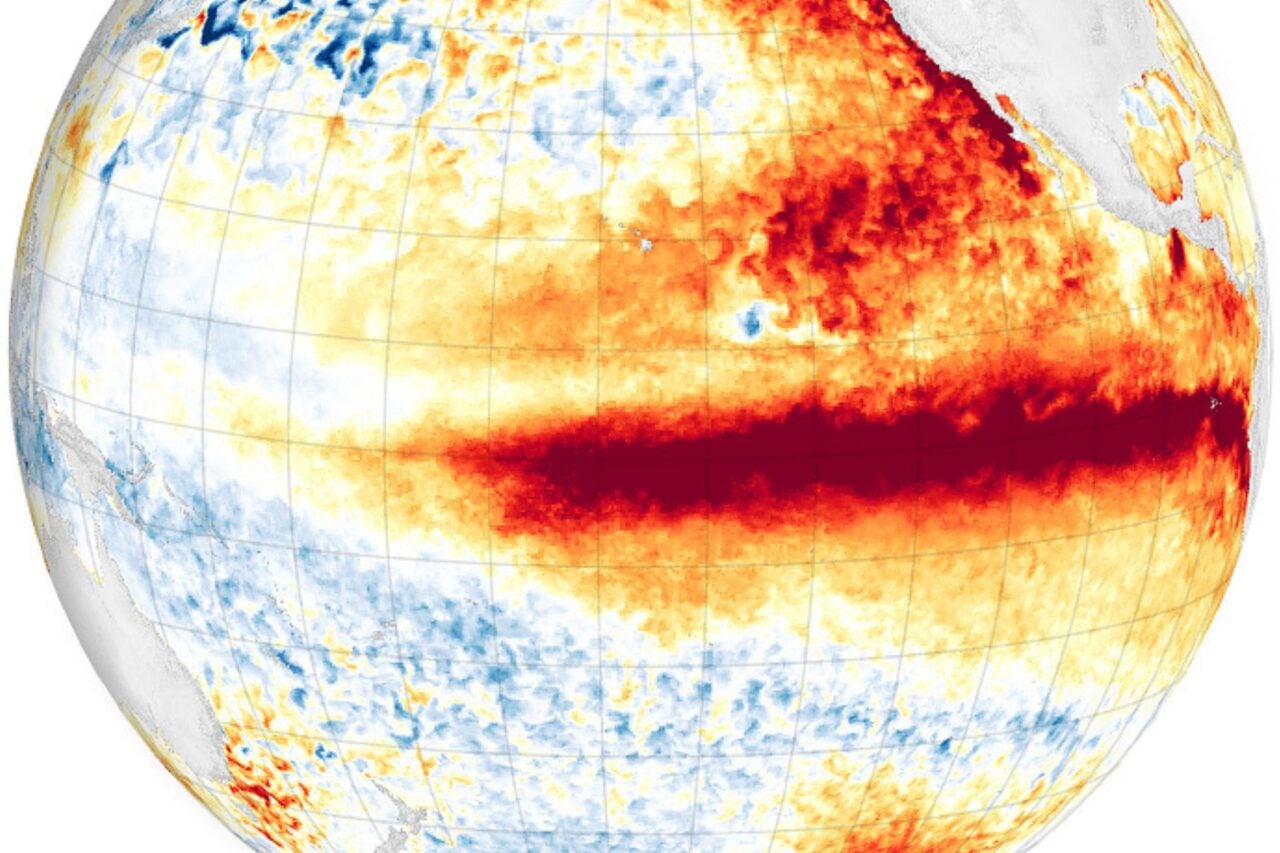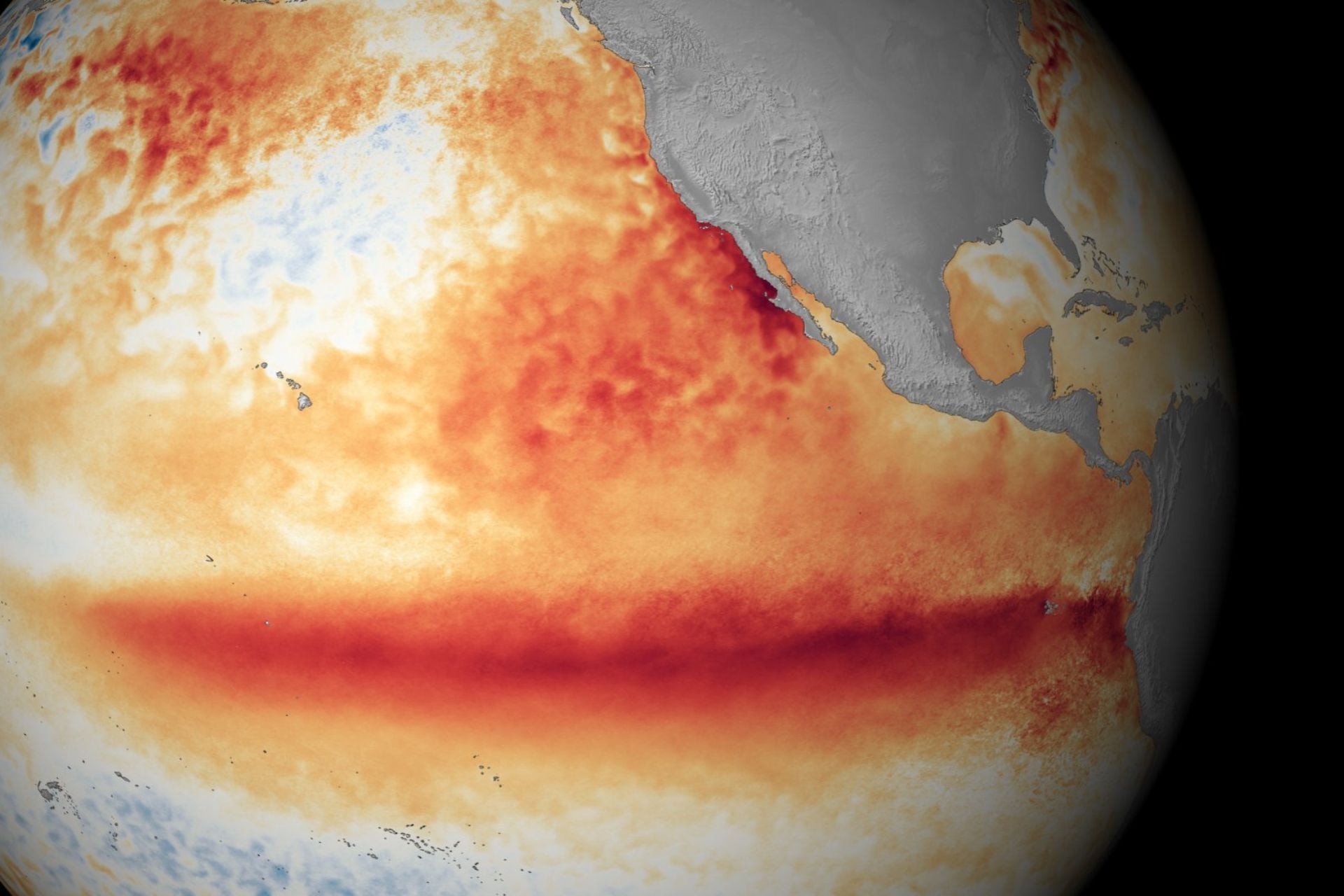
El Niño has officially arrived, and it’s going to be a big one. Meteorologists warn that the 2026-2027 “super” El Niño will have major implications for extreme weather, potentially exacerbating heatwaves, droughts, floods, and wildfires in various parts of the world.
Nowadays, El Niño events are unfolding against the backdrop of global warming, and the relationship between these two climatic forces is complex. El Niño worsens extreme weather events that are already growing more frequent and severe due to human-driven climate change, and stronger El Niño events tend to have a more significant weather impact. Scientists also expect super El Niños to occur more frequently in a warmer world. However, new research suggests that once global warming exceeds 3.6 degrees Fahrenheit (2 degrees Celsius), super El Niños could pack less of a punch in North America.
The findings, published Friday in the journal Geophysical Research Levels, show that the weather impacts of super El Niños weaken and shift eastward under worst-case global warming scenarios. As a result, extreme El Niño-related impacts over North America—such as winter warming in the Northeast and increased rainfall over California and Florida—are substantially reduced.
“Beyond [6.3 degrees F] 3.5 degrees C of global warming, the distinction between moderate and extreme El Niño impacts over North America nearly disappears,” the authors write.
Forecasting the future of El Niño
To investigate how super El Niño impacts will change as Earth warms, a team of researchers analyzed 13 state-of-the-art climate models that can simulate extreme El Niños and their distinctive weather impacts. They ran each model under various emissions scenarios, then compared super El Niño impacts at warming levels ranging from roughly 3.6 degrees F to more than 6.3 degrees F (2 degrees C to more than 3.5 degrees C) with historical simulations.
Even the most intense El Niño events packed less of a punch in a significantly warmer climate. The characteristic North American impacts of a super El Niño event changed significantly, shifting 20 to 30 degrees east and weakening by roughly one-third under a +6.3-degree F (3.5-degree C) warming scenario. This suggests that winter in the Northeast wouldn’t be as warm as it tends to be during extreme El Niños today, and rainfall wouldn’t be as intense in states like California and Florida.
To be clear, this doesn’t mean we won’t have to worry about super El Niños in a world that has warmed more than 3.6 degrees F (2 degrees C) above pre-industrial levels. The study suggests that their weather impacts may become less distinct from those of moderate El Niño events, not that their impacts will disappear altogether. Extreme El Niños would still be capable of triggering significant shifts in precipitation and temperature patterns across the globe, compounding the effects of a climate already destabilized by severe warming.
A warmer climate is an unstable climate
The study underscores the fact that global warming is causing climate patterns to behave in unexpected ways. If emissions continue at their current rate, the world could exceed 3.6 degrees F (2 degrees C) of warming by the middle of this century, so understanding what this means for El Niño is a matter of urgency.
Under strong warming scenarios, distinguishing between extreme and moderate El Niño events becomes less relevant for forecasting North American impacts, according to the researchers. However, they also found that super El Niños could have a stronger influence on weather patterns over the North Atlantic and Europe in a warmer world. Accurately predicting when these unusually strong events occur will therefore remain important for these regions.
The fallout from the 2026-2027 El Niño remains to be seen, but all signs point to an exceptional event. Model forecasts indicate it could become the strongest El Niño on record, boosting the global average temperature to new heights and triggering weather anomalies around the world. As it develops, we’ll get a preview of the climate we’ll be living in permanently just five or 10 years from now, even in the absence of El Niño.