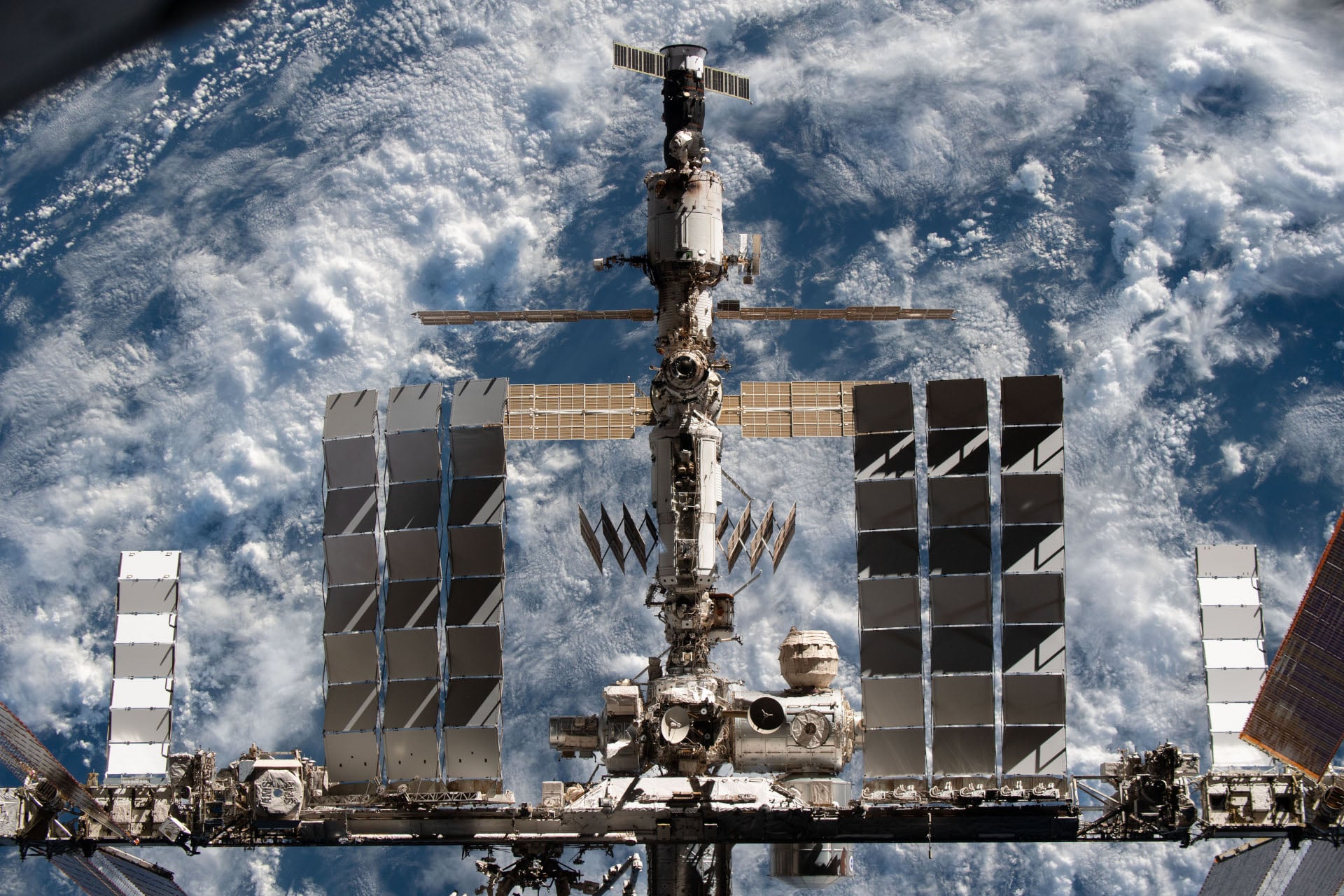
For seven years, tiny cracks in the International Space Station (ISS) have been leaking air. NASA and its Russian counterpart, Roscosmos, have deliberated over ways to fix the air leaks, but nothing seems to work. After a risky plan prompted the ISS astronauts to seek emergency refuge, Russia’s space agency may finally throw in the towel.
Roscosmos first reported a leak on board the ISS in September 2019, tracing it to the vestibule (named PrK) that connects a docking port to the Russian Zvezda module. Russian cosmonauts have made several attempts to seal the leak, but air continues to escape the space station at a growing rate.
The situation escalated on June 5 when NASA ordered its five crew members to shelter in place as Russia prepared to attempt a risky repair: cutting away a load-bearing bracket with a saw. Roscosmos later postponed the operation, allowing the astronauts to return safely to the ISS.
Since then, ongoing deliberations between NASA and Roscosmos suggest Russia has decided to decommission the PrK module altogether, according to a report by Ars Technica.
The leak that won’t quit
The persistent air leak poses a major safety risk to the structure of the space station and the safety of the astronauts on board. Over the years, the rate at which the air is leaking doubled from one pound a day to a little over two pounds a day, according to a report released in 2024. That led NASA to elevate the leak to the highest level of risk.
At the time, it was reported that NASA and Roscosmos could not agree on the root cause of the leak or a way to fix it. In June 2025, things began to look more promising after NASA measured a new pressure signal (a change in airflow or cabin pressure picked up by sensors) in the Russian module, which was taken as a sign that previous attempts to repair the air leak were successful.
On May 1, Russian cosmonauts were unloading cargo from the Progress 95 spacecraft when they noticed a slow pressure drop in the Zvezda module. That meant that air was still escaping from the space station and that the dreaded saga was far from over.
Shut it down
Ahead of the latest attempt to repair the leak, Russian officials informed NASA of their plan to use a saw to gain better access to the crack leaking air in the Zvezda module’s transfer tunnel. NASA disagreed with this strategy, stating that it “could have resulted in elevated risk to the structure in the area.”
According to Ars Technica, NASA’s decision to have its astronauts take shelter inside the SpaceX Dragon spacecraft prompted Russia to back down from its plan. The two agencies continued to dispute the issue before Russia told NASA that it would decommission the PrK module.
That means permanently closing the hatch to the service module in order to minimize the amount of air lost and isolate the leak itself from the rest of the space station. If that happens, Russian cosmonauts will no longer have access to the module, and Roscosmos will have to use other docking ports to transfer supplies to the ISS.
Once the hatch is closed, however, the chaos of the air leak saga may finally come to an end.