The municipality of Sysmä and the surrounding Päijät-Häme region of south-central Finland seem to have been a hot spot for people looking to bury their treasure roughly one millennium ago. Multiple stashes of precious items have been uncovered in the area over the past decade, according to local archaeologist Esko Tikkala of the Lahti Historical Museum.
But for the first time in well over a century, the Sysmä dirt has given up a truly record-breaking hoard: a massive trove of ancient silver coins dating back to the era of the Vikings and collectively weighing in at nearly 10 pounds (4.5 kilograms). Metal detectorist Kalle Lappinen made the discovery a little over a week ago on September 3rd, in a forest just outside the Sysmä “church village” (kirkonkylä). This mass of silver, divided between two containers made of bark, is now the largest known cache of Iron Age treasure ever unearthed in the country—beating a roughly 4.9-pound (2.2-kg) cache of coins and other precious objects found in Nousiainen, to Sysmä’s west, back in 1895.
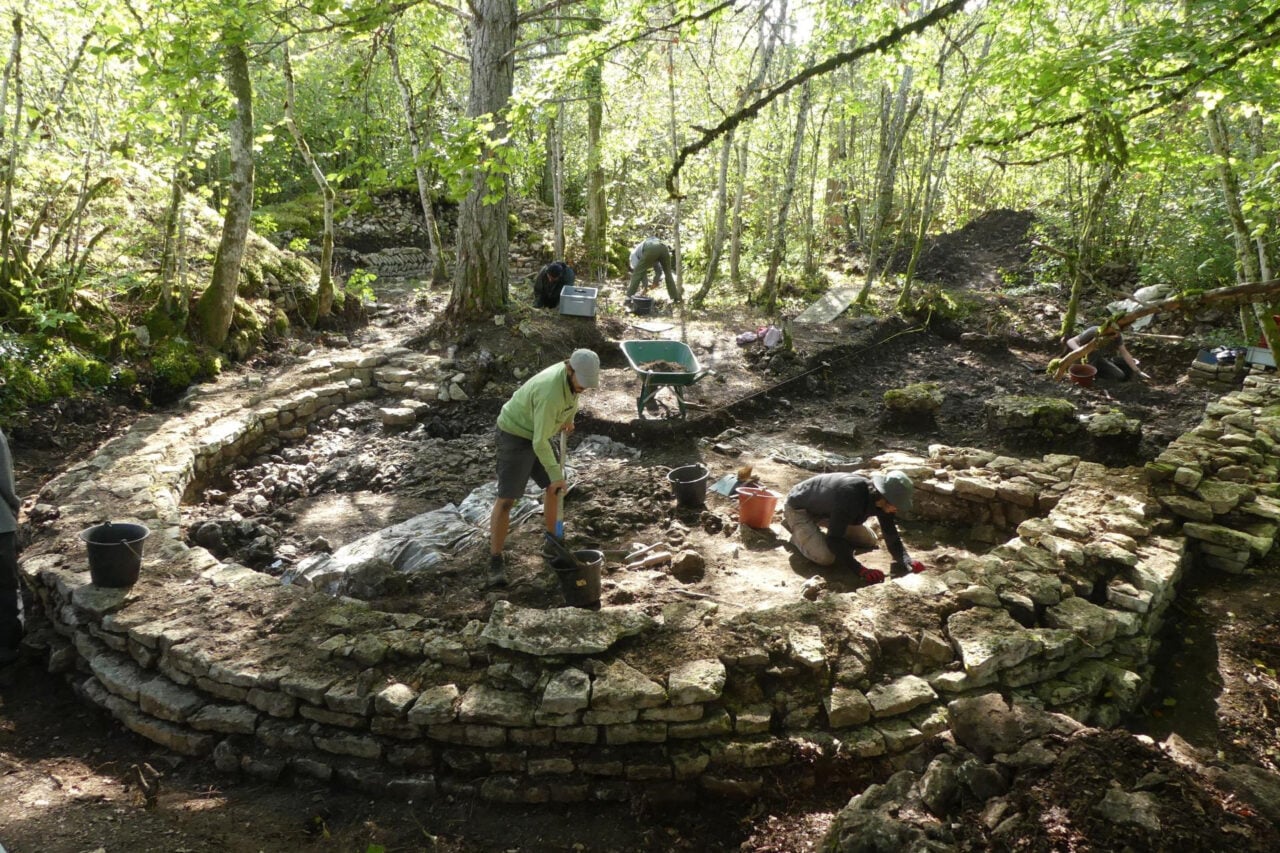
Lappinen dutifully alerted authorities to his discovery, leading to a full excavation of the treasure led by Tikkala the following day, according to a press release from the Lahti Historical Museum, translated via Google.
“There are quite a lot of coins in this hoard,” Tikkala told the site Live Science. But, he admitted, “I have not had time to go through them.”
Currency exchange
According to Tikkala, this as-yet-uncatalogued hoard of coins and other precious items appears to be twice as large as the cache of 1,700 coins and other valuables uncovered in Nousiainen over 130 years ago. Just the weight of the silver in Lappinen’s new metal detector find alone—unappraised for its antique value—would fetch nearly $10,000 today on the open market. (It is so important to have hobbies.)
Tikkala noted that the provenance of these ancient coins, which likely date back to somewhere between 1000 and 1050 CE, implied extensive trade and maybe some high-seas travel. Several of the coins appear to have been minted elsewhere in Scandinavia as well as in what is now Germany during the reign of the Holy Roman Empire. Some of these coins originated from Britain in the years just before the Norman Conquest of England in the 11th century. And still others appear to be a kind of silver coin made in the Islamic world, known as a dirham, which could indicate an origin anywhere from Al-Andalus in what is now Spain to the most eastern reaches of the former Byzantine Empire.
-

The record-setting find of Iron Age silver coins was found divided between two containers made of bark. Credit: Esko Tikkala / Lahti Historical Museum
Hoard senseless
Although this once hidden treasure dates back closely to the era when Vikings used to terrorize the North Sea, Tikkala and his research partners have reported no evidence tying the find directly to any Norseman’s plunder just yet. That said, there has been evidence that Vikings did fairly routinely use the dirham as currency.
The presence of so-called “payment silver” or hacksilver—scrap intended to be cut into smaller units for payments by weight—may also yield more clues as to the identity of whoever buried this stash in the first place. Both Vikings and Scotland’s old Pictish tribes are known to have used this method, sometimes while trading with the Romans.
According to the museum’s press release, the hoard also includes a silver bracelet, a silver clasp, and one silver bead, which may offer further clues.
“The coins have not yet been cleaned, separated or counted, so their exact weight, quantity and more precise timing will only be determined in further research,” the museum noted in its press statement, translated via Google. “In any case, there are thousands of coins.”