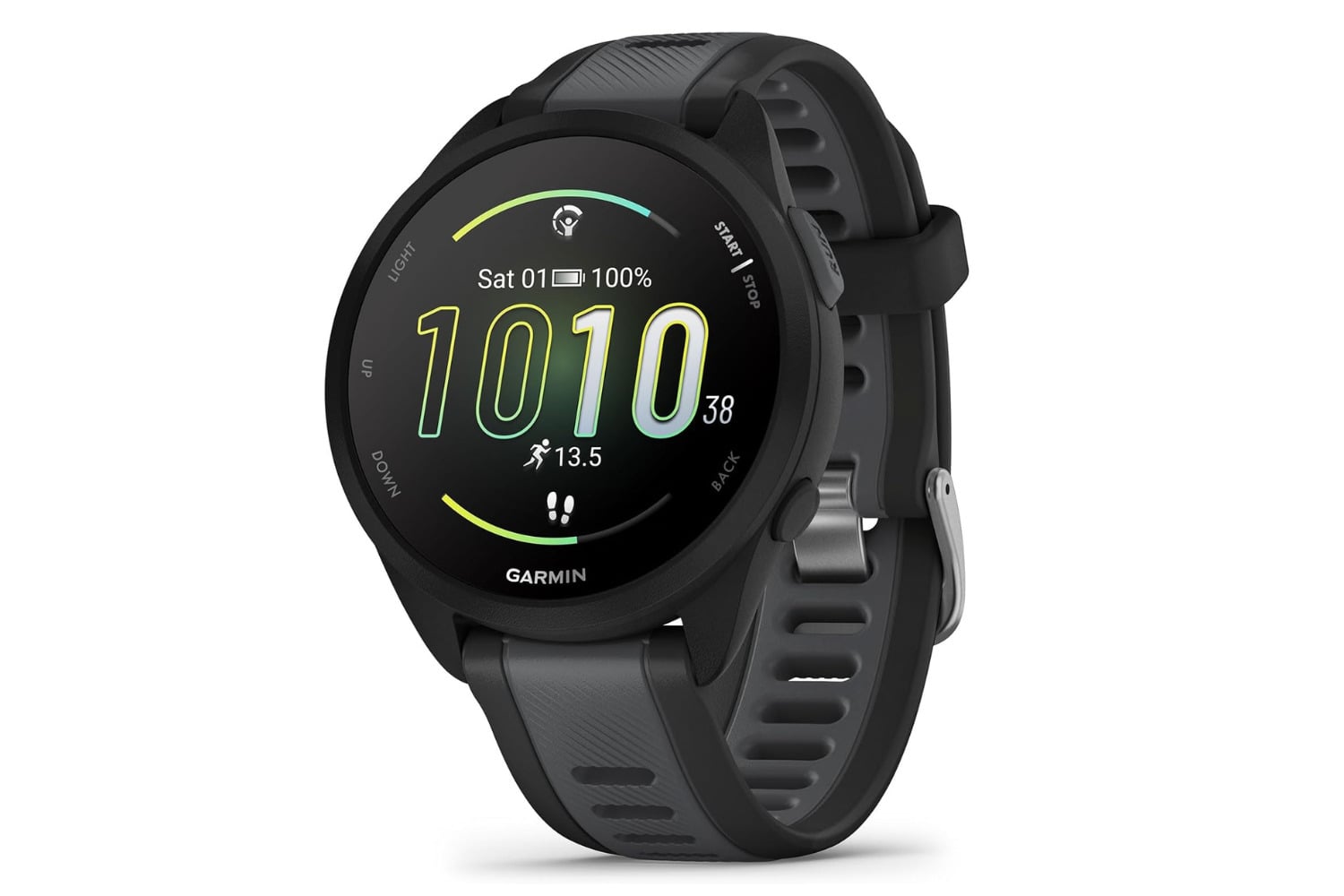
Garmin prices the Forerunner 165 at $249. Amazon has apparently decided that’s someone else’s problem. The Garmin Forerunner 165 is down to $190, below what no-name GPS running watches sell for on the same platform, for a 43mm AMOLED running smartwatch with built-in GPS, 11-day battery, personalized training plans, recovery tracking, HRV monitoring, and 25-plus activity profiles. No Prime membership required, and Garmin’s official store is at $249.
What Garmin does that no-name GPS watches can’t
No-name GPS running watches at $150 to $200 advertise GPS tracking, heart rate monitoring, and sleep tracking. They deliver GPS coordinates that update slowly, heart rate sensors that lose accuracy during high-intensity intervals, and sleep tracking that logs duration without the sleep stage analysis that actually informs recovery decisions. The Garmin Forerunner 165 delivers GPS accuracy from a brand that has been building GPS devices for decades, wrist-based heart rate that maintains accuracy during tempo runs and interval sessions, and HRV status monitoring that tracks heart rate variability continuously to provide a physiological picture of readiness that no-name sensors can’t produce reliably.
The personalized daily suggested workouts adapt based on your actual performance and recovery data rather than following a fixed plan regardless of how your body responded to the previous session. Garmin Coach and race adaptive training plans generate specific workout recommendations for target events, and training effect labels tell you the primary fitness benefit of each completed workout so you understand what you’re building rather than just logging mileage. Recovery time tells you exactly how long before your next high-effort session, which is the number that prevents the overtraining that derails most new runners within months of starting a structured program.
The morning report consolidates sleep quality, recovery status, training outlook, weather, and HRV status into a single glance before you make any decisions about the day’s training. The brilliant AMOLED display with traditional button controls handles touchscreen interaction during normal use and button navigation when sweat or gloves make touch unreliable, which is the practical requirement for a running watch that needs to work in all conditions rather than just ideal ones. Battery life runs 11 days in smartwatch mode and 19 hours in GPS mode, covering multi-day trips and week-long training blocks without daily charging.
Amazon pricing Garmin below no-name alternatives on the same platform
A search for GPS running watches on Amazon at $150 to $200 returns pages of unbranded alternatives from manufacturers most people haven’t heard of, with spec sheets that look similar to the Forerunner 165 on paper and deliver substantially different results in practice. The Forerunner 165 at $190 now sits below that price range, which produces the specific situation where the most trusted name in GPS sports watches costs less than the no-name alternatives competing for the same search results. Garmin’s official store sells the Forerunner 165 at $249 and hasn’t moved that number. Amazon went rogue on the pricing, and runners are the beneficiaries.
Safety features include incident detection during outdoor activities and Assistance, which sends a message with your live location to emergency contacts when something goes wrong on a run. For solo runners, early morning runners, and trail runners in remote areas, those features are the ones that matter most when the GPS tracking becomes relevant for reasons other than pace data.