AMD is trying to give Nvidia’s long-rumored laptop CPUs a run for their money before they’re even out the door. To do this, AMD is making its most powerful processor with the latest Ryzen AI Halo chips that—hopefully—won’t be a no-show like its recent Ryzen AI 400 laptop CPUs.
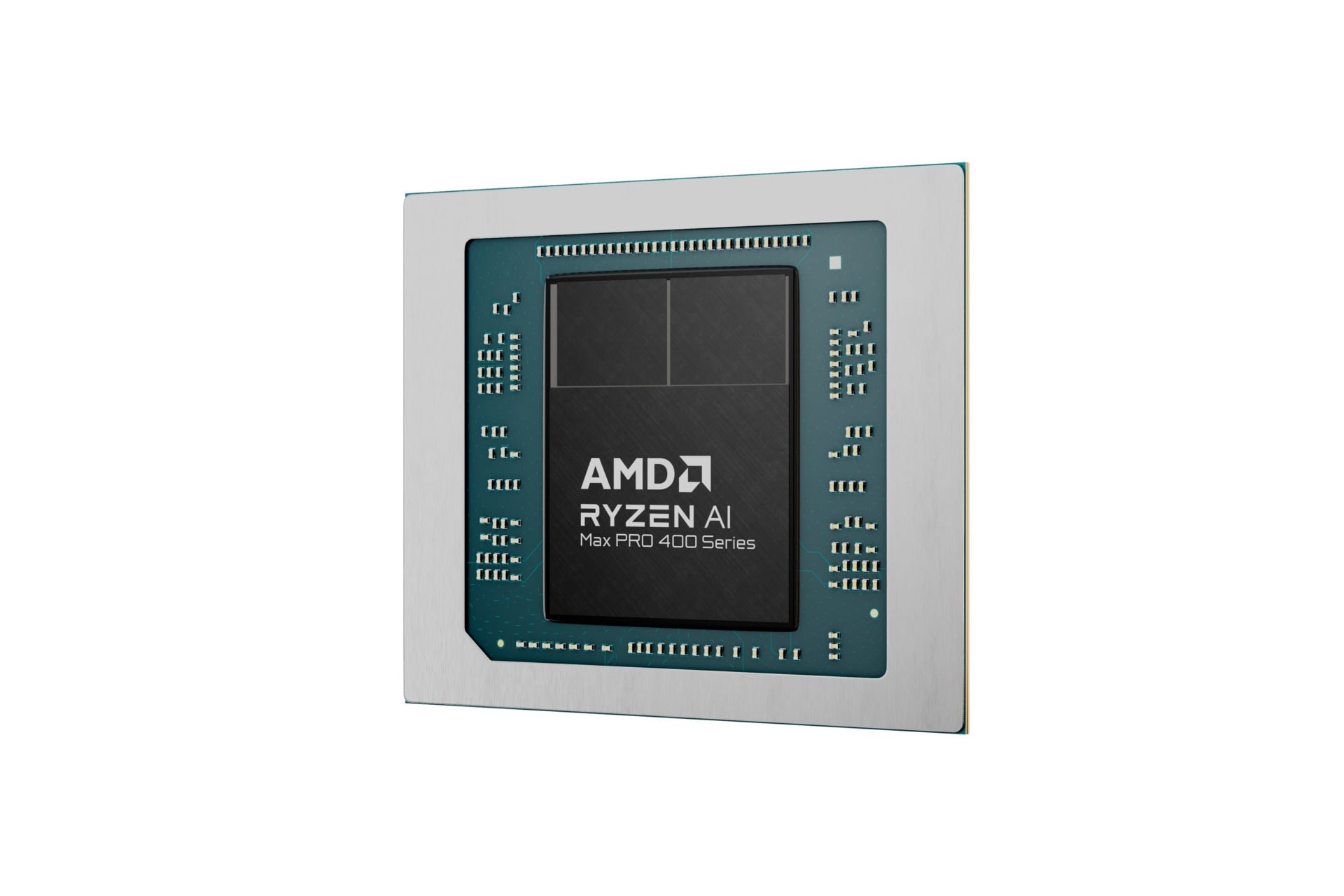
The newly revealed Ryzen AI Max+ Pro 495 chip seems like a beast, at least on paper. The main draw is the newer Zen 5 CPU, which features 16 cores and 32 threads with a boost clock speed of 5.2GHz. However, the new chip has the same old RDNA 3.5 GPU microarchitecture that’s inside the previous-generation Ryzen AI Max+ 395. That Radeon 8065S graphics chip includes 40 compute units (the name AMD gives to its core clusters). It should also get a small boost with up to 160GB of possible VRAM (video random access memory), pushing the GPU memory further than before.
Without AMD’s latest RDNA 4 GPU microarchitecture, it’s hard to call it a huge jump in possible performance compared to the Ryzen Max+ 300 series. AMD claims the Ryzen AI Max+ Pro 495 is its first x86 processor that can run a 300 billion parameter AI model all by itself. AMD also promoted two other versions of the same APU (accelerated processing unit, which combines CPU and GPU capabilities). There’s a Ryzen AI Max Pro 490 with 12 cores and 24 threads, plus a Ryzen AI Max Pro 485 with eight cores and 16 threads. The lower-spec models use a smaller GPU with only 32 compute units.
The reason why AMD’s last generation of Strix Halo chips became so popular wasn’t necessarily because of AI capabilities but rather because of their surprisingly capable graphics performance. This year, AMD expanded the lineup with a few toned-down Strix Halo processors specifically for gaming and creative-centric devices. The side effect of the AI-induced RAM crisis is that several companies cancelled gaming handhelds that were supposed to feature those toned-down processors.
As such, while we’re losing out on boutique gaming products, AMD decided it was time to launch a miniature “AI developer platform” called AMD Ryzen AI Halo. The small PC contains AMD’s own Ryzen AI Max+ 395, the previous-gen Strix Halo chip and not its newfangled Gorgon Halo design. It otherwise supports a 2TB SSD and 128GB of unified memory. We’ve seen this chip perform well for mobile and pint-sized devices like the Asus ProArt PX13 GoPro Edition and the Framework Desktop.
The announcements were part of a wave of AI-centric news as AMD desperately tries to claw away an ounce of Nvidia’s clout with AI developers for itself. Nvidia has already released its $4,000 DGX Spark, a desktop AI-centric computer built on an ARM chip and the company’s Blackwell GPU architecture. AMD’s Ryzen AI Halo costs $4,000 for a box that measures just 6 by 6 inches.
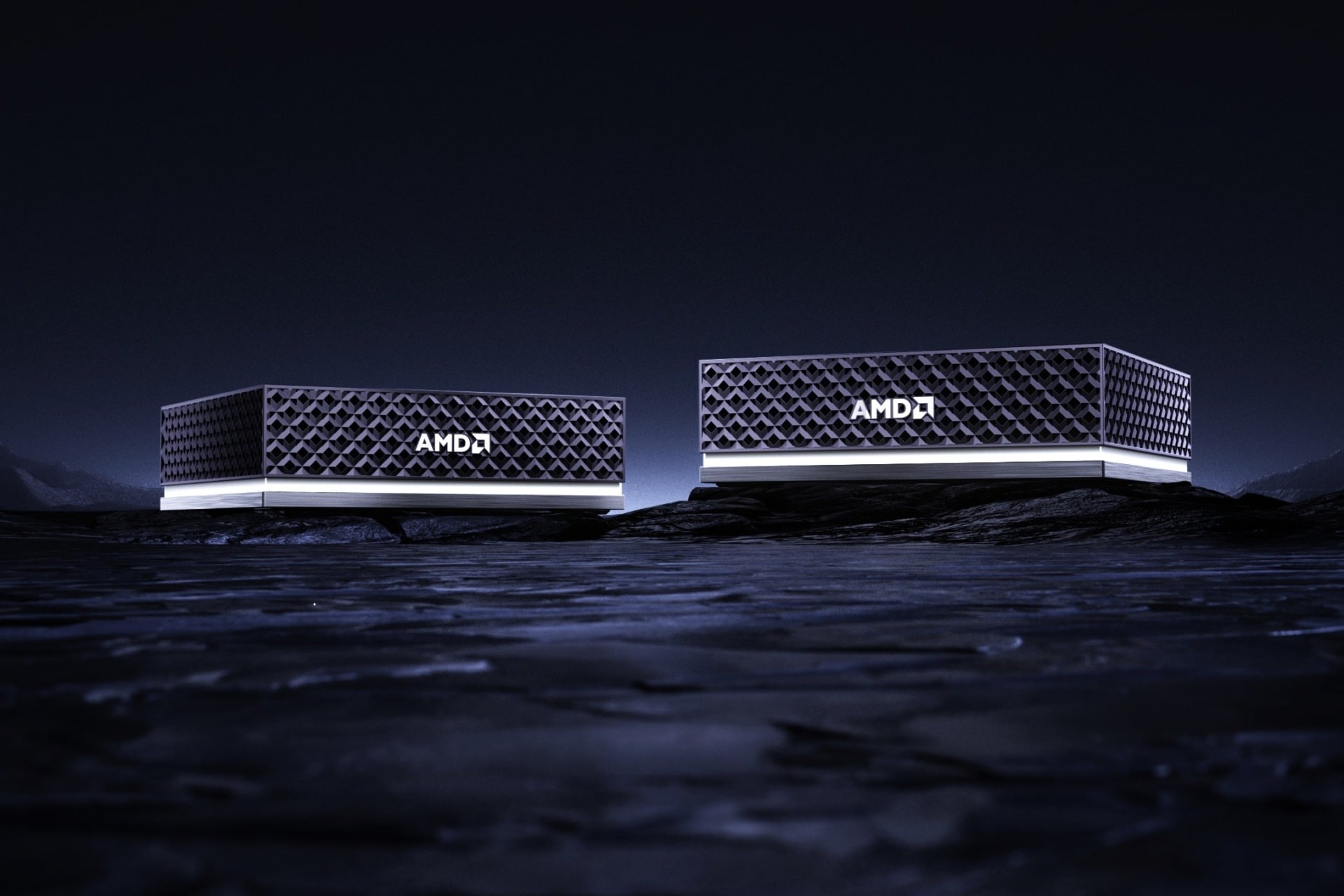
The DGX Spark also runs on a version of Linux, whereas AMD’s Ryzen AI Halo can use Linux as well as Windows for a more comfortable PC-like experience. Running on an x86 chip and Windows will effectively mean the AI Halo will work just as well as any other mini PC for regular day-to-day tasks and not just natively running OpenClaw. Apple’s latest Mac mini has proved especially popular for running on-device AI, though AMD promises its AI Max+ chip offers 4X generative AI workloads compared to an M4 Pro.
The Ryzen AI Halo with the previous-gen 395 chip should be available for preorder in June, according to the company. AMD added that a version of the device with Ryzen AI Max+ Pro 495 is “coming soon.” As far as the new 495+ chip goes, the company promised we’ll have new devices from Asus, HP, and Lenovo sometime in Q3 this year. Nvidia’s upcoming laptop CPUs, which are likely to hit the scene at Computex in June, will now have to compete against AMD’s latest and Intel’s Panther Lake chips for laptop dominance.