Little green men and their freaky beacons
When astronomer Jocelyn Bell Burnell discovered a pulsar in 1967, she didn’t quite know what to make of the object’s eerie rhythm. Here’s how she described the moment in her 1977 essay, “Little Green Men, White Dwarfs or Pulsars?”:
We did not really believe that we had picked up signals from another civilization, but obviously the idea had crossed our minds and we had no proof that it was an entirely natural radio emission. It is an interesting problem—if one thinks one may have detected life elsewhere in the universe how does one announce the results responsibly? Who does one tell first? We did not solve the problem that afternoon, and I went home that evening very cross [as] here was I trying to get a Ph.D. out of a new technique, and some silly lot of little green men had to choose my aerial and my frequency to communicate with us.
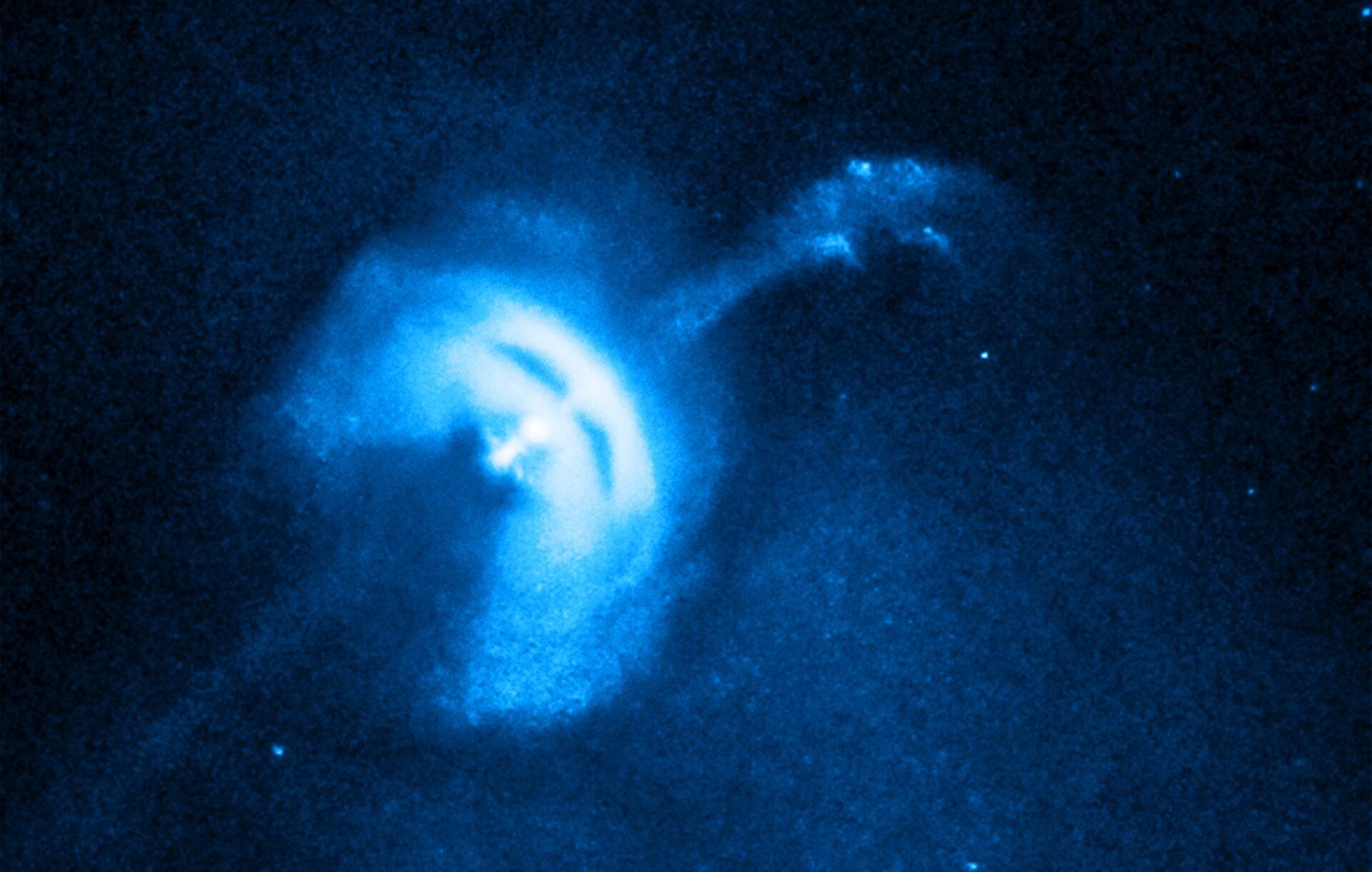
Funnily enough, Burnell and her team named the pulsar LGM-1, which stands for “little green men.” Pulsars are not celestial lighthouses built by communicative aliens, but rather periodic flashes of electromagnetic radiation produced by magnetic, rotating neutron stars.
Correction: A previous version of this article claimed that Jocelyn Bell Burnell won the Nobel Prize. This is incorrect, but to be fair, she deserves it.