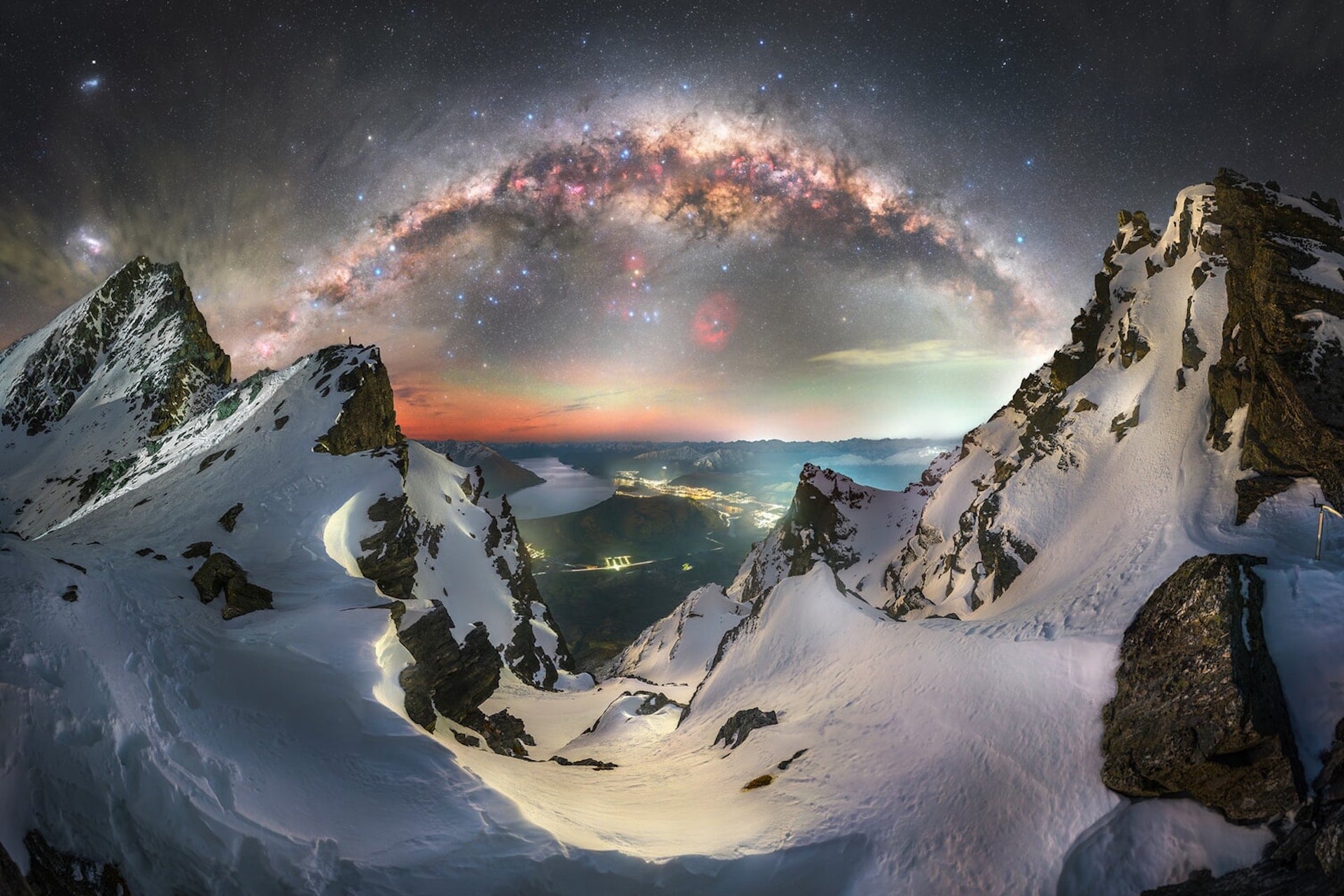
A clear, dark night sky is becoming a protected resource, with growing light pollution erasing our views of the cosmos. In order to capture some of the billions of stars that litter the Milky Way, photographers have to travel to exceptionally remote areas before pointing their lenses at the signature arch of our galaxy.
The Milky Way Photographer of the Year awards, courtesy of Capture the Atlas, celebrate those exceptional efforts to inspire awe at the beauty of the galaxy. This year’s competition honored 25 photographs of pure celestial wonder and highlighted the exceptional effort that went into capturing the Milky Way from remote landscapes, deserts, islands, coastlines, and mountains.
Below are some of these exceptional photographs and the stories of patience and creativity from behind the lens.
Geminid Symphony Over La Palma’s Guardian of the Sky
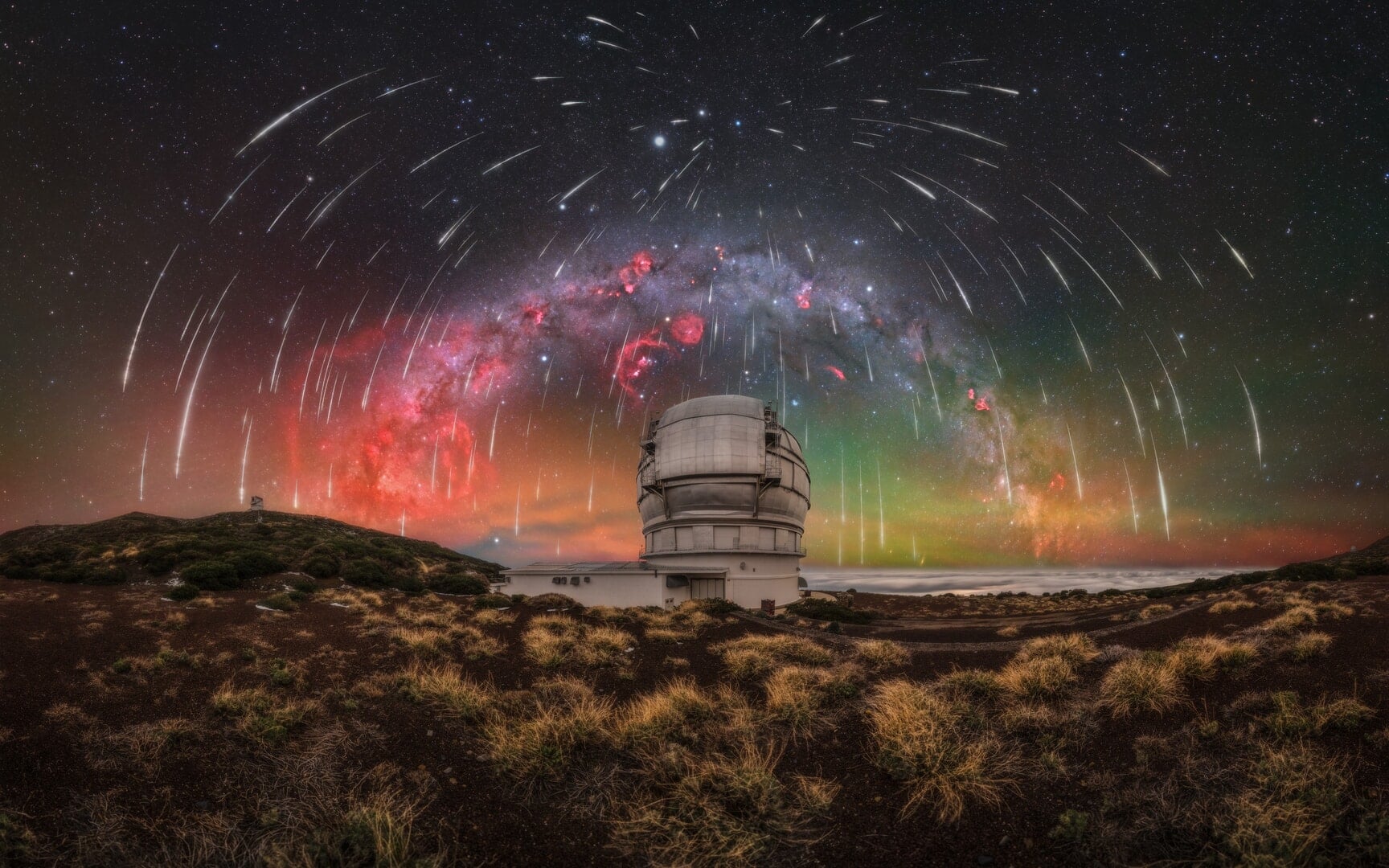
This panorama of the Milky Way features another striking celestial feature, the Geminid meteors, shaping the night skies like a dome of celebratory fireworks.
The image was captured above the Gran Telescopio Canarias, an optical telescope situated at the Roque de los Muchachos Observatory on the island of La Palma in the Canary Islands, Spain. Photographer Uros Fink put together this composite image using six cameras over the course of five nights.
Fink describes arriving at La Palma during rainy, stormy weather with summit snowfall that blocked the road to the observatory. “Reaching the summit seemed increasingly unlikely, until the fourth day, when the road finally reopened. We immediately made our way up, filled with anticipation,” Fink said in a statement. “After scouting compositions and preparing for the night, clouds once again moved in, putting everything at risk.”
It wasn’t until midnight that the first stars began to appear in the night skies. “Above us, the sky opened into a field of stars, while a layer of clouds remained below, creating a striking contrast with the illuminated structure of the telescope,” he added. “The experience of witnessing such dark skies for the first time was remarkable, with the Milky Way appearing almost three-dimensional.”
Salto Del Agrio
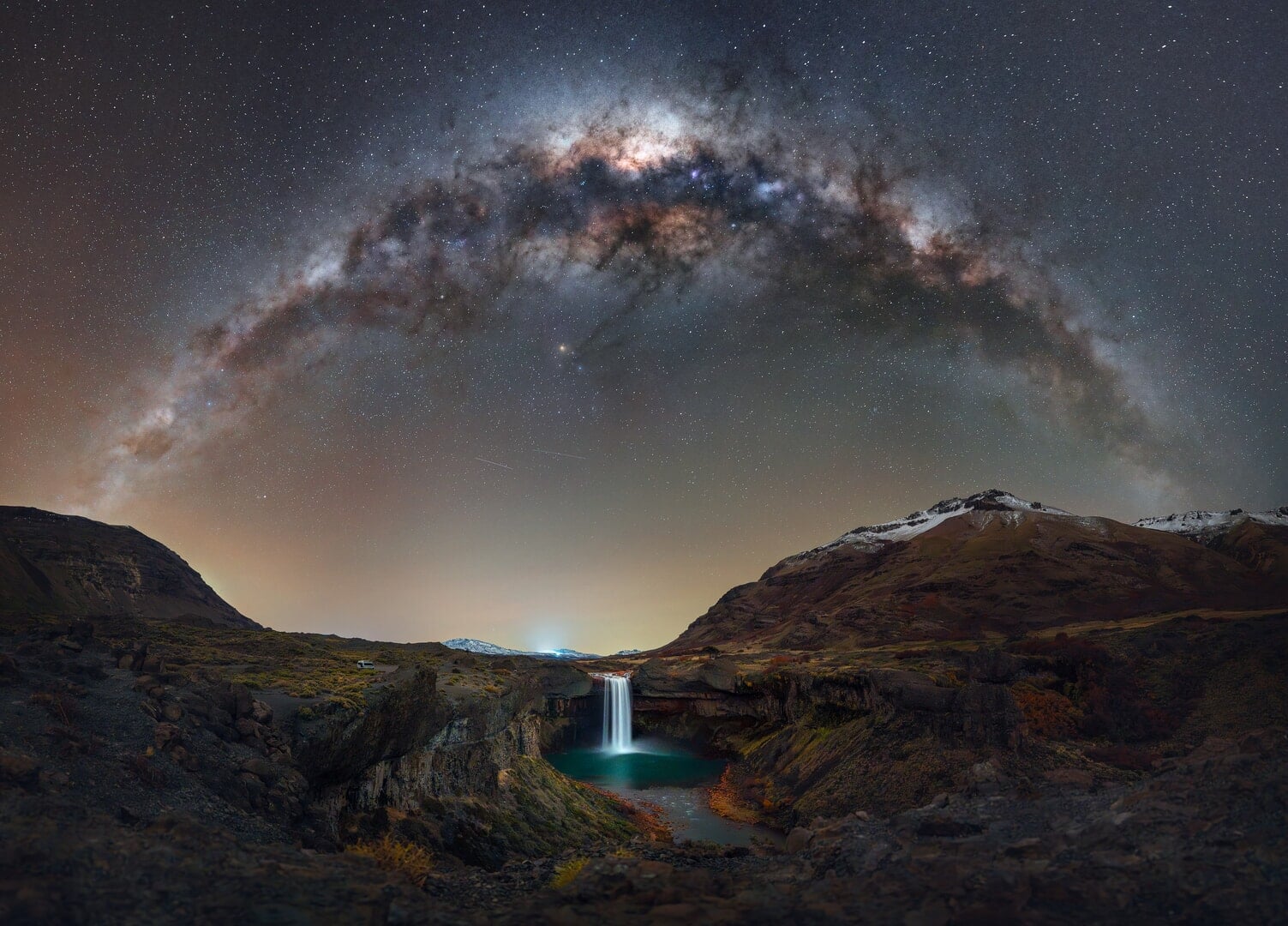
Alejandra Heis’ first attempt to reach this location was prevented by heavy snowfall, while the cold and strong winds almost fouled her second go at capturing this winning image. “Images like this are carefully planned and patiently awaited, yet they always carry an element of uncertainty,” Heis said in a statement.
The scene captures a 147-foot (45-meter) waterfall plunging into a canyon carved by ancient lava flows from the Copahue volcano in Neuquén Province, Argentina. The canyon itself is vivid with colors of the minerals carried by the Agrio River, particularly iron and sulfur.
“Despite the harsh conditions, I waited for the precise moment when the Milky Way aligned above the waterfall, forming an arch suspended over this ancient terrain,” Heis said. “Working with the tripod close to the ground and repeating exposures, I was finally able to capture the scene I had envisioned for so long.”
Standing on the Shoulders of Giants
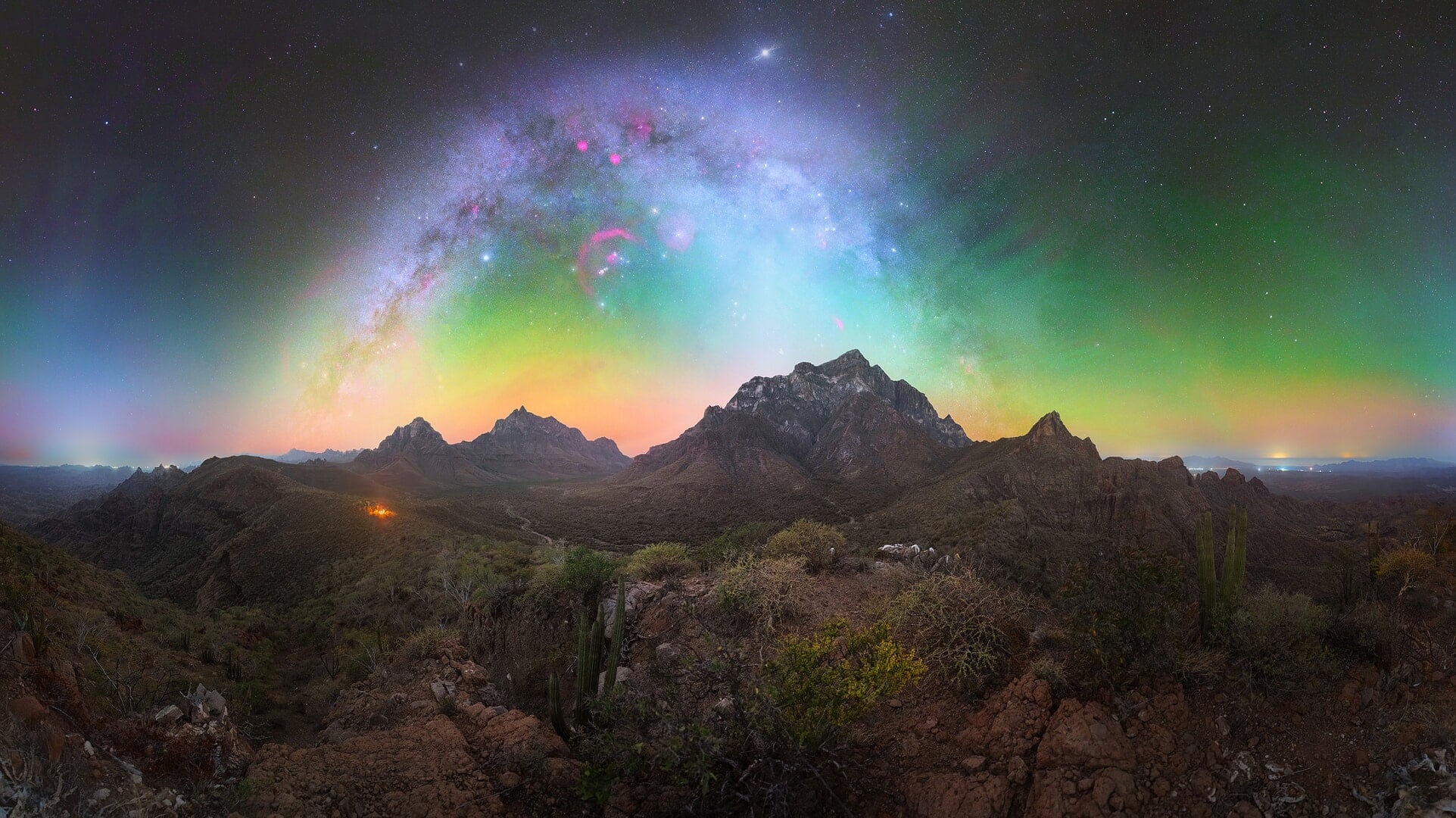
This photograph was captured in the heart of the Sierra La Giganta as part of an ongoing project focused on documenting and promoting the exceptional dark skies of Baja California.
Following a two-day expedition from the small village of San Juan Londo, photographer Nacho Peláez ascended nearly half a mile up (800 meters) on a mule along a long-forgotten section of the historic Camino Real, which was once used to transport goods between remote settlements.
“We were accompanied by Señor Juan, our guide, whose father first brought him to this hidden location over 65 years ago,” Peláez said in a statement. “Together, we aim to preserve the memory of these historic routes, ancient paths that have been gradually reclaimed by nature over time.”
The Milky Way Over a Field of Lupines
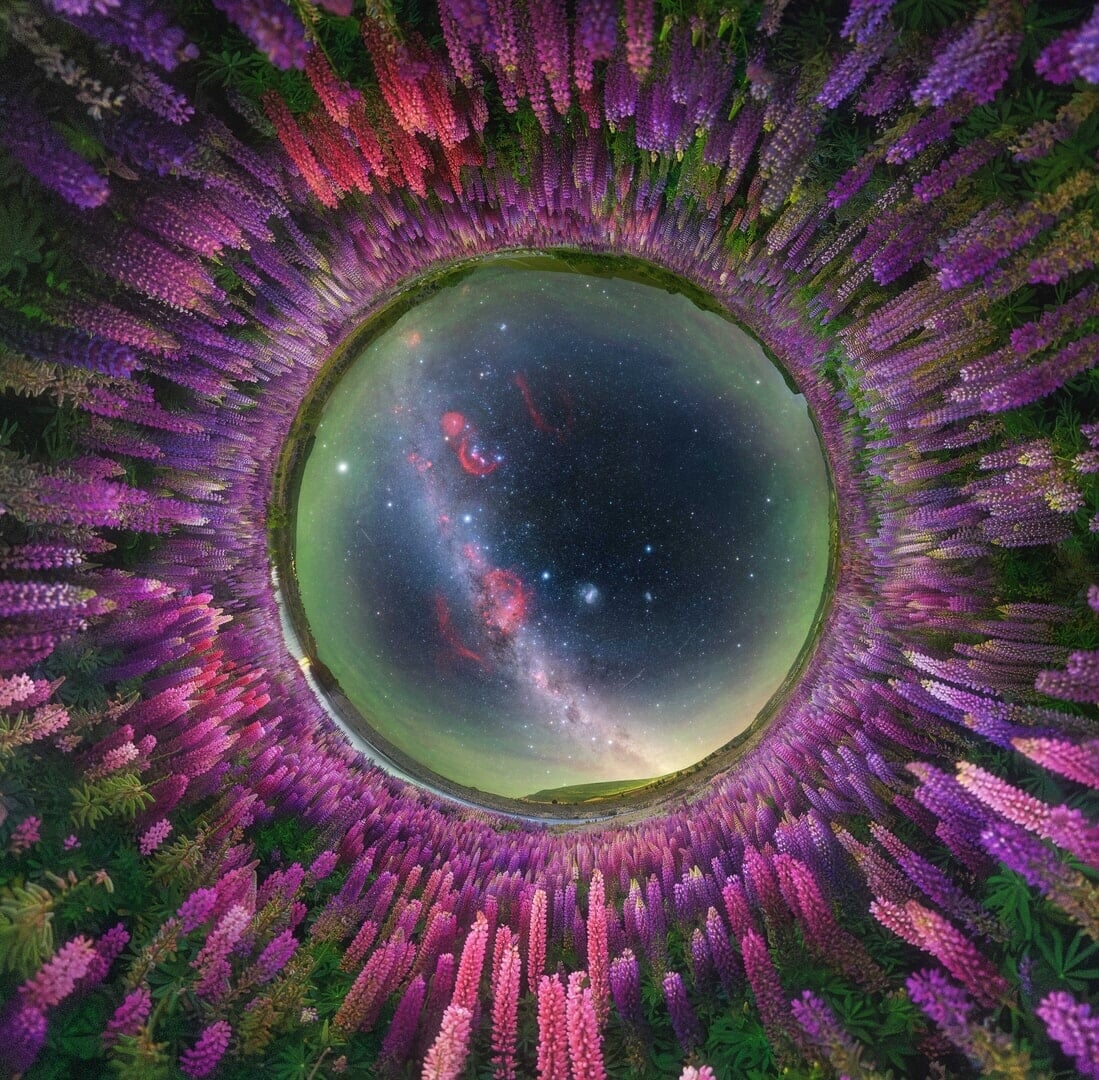
Using a fisheye perspective, photographer Alvin Wu captured the Milky Way rising above a blooming field of lupines in New Zealand. The image was taken in November, when spring flowers begin to transform the landscape beneath the night sky.
My Perfect Night
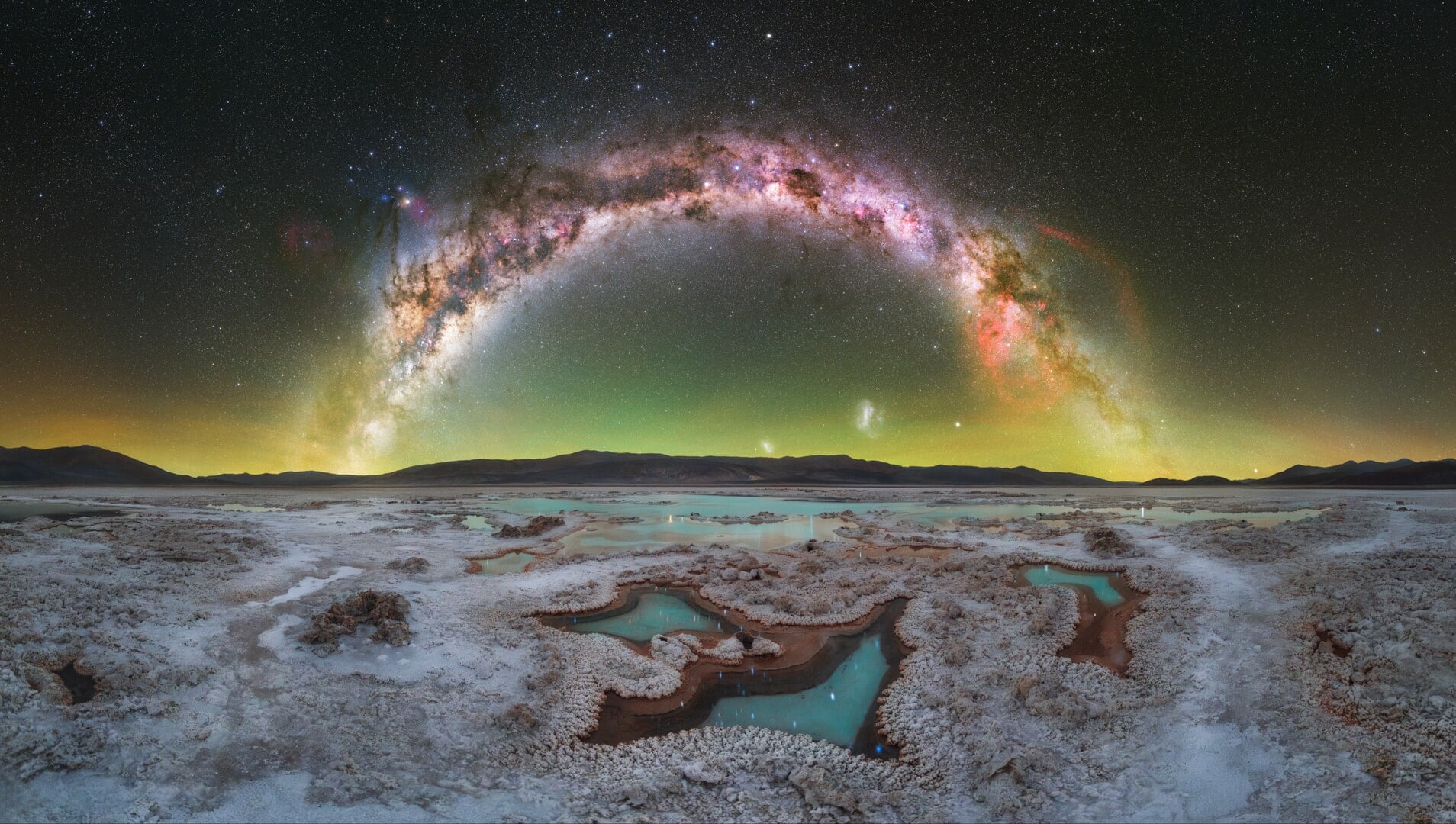
Photographer Daniel Viñé Garcia traveled deep into the Argentine Puna in order to get away from any source of light pollution. “The nearest settlement was Antofalla, a small village of around 60 inhabitants, where electricity is generated locally and turned off at night,” Garcia said in a statement. “Beyond that, the closest towns are several hours away, surrounded by vast and isolated landscapes.”
Garcia was not used to photographing the Milky Way from the Southern Hemisphere, where the galactic center appears to the left side of the arch while the Gum Nebula appears on the right.
“What made this place particularly compelling was its rarity. I had never seen photographs of this salt flat before, and its untouched character and minimalist landscape immediately stood out,” Garcia added.
Galactic Gandalf
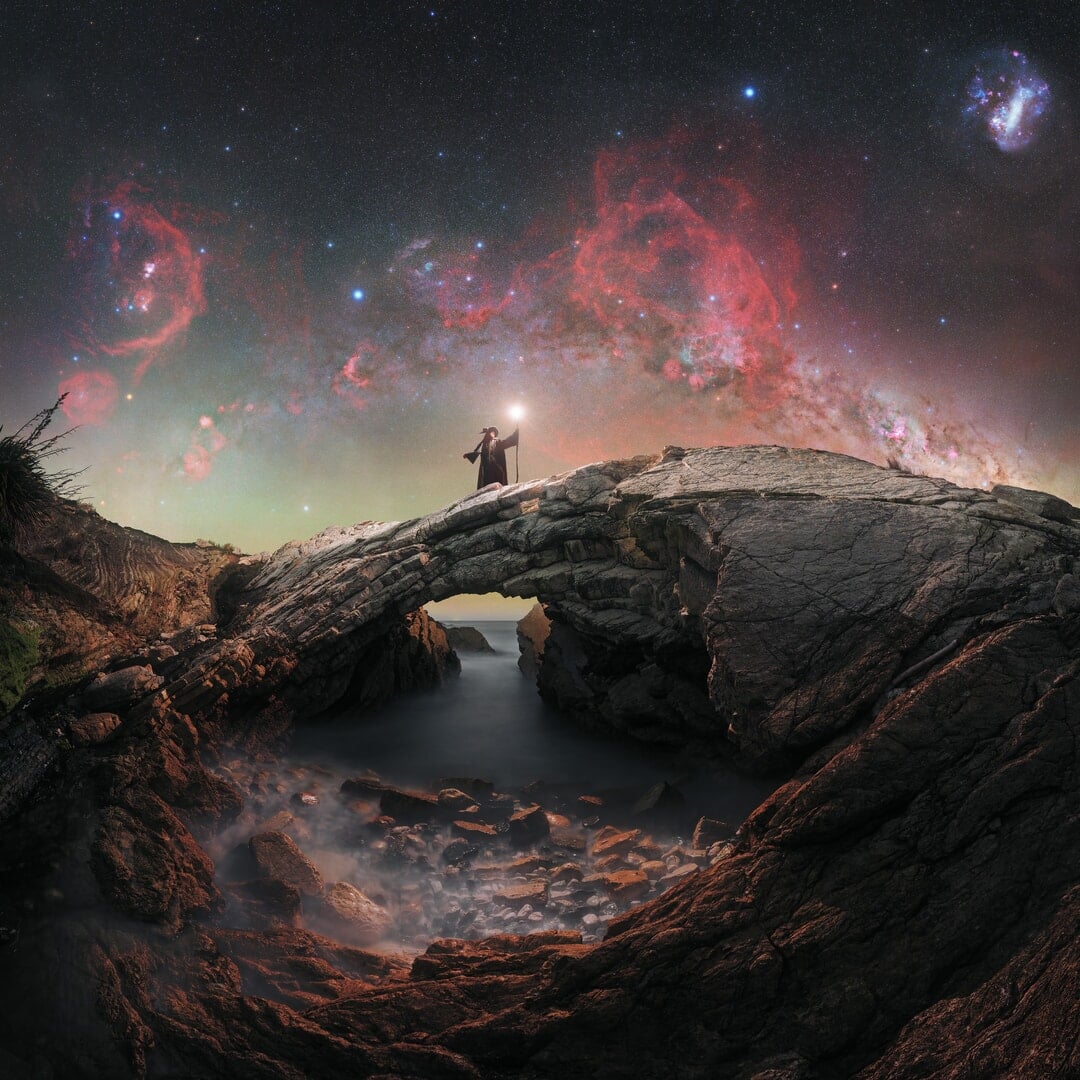
This image combines celestial wonder with fictional fanfare, adding a unique touch to the scene taken on the Wairarapa Coast, New Zealand.
Photographer Evan McKay describes arriving at the location and finding an unexpected occupant. “A seal had settled exactly where I had planned to set up my tripod,” McKay said in a statement. “It showed little interest in moving, and judging by how worn and polished the rock was, it was clearly one of its preferred resting spots.”
The seal eventually moved, and McKay was able to begin building the stunning panorama under the night sky, returning to the same spot over several weeks to collect data. The seal, however, can still be seen in the final image (let me know if you can spot it).
Celestial Light Over Sea Cliffs
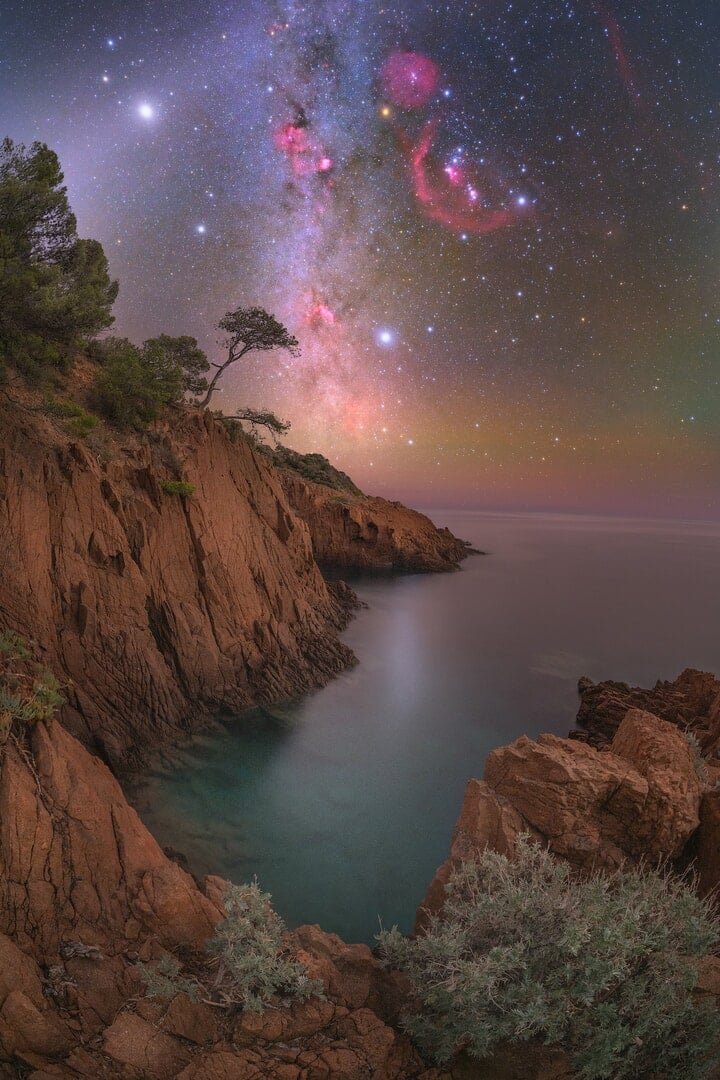
Photographer Anthony Lopez shot this photograph above the sea cliffs near his home in the south of France, capturing the harmonious balance between the coastline and the stars.
“Having access to such diverse landscapes, from mountains to the sea, all within reach of dark skies, makes moments like this not only possible, but deeply rewarding,” Lopez said in a statement.
Lost in the Ripples of Space and Time
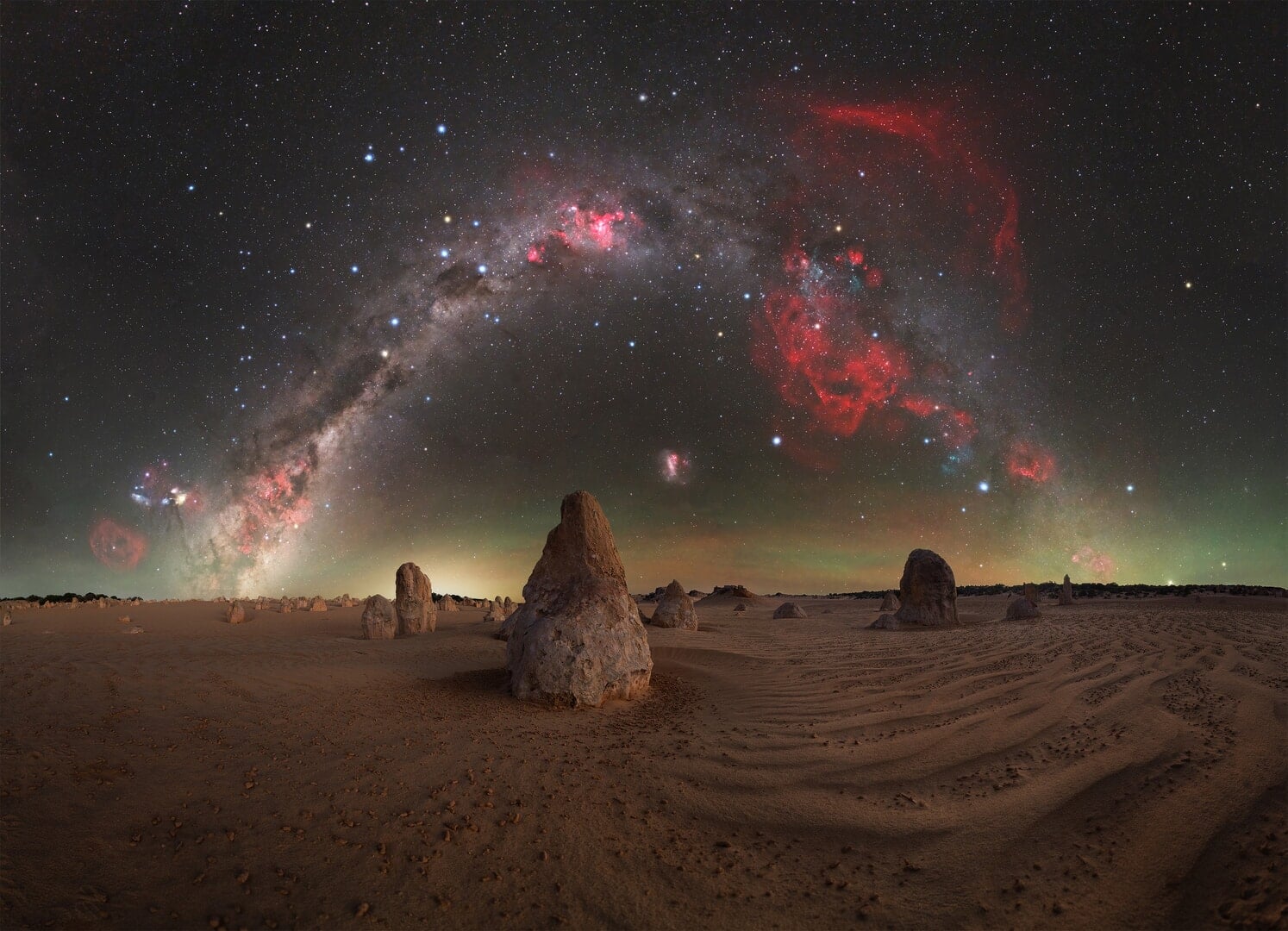
In this breathtaking image taken in the Pinnacles Desert, the main limestone pillar aligns almost perfectly with the South Celestial Pole and acts as an anchor beneath the rotating sky. The remarkable red glow of the Gum Nebula can also be seen to the right of the image, creating an unmistakable depth of view.
“As the sun sets beyond the Indian Ocean, a profound stillness settles over Nambung, transforming the landscape into an almost otherworldly scene and drawing me back here time and time again,” photographer Leonel Padrón said in a statement.