As asteroid the size of a house will pass within just 57,000 miles (92,000 kilometers) of Earth today. That’s less than a quarter of the average distance between our planet and the Moon.
Don’t worry, this wayfaring space rock—named asteroid 2026 JH2—poses no threat to Earth, but this close encounter will allow astronomers to take a good look at it. The Mount Lemmon Survey in Arizona first spotted the asteroid on May 10, so experts are still getting acquainted with it. Initial observations suggest 2026 JH2 is between 46 and 98 feet (14 and 30 meters) wide and will make its closest approach to Earth at approximately 5:58 p.m. ET today, according to the European Space Agency.
You can watch the flyby in real time via the Virtual Telescope Project 2.0 livestream below. The video feed is scheduled to begin at 3:45 p.m. ET, weather permitting.
Nice to meet you, 2026 JH2
According to NASA’s Jet Propulsion Laboratory, preliminary calculations of 2026 JH2’s orbit show that it completes one trip around the Sun every 3.76 years, following an elliptical path that takes it as far out as Jupiter’s orbit.
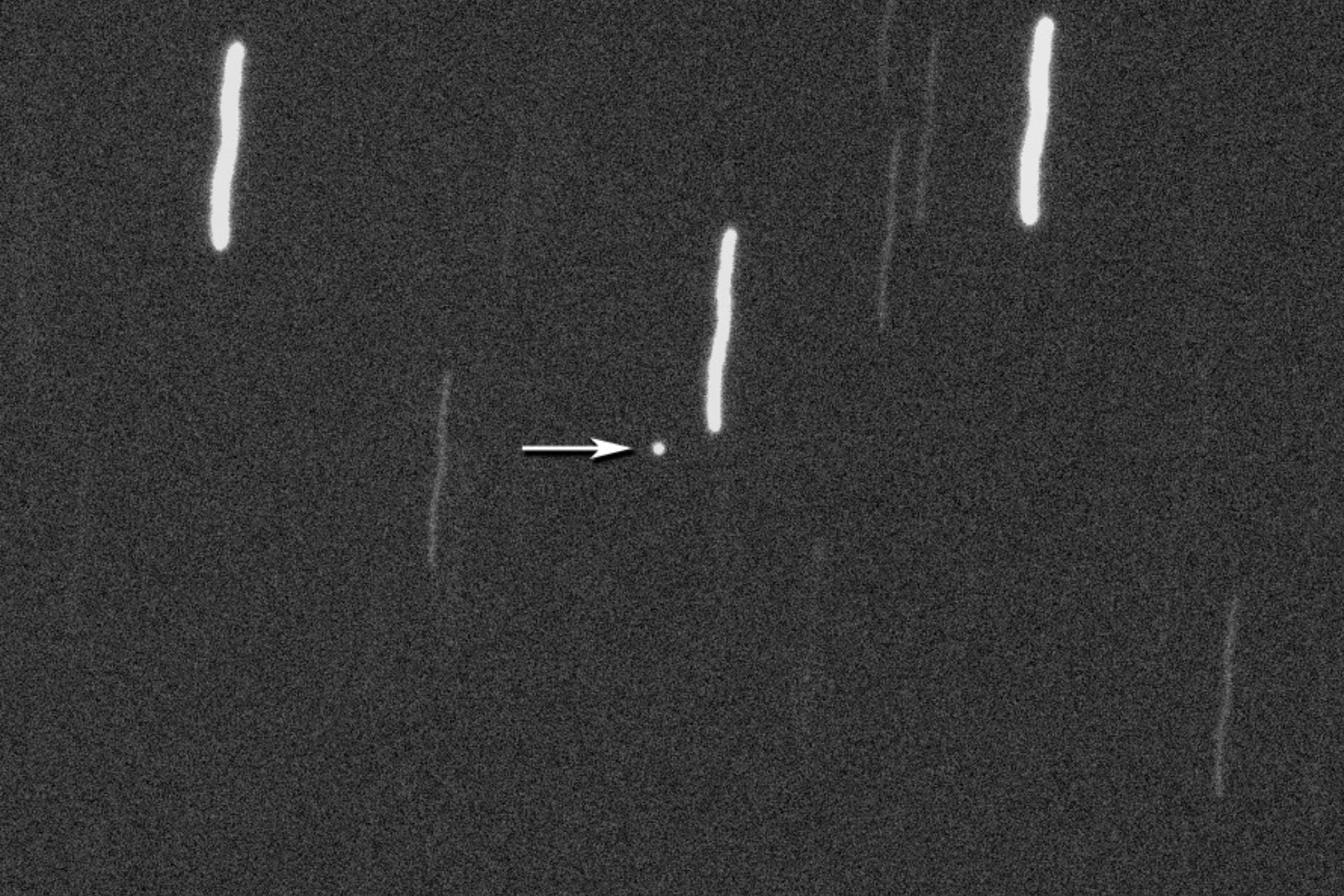
Astronomers with the Virtual Telescope Project 2.0 will be tracking 2026 JH2’s close approach using a fleet of robotic telescopes in central Italy. They have already captured some images of the asteroid as it makes its way toward Earth. The photo featured up top was taken while 2026 JH2 was about 503,000 miles (810,000 km) away. During the livestream, you will be able to see the asteroid its peak brightness—around magnitude 11.5.
That’s bright enough to see with moderately sized backyard telescopes. If you have one and the weather happens to be clear tonight, you can try spotting 2026 JH2 yourself, but it will be tricky as this asteroid will be zipping across the sky.
“At the time of the observation, the object will be moving pretty fast against the stars,” Virtual Telescope Project founder Gianluca Masi told Space.com in an email. “But our advanced telescopes will precisely track 2026 JH2 while it will be almost at its minimum distance from us.”
Via the livestream, 2026 JH2 will look like “a sharp dot of light moving against the starry background, with stars leaving long streaks,” Masi said.
After the asteroid passes by Earth today, it won’t make another close approach until 2090, ESA predicts, so you won’t want to miss this chance to see it. During that flyby, it will come within roughly 1.4 million miles (2.3 million km) of our planet.