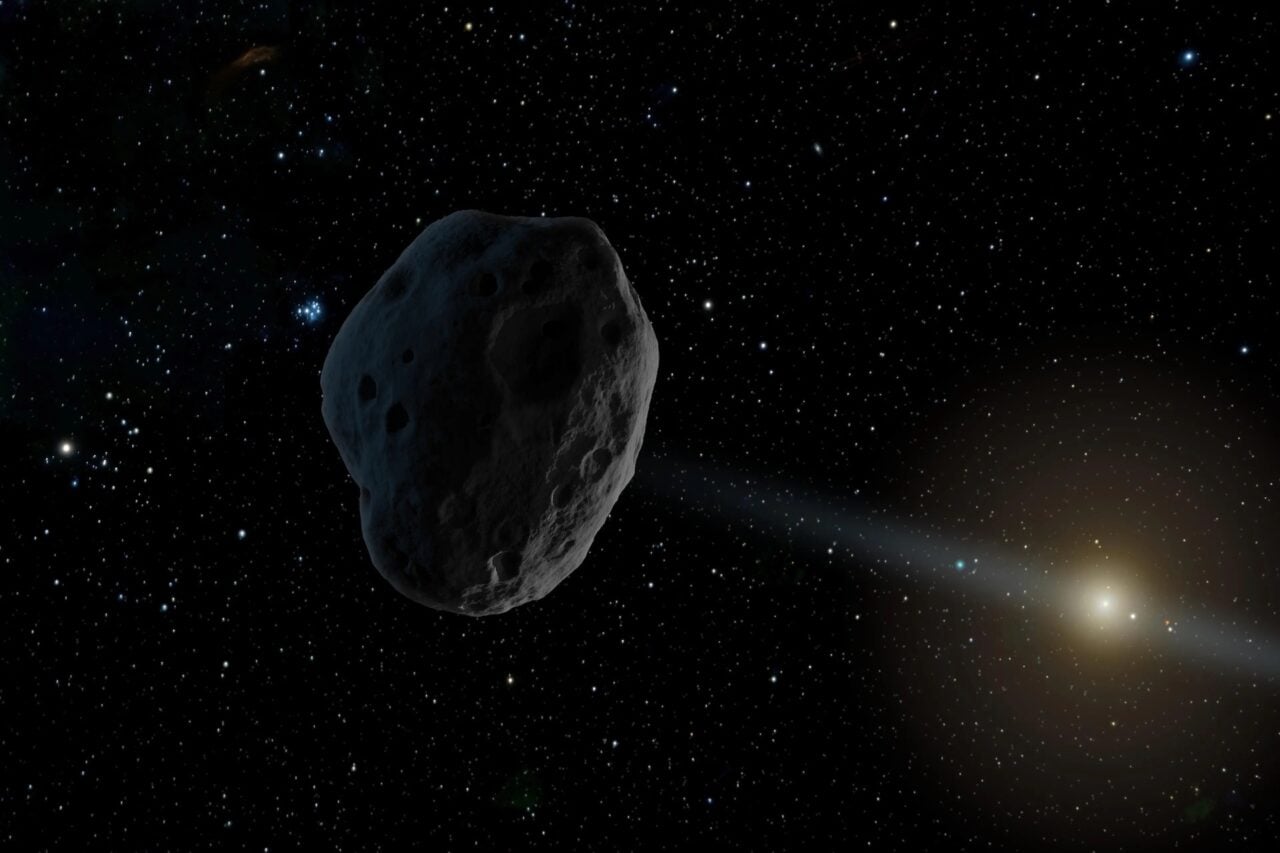
Deep in the outer reaches of the solar system, an unusual object is moving against the flow of cosmic traffic, cutting across the Sun’s orbital plane at a remarkably steep angle. Scientists aren’t sure exactly how it got there; either it was tossed into its unique trajectory by Neptune or it’s an interstellar visitor from another star system.
The Rubin Observatory in Chile first spotted the object beyond the orbit of Neptune at a distance of approximately 3 billion miles (4.8 billion kilometers). While most planets, asteroids, and comets orbit the Sun in a relatively flat plane, this newly discovered object follows a retrograde path defined by a highly inclined orbit.
It’s not yet clear whether this object, temporarily designated R631, is a rocky body or a volatile-rich comet, or how it ended up in this backward trajectory around the Sun.
Coming through
To understand why most planets and other objects orbit the Sun along roughly the same flat plane, we need to rewind to the birth of the solar system some 4.6 billion years ago.
It all began with a giant cloud of gas and dust that collapsed under its own gravity, eventually flattening into a thin, rotating disk around the young Sun. As dust grains within this disk collided and clumped together, they gradually grew into larger bodies, eventually giving rise to the planets and other solar system objects. Having emerged from the same rotating disk, most of these bodies inherited its relatively flat orbital arrangement.
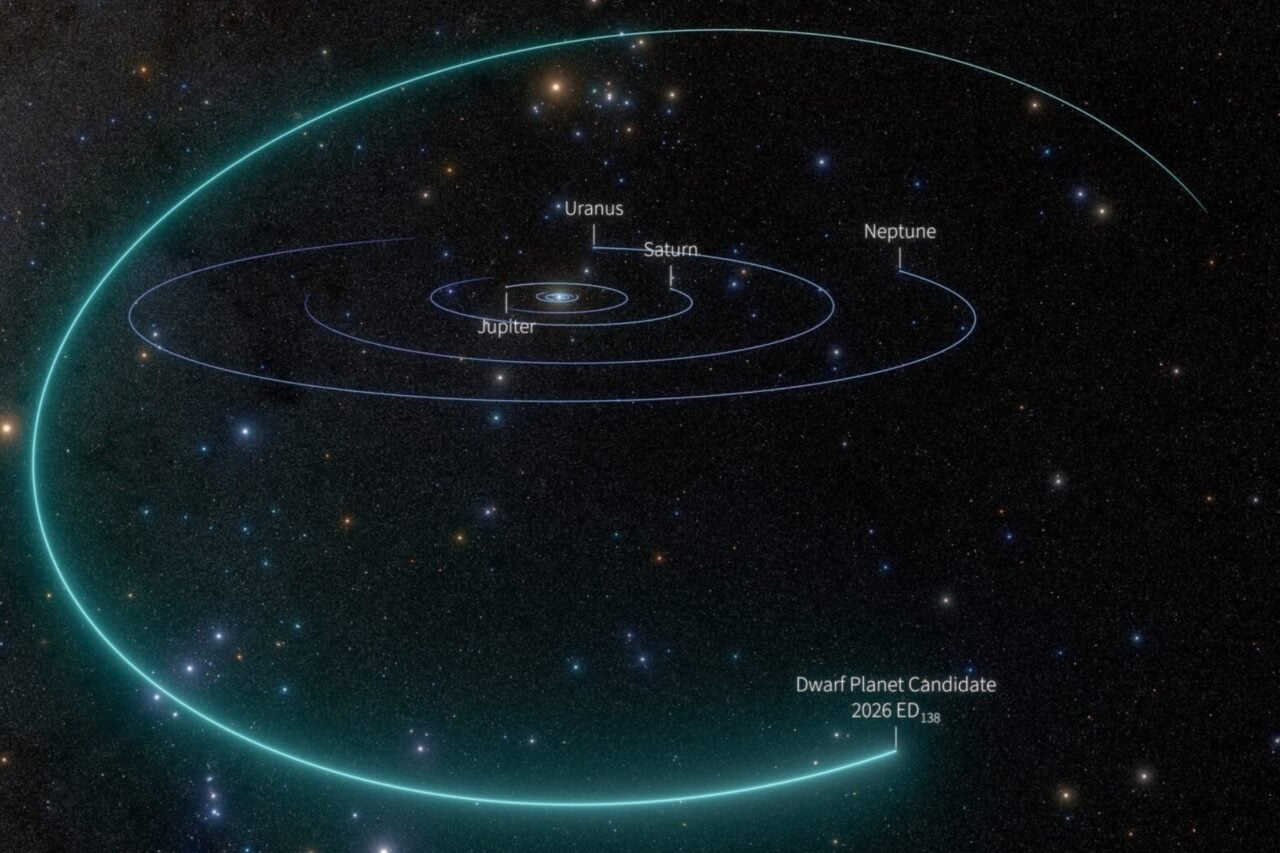
Therefore, R631’s unusually steep orbital inclination makes it an interesting outlier. The object has an orbital inclination of 142 degrees relative to the plane of the solar system, according to EarthSky. In astronomy, an orbital inclination greater than 90 degrees is defined as a retrograde motion.
While most other objects appear to orbit the Sun in a counterclockwise direction, R631 slices through the solar system’s orbital plane at a severe angle as seen in this simulation by astronomer Tony Dunn.
Origin story
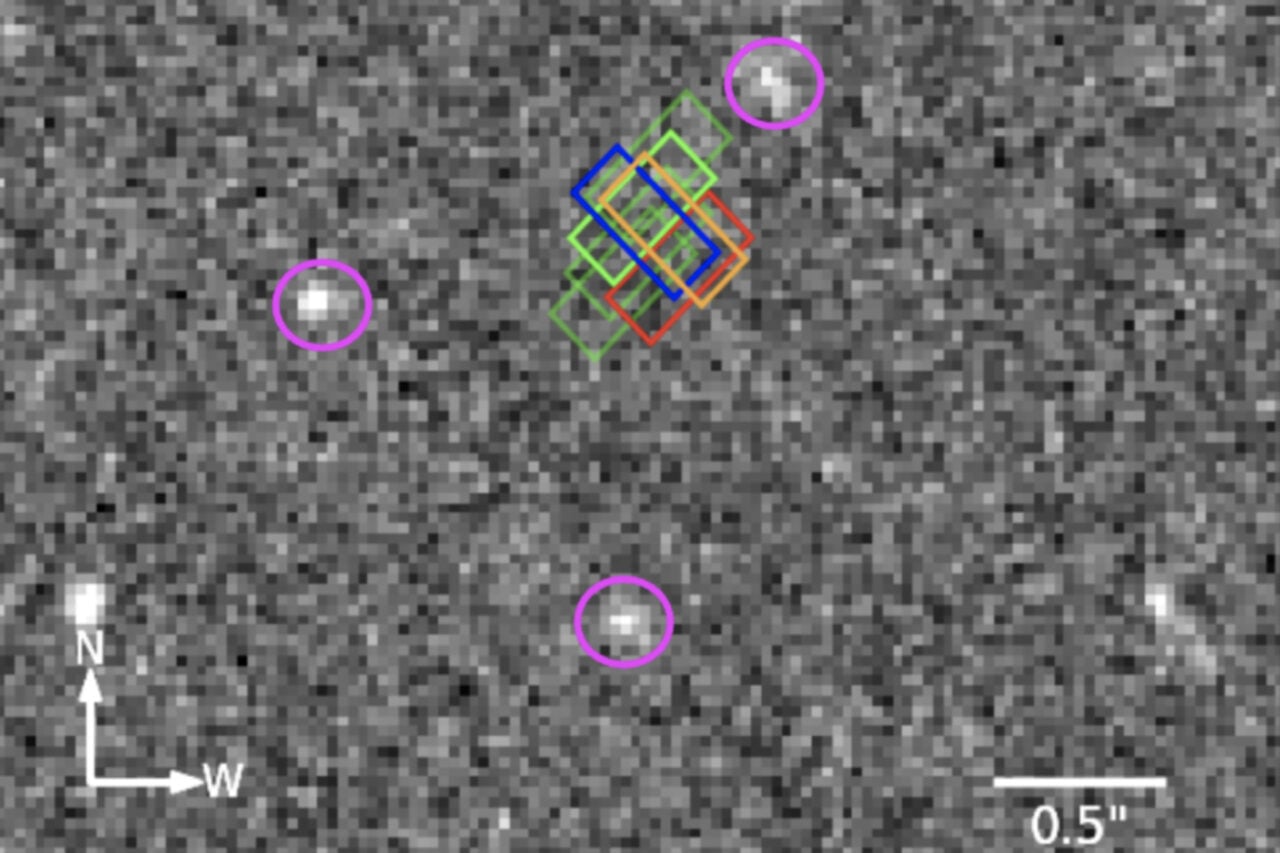
Rubin’s data stream first flagged R631 during observations taken between December 2025 and March 2026. Astronomers and citizen scientists took notice of the trans-Neptunian object while scouring through the observatory’s public alert stream.
The object is currently at a distance of 32 astronomical units (about 30 times the distance between Earth and the Sun). It takes approximately 547.84 years to complete one orbit around our star. It will reach perihelion, its closest approach to the Sun, on October 31, 2047, at a distance of about 24 astronomical units, according to EarthSky.
Astronomers believe R631 may be a comet measuring approximately 62 miles (100 kilometers) wide. If it is indeed a comet, it may begin to show some activity or outgassing of its material as it gets closer to the Sun.
As to why R631 orbits the Sun in a retrograde motion, there are two competing theories. Scientists believe the object could have been born in a different star system, which happened to come too close to our own. It may have then been tossed out of its stellar neighborhood and captured by the Sun’s gravitational pull. That would make R631 an interstellar object, joining the ranks of ‘Oumuamua and 3I/ATLAS, but with one key difference: R631 would have been captured into orbit around the Sun.
On the other hand, R631 may have been the product of our solar system and was flung into its retrograde orbit after a close brush with a large object like Jupiter or Neptune.
Scientists will continue to track R631, which will soon get an official designation from the Minor Planet Center, as it approaches closer to the Sun in hopes of gathering more clues to its rebellious nature.