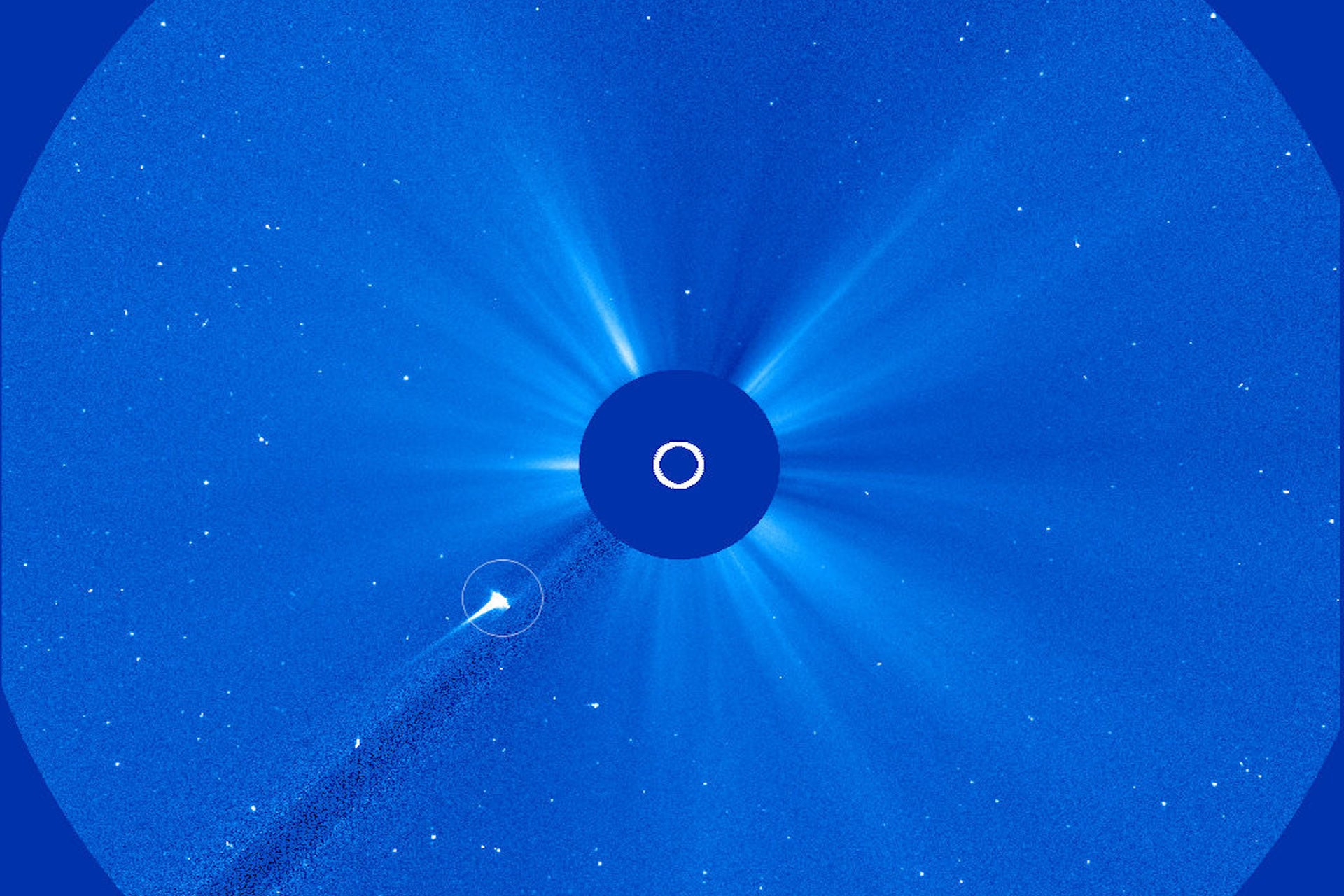
Bad news for skywatchers: A sungrazing comet that was set to put on a bright display succumbed to a fateful encounter with our host star.
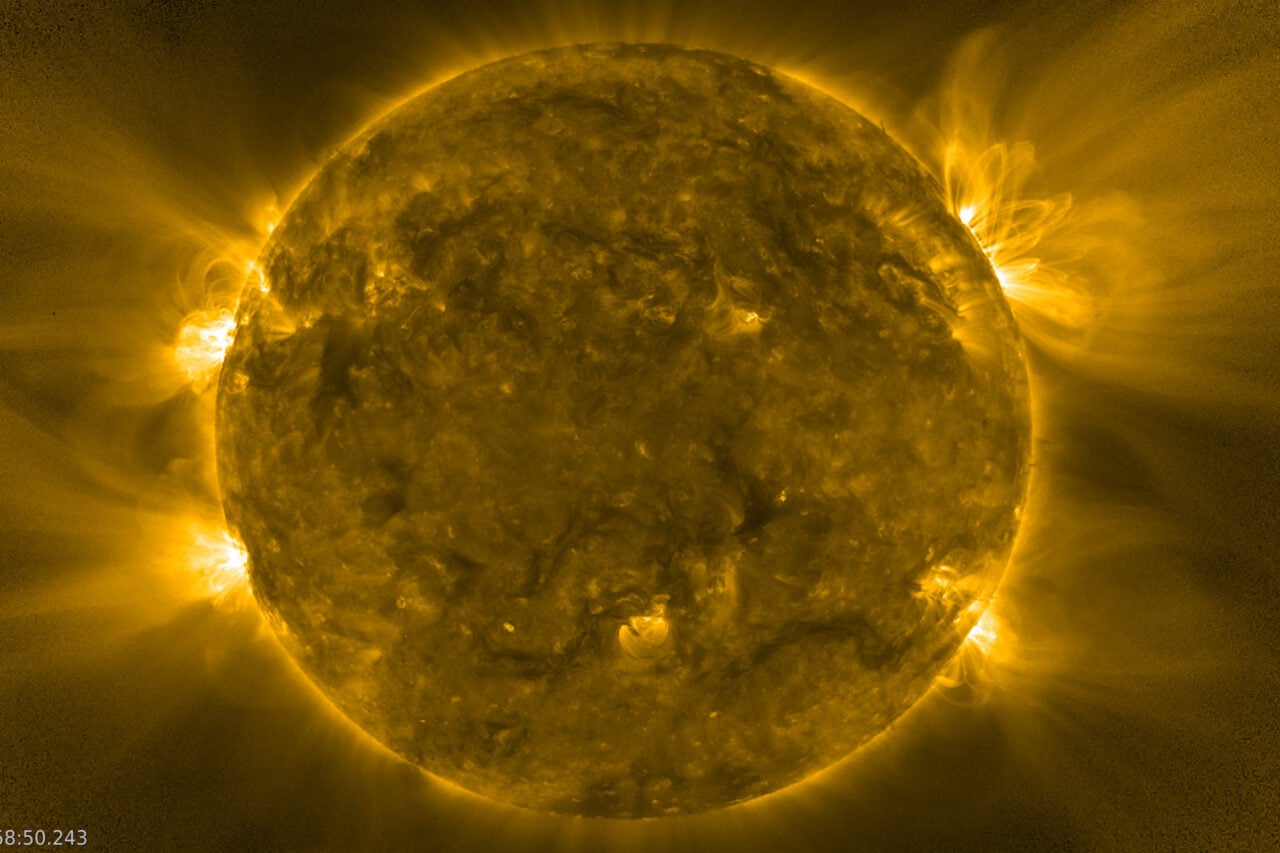
Comet MAPS (C/2026 A1) was obliterated during its perihelion, or closest approach to the Sun, on Saturday, April 4. The Solar and Heliospheric Observatory (SOHO) captured the comet’s death dive as it came within 99,000 miles (160,000 kilometers) of the Sun’s atmosphere.
Lights out
The joint NASA and European Space Agency (ESA) SOHO mission constantly watches the Sun from about 932,000 miles (1.5 million kilometers) away.
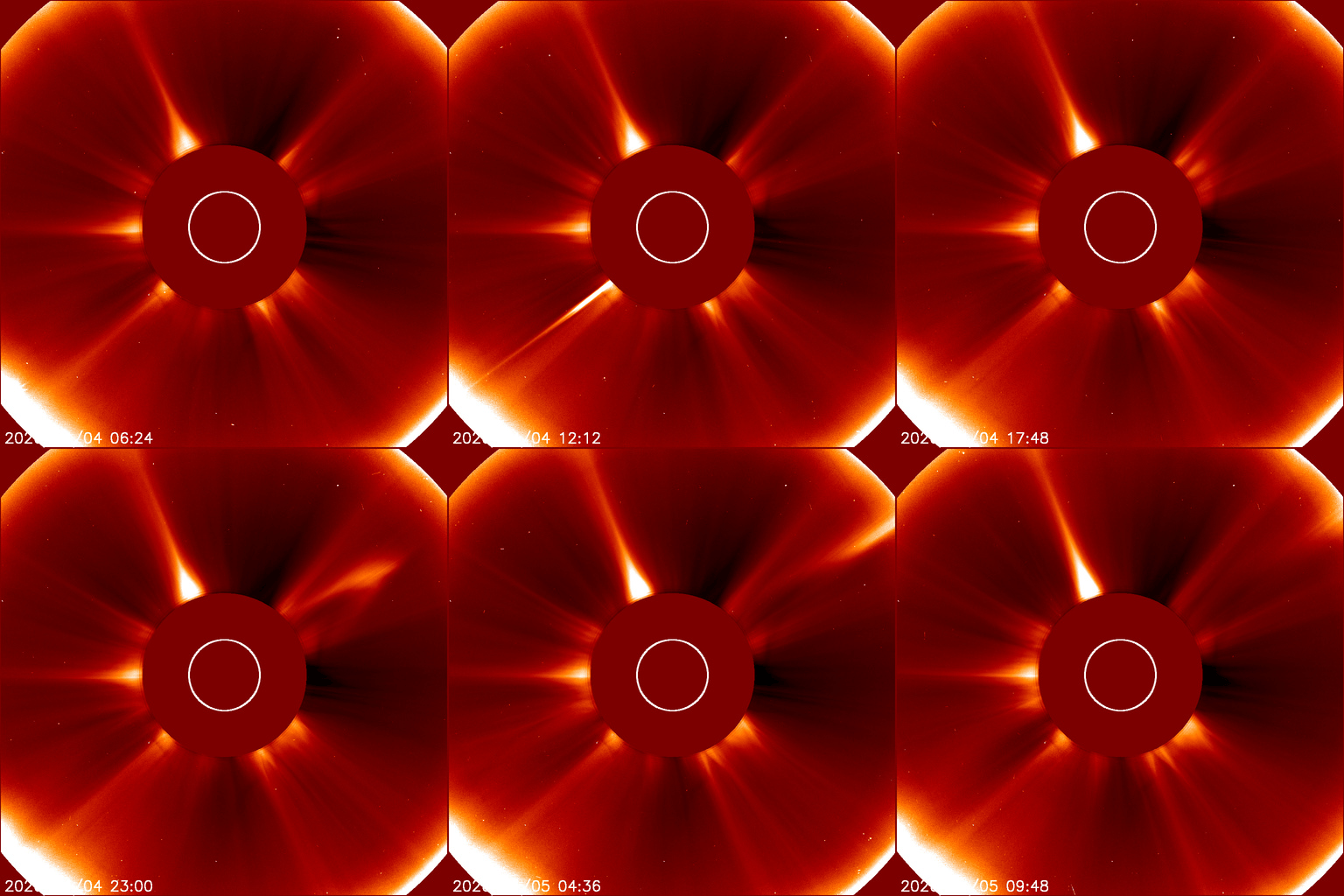
During its observing run earlier this week, the spacecraft’s coronagraph captured comet MAPS racing toward the Sun for a close encounter. As the video shows, right before the comet breaks apart, there’s a sudden brightening that was likely due to its nucleus exploding from the intense heat.
After the nucleus exploded, the comet was left behind as a ghostly tail with no head. As the comet hid behind the coronagraph’s disk, its fragmented nucleus vaporized and a trail of dusty debris exited from the other side.
Haunting the skies
Astronomers and skywatchers were hoping for a different ending for MAPS. The recently discovered comet is part of a group of comets called Kreutz sungrazers, which get their name from their uniquely close approaches to the Sun during perihelion.
If MAPS hadn’t been destroyed by the Sun during its close approach, it may have become a bright object visible to the naked eye with a peak magnitude of -4 (around the same brightness level as Venus).
Sungrazing comets are likely broken-off fragments from a larger object that may have broken apart centuries ago during its own solar meet-and-greet. Most sungrazers are tiny comets, which is why they tend to either completely disintegrate or crash into the star during their close approach.
Comet C/2024 S1 (ATLAS) also met its unfortunate demise during its closest approach to the Sun on October 28, 2024, breaking apart into cosmic rubble. Comet Lovejoy, on the other hand, survived its perihelion and emitted a unique blue and green glow that lit up the night skies after its closest approach in 2011.
Astronomers first spotted comet MAPS on January 13 from the AMACS1 Observatory in the Atacama Desert in Chile. At the time of discovery, Comet MAPS was 191 million miles (308 million kilometers) away from the Sun and it was extremely faint at an 18th-magnitude brightness. It showed promising signs as it increased dramatically in brightness over time, as sky watchers enthusiastically cheered the comet on.
Alas, MAPS wasn’t one of the lucky few sungrazing comets that survive the intense heat of the Sun, disappearing from view before it got to put on a show.