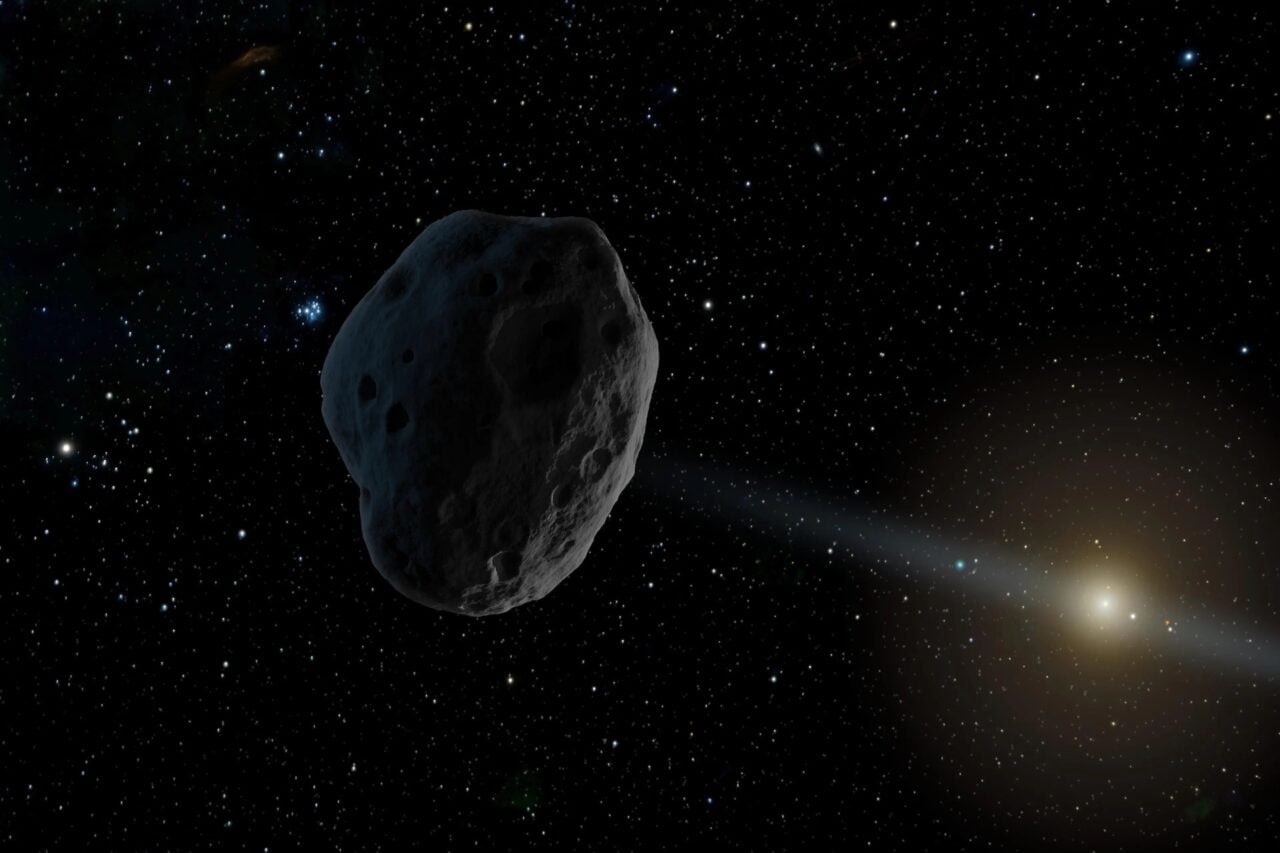
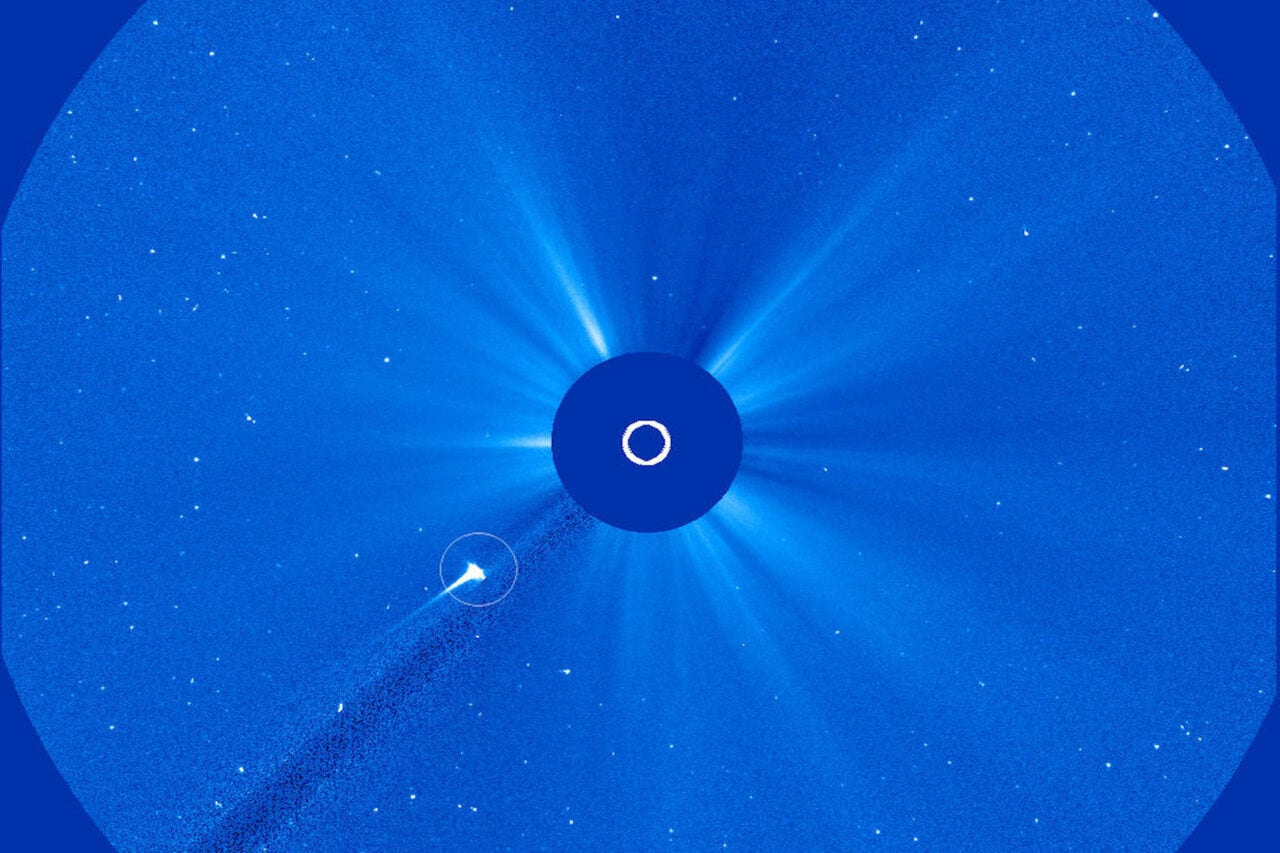
C/2025 K1 (ATLAS) was on its way out of the solar system when it did the fateful thing that many comets do.
Comet MAPS (C/2026 A1) is set for a dangerous brush with our star.
The JUICE mission snapped photos of Comet 3I/Atlas after surviving its closest approach to the Sun.
A fresh analysis of Comet 41P/Tuttle-Giacobini-Kresák observations suggests it abruptly reversed its spin after its last Earth flyby—an extreme and unprecedented change.
All conditions favor a dazzling show across the skies this weekend.
Astronomers found evidence of three rings around Chiron, which orbits the Sun between Uranus and Saturn.
Conditions are near-perfect to spot this celestial visitor, which won't appear again in our night sky for another millennium.
Comet 3I/Atlas has disappeared from Earth's view, but it can still be spotted from Martian skies.
Comets Lemmon and SWAN may be visible around the same time as they race across the solar system.
The recently discovered interstellar object 3I/Atlas is set for a close flyby of Mars in October, where it can be observed by orbiters around the planet.
The first JWST survey of 3I/ATLAS revealed more of the comet’s surprising characteristics, helping astronomers gain a clearer picture of where it came from.
A recent study claims to have found new geochemical evidence of an Earth-altering comet impact at the end of the last ice age, but skeptics still aren't convinced.
The recently discovered comet is the third interstellar object discovered wandering through our solar system.
The Gemini North telescope in Hawaii recently snapped a close-up of the comet that's captured the world’s attention.
This cosmic visitor is now officially named 3I/ATLAS, and it appears to be a comet from another solar system.
The newly discovered comet, C/2025 F2 (SWAN), is racing toward the Sun, and it may not survive its closest approach.
Set your eyes on the night sky this week and you may catch a glimpse of the New Year comet.
The Quadrantids will peak on Friday, dazzling night skies with 20 to 30 meteors per hour.
They look like asteroids, but act like comets.