Much like EA Sports FC, the Football Manager series has become an annual ritual for budding tacticians. Every year (or almost), a new installment arrives a few weeks before Christmas with its share of new features. But do you know where the series comes from? It all started with Championship Manager, released in 1992 and created by two English brothers, Paul and Oliver Collyer. On the family farm in Shropshire, the pair, both Everton fans (Liverpool’s crosstown rivals), spent every weekend listening to matches on the radio. A passionate soccer fan, Paul Collyer was also a home computer enthusiast, and he developed an early forerunner of Championship Manager on the BBC Micro, a computer that was a big hit in Britain. Why build it? He wanted to make up for a terrible radio signal, especially since the family couldn’t get teletext either (the text pages broadcast alongside TV channels) because their TV reception was just as unreliable. Anyone who has ever been stuck with a painfully slow internet connection will understand.
In the mid-’80s, League Division One, Mexico ’86 and… Football Manager (which has nothing to do with the series we know today) were part of the two boys’ everyday lives. But they were frustrated by the lack of continuity in these games: every season started from scratch, and there was little interaction between teams. So the Collyer brothers decided to build their own game, one that would make running a club feel truly alive. Since they had grown up following soccer on the radio rather than on TV (remember that awful TV signal), Paul and Oliver focused on content rather than graphics. Fun fact: because they lived on a farm, their project almost never saw the light of day, thanks to a goat that kept gobbling up bits of computer equipment (probably cables and ribbon connectors). It’s the kind of animal story that brings to mind the history of Rare, the legendary English studio that was based for years in a manor house in Twycross, complete with grounds, a pond, chickens, ducks, and horses.
For six years, Paul and Oliver Collyer, who were in high school and then college at the time, worked on their game: Championship Manager. It finally came out in 1992. After a few twists and turns, the brothers’ studio, Sports Interactive, parted ways with publisher Eidos, which kept the Championship Manager name, and the series was reborn as Football Manager under SEGA’s wing. For more than 20 years now, the series has kept soccer management fans busy, and Football Manager 27 carries on that story.
Football Manager 26 paved the way, with two years of development and a brand-new approach. Although it was criticized for its interface and some questionable choices, it was the first installment to use the Unity engine and to take a few risks. Battered by critics and fans alike, the game clearly needed a makeover. So Sports Interactive spent an entire year listening to its community and rethinking everything from the ground up. On the agenda: a reworked interface, tactical instructions given live from the sideline and a brand-new multiplayer mode. Time to take your place in the dugout.
Why Should I Download Football Manager 27?
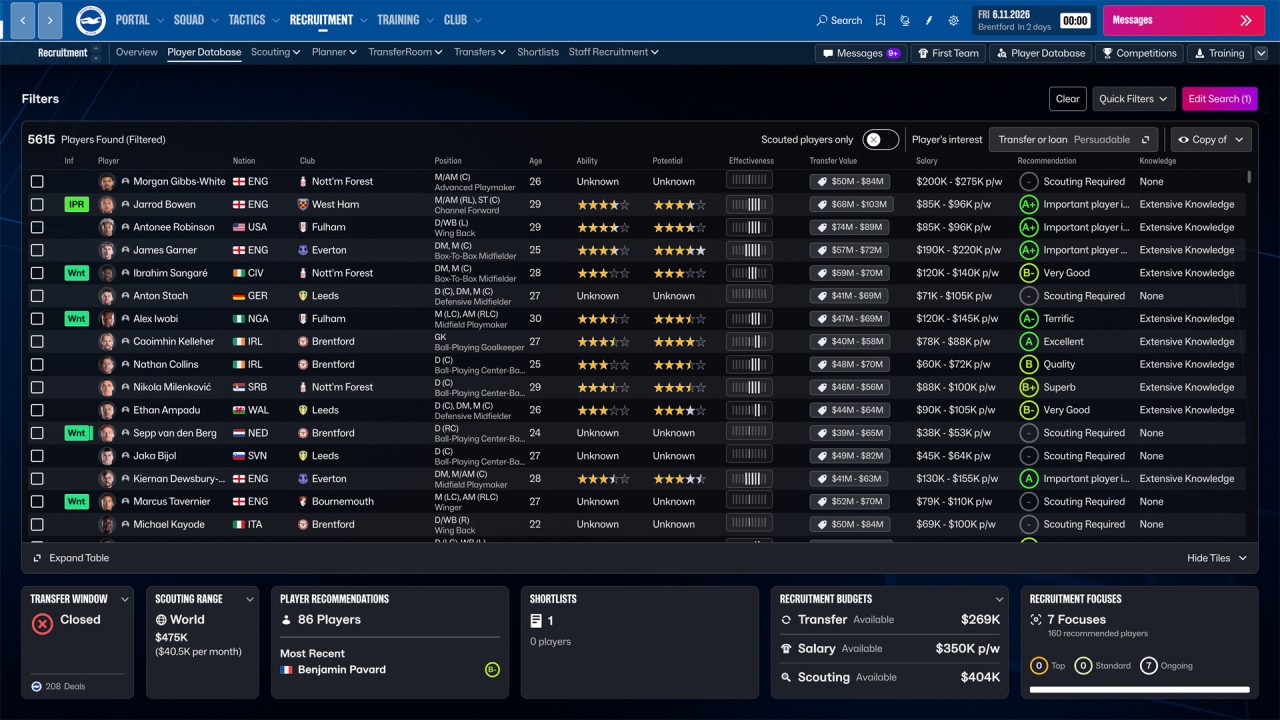
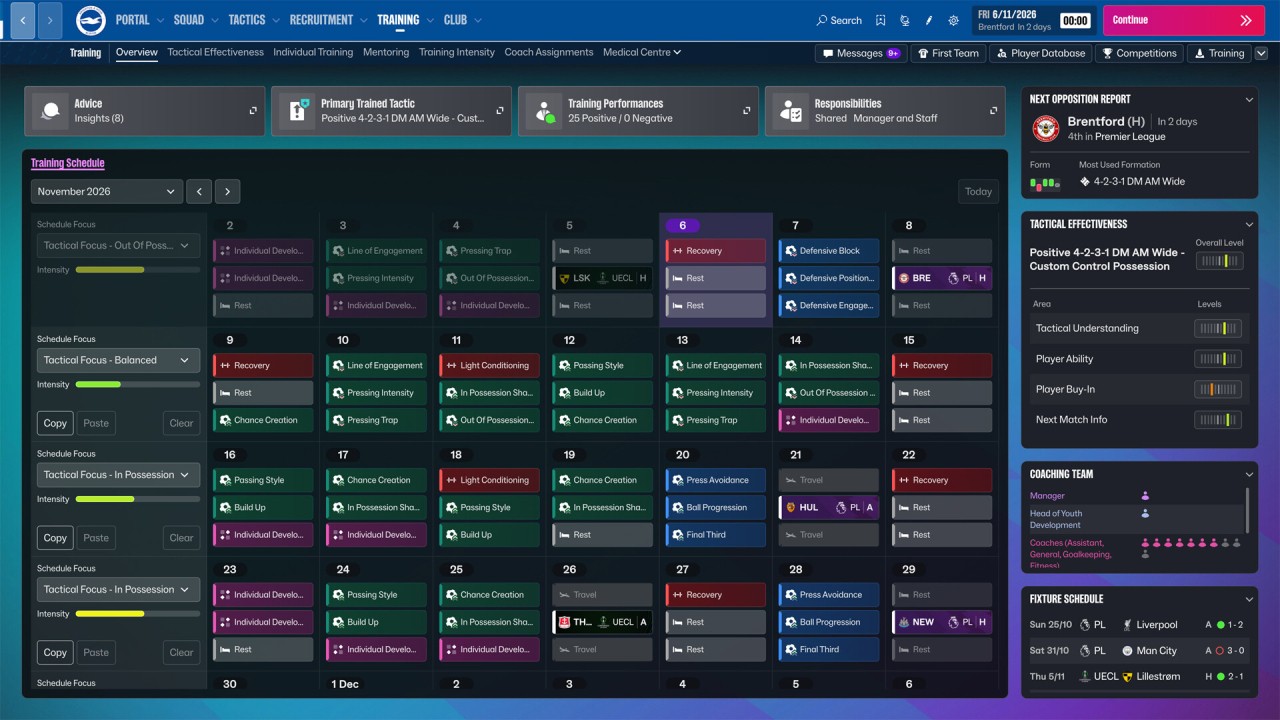
Football Manager 27 is a soccer club management sim. In this series, you don’t control players with a gamepad like in EA Sports FC or eFootball. Instead, you step into the shoes of the coach or manager and lead your team to the top from the sideline. As a result, everything that revolves around a coach’s life is considered: team selection, tactics, transfers, training, press conferences, relations with the board, and more. What’s interesting about the series is that you can take charge of one of Europe’s biggest clubs, such as Luis Enrique’s PSG, Hansi Flick’s Barcelona, or Mikel Arteta’s Arsenal, or opt for a local club with more modest ambitions. Week after week and season after season, you have to deal with the ups and downs of running a soccer club, following matches from the sideline in 2D or 3D, with the 3D matches running on Unity since Football Manager 26.
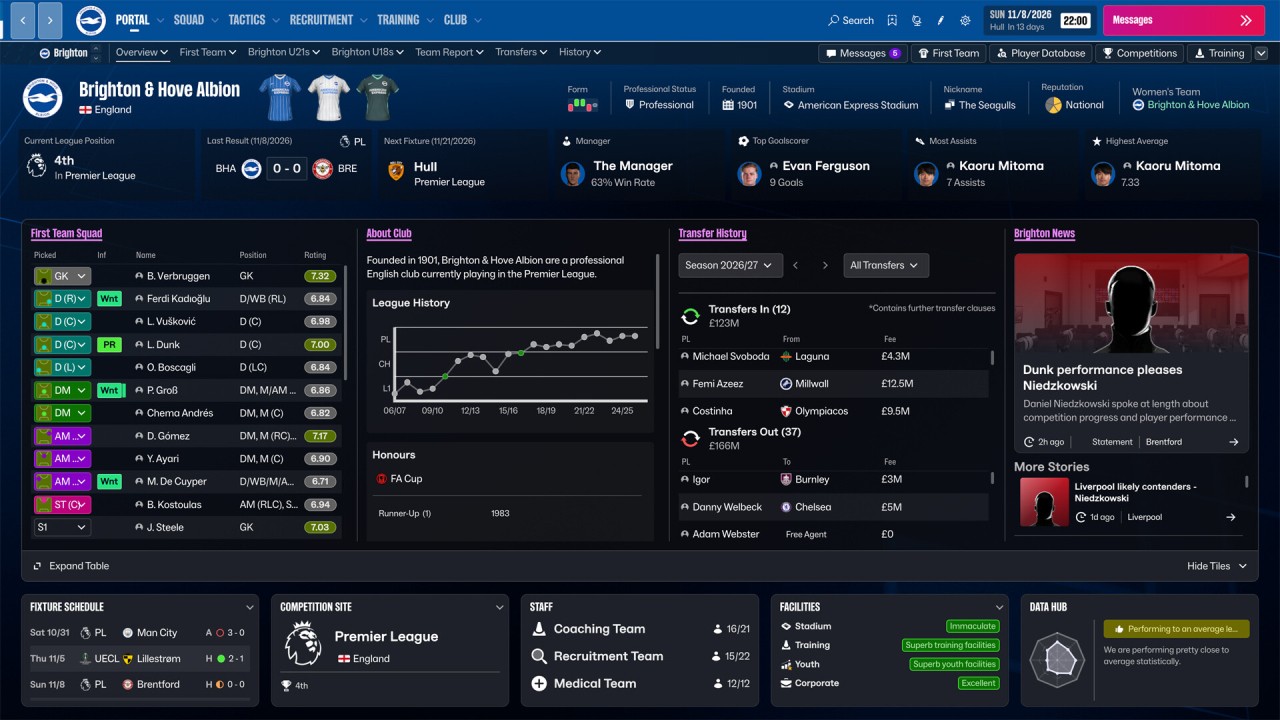
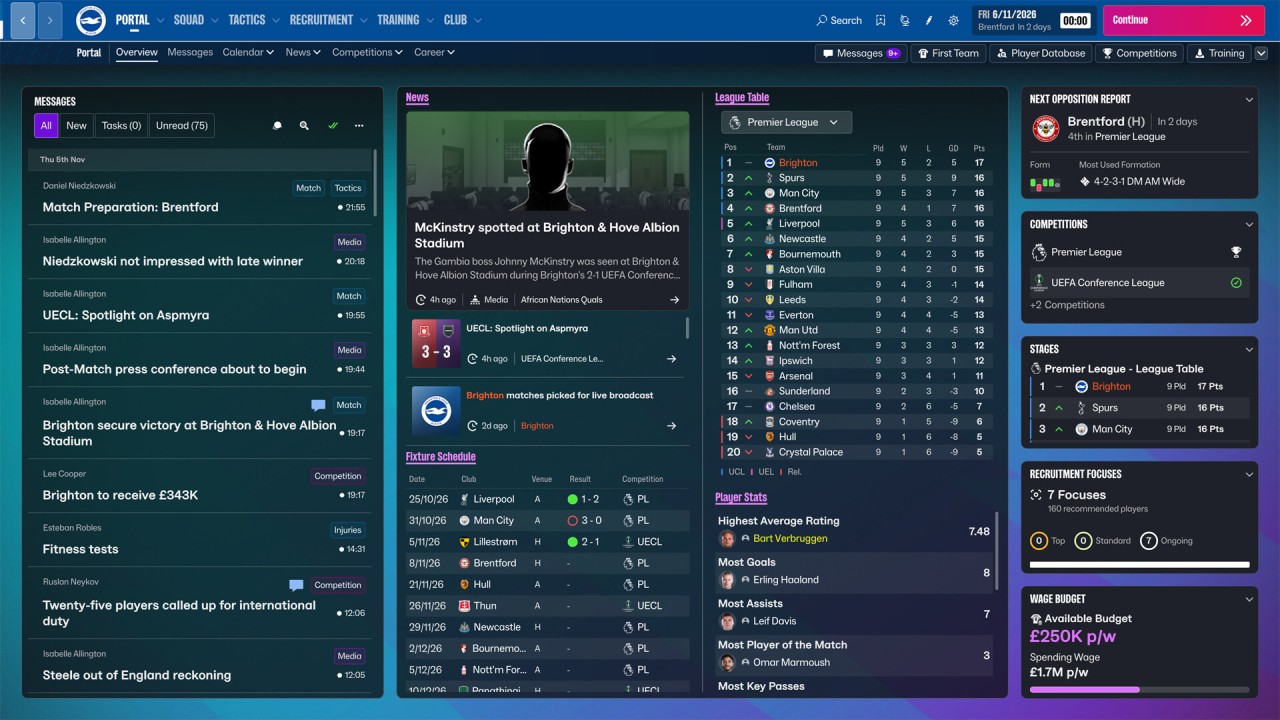
As mentioned above, the previous installment’s interface came under heavy fire and was far from universally liked. Aware of the problem, the Sports Interactive team used FM27 to overhaul it completely. The look is more colorful, the layout is cleaner and less cluttered, and color-coding by theme lets you spot time-sensitive matters at a glance. There are even interchangeable tiles so you can arrange your dashboard the way you like. Another long-awaited feature: you can now customize how often you receive notifications, so they don’t constantly interrupt your progress. In short, fewer clicks and more soccer.
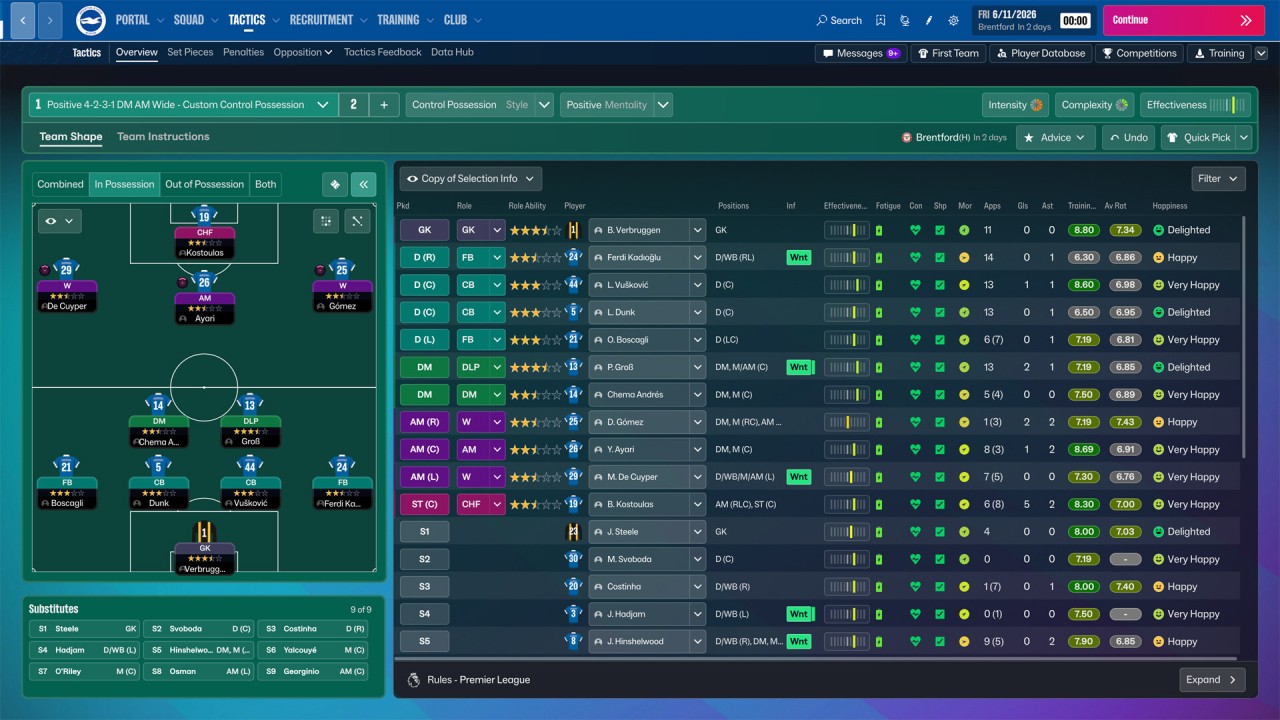
On the field, you can now make genuine tactical adjustments in real time. You can give several instructions at once, straight from the sideline, without going through the tactics menus. The whole experience is more interactive, and you can choose to target the entire team or a single player to adjust the game plan as you see fit. The traditional shouts are back too, those words of encouragement (or angry outbursts) aimed at your players. New indicators also come into play to assess how effective a system is or how demanding it is for your squad. That’s because you’ll have choices to make as you progress, especially when you change systems. You can go for a system your team will pick up easily, but that opponent will figure it out just as quickly. Conversely, a more complex system will cause your opponents problems but will take your squad longer to adapt to. It’s up to you to choose the approach that suits you best.
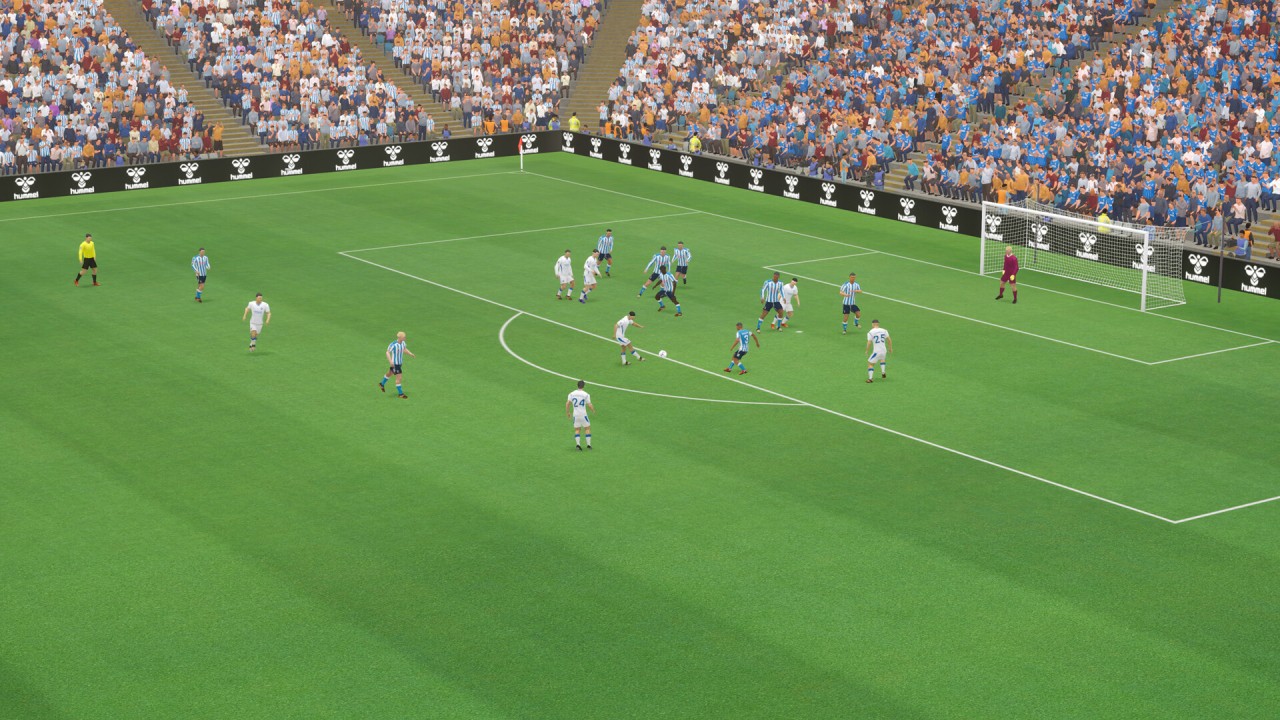
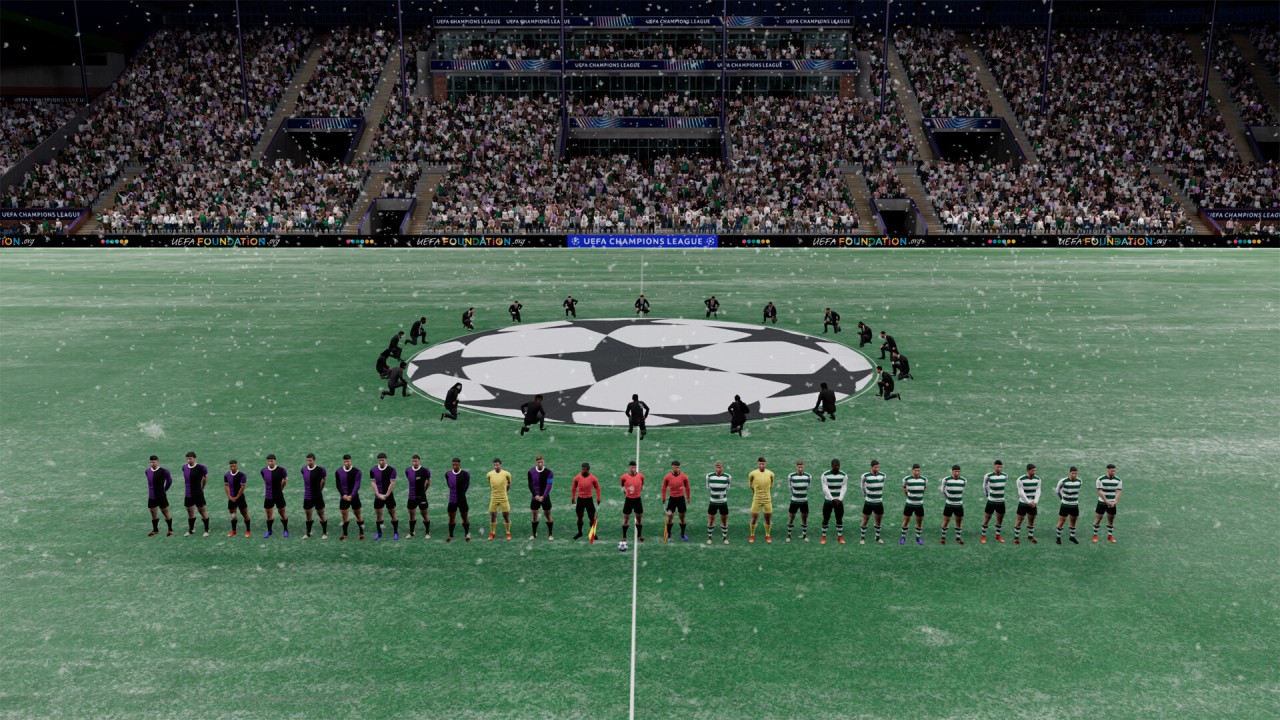
With its database as massive as ever and plenty of new features, Football Manager 27 clearly looks like the series’ redemption. Matches feel more alive than before, animations are more natural, and players look more like their real-life counterparts. There’s even a new camera that follows penalty takers’ run-ups during shootouts. Finally, a word on multiplayer, which aims to be more intuitive and more engaging than ever. While Football Manager 27 isn’t perfect, it feels like Sports Interactive is finally back on the right track after months of going back and forth. Early feedback is very encouraging, and it will be interesting to see what updates bring over the coming weeks and months.
Is Football Manager 27 Free?
Football Manager 27 is a paid game, but there are several ways to play it without necessarily buying it. The game is included in PC Game Pass and Xbox Game Pass Ultimate from day one. Meanwhile, Apple Arcade subscribers can play the touch-screen version, FM27 Touch, and Netflix subscribers can play FM27 Mobile, both at no extra cost.
What Operating Systems Are Compatible with Football Manager 27?
Football Manager 27 is available to download on Windows PC via Steam, the Epic Games Store and the Xbox app, as well as on macOS. The console version runs on PlayStation 5, Xbox Series X|S.
The touch-screen version, called FM27 Touch, comes to Apple Arcade, with the option to pick up your old saves and continue your career from one device to another via the cloud. Finally, the mobile version, simply titled FM27 Mobile, is a Netflix Gaming exclusive available to download on iOS and Android.
What Are the Alternatives to Football Manager 27?
Several games will appeal to those who enjoyed Football Manager 27. To start with, it’s hard not to mention Football Manager 26, released in 2025. The first installment in the series to run on Unity (and the first to use a two-digit number in its title instead of the full year) marked a historic milestone by adding women’s soccer to its database. After a chaotic launch, marred by a heavily criticized interface and the absence of national teams, the game got back on track with a free update that brought back international management, officially licensed by FIFA and themed around the 2026 World Cup. Although it’s flawed in many ways, Football Manager 26 has improved considerably and laid the groundwork for its sequel. It remains a perfectly valid option if you’re looking for an alternative to this new installment.
Also focused on soccer management, We Are Football 2024 aims to be more fun, more humorous, and more colorful. In the spirit of old-school management games, it puts you in charge of every corner of a club, from sponsors and advertising boards to merchandise. Matches are shown in 3D, and of course you can influence your team by shouting instructions from the sideline. A very comprehensive editor also lets you create your own leagues, logos, and jerseys. Lighter and more accessible than Football Manager, it also has the advantage of local multiplayer on the same screen. We Are Football 2024 has proved popular enough for a sequel, We Are Football 2027, to be announced.
How about swapping cleats for tires? Also published by SEGA, Motorsport Manager leaves soccer behind for the world of the paddock, inspired by Formula 1. It puts you at the head of a racing team and has you manage every aspect of the business: hiring drivers and mechanics, designing parts, research and development, managing sponsors, dealing with the media and more. On race day, the adrenaline kicks up a notch as you juggle tire choice, tire wear, the weather, and radio instructions, any of which can change everything in just a few laps. Although it lacks an official license, the game is a credible alternative for anyone who wants to try a management game set in this exciting world.