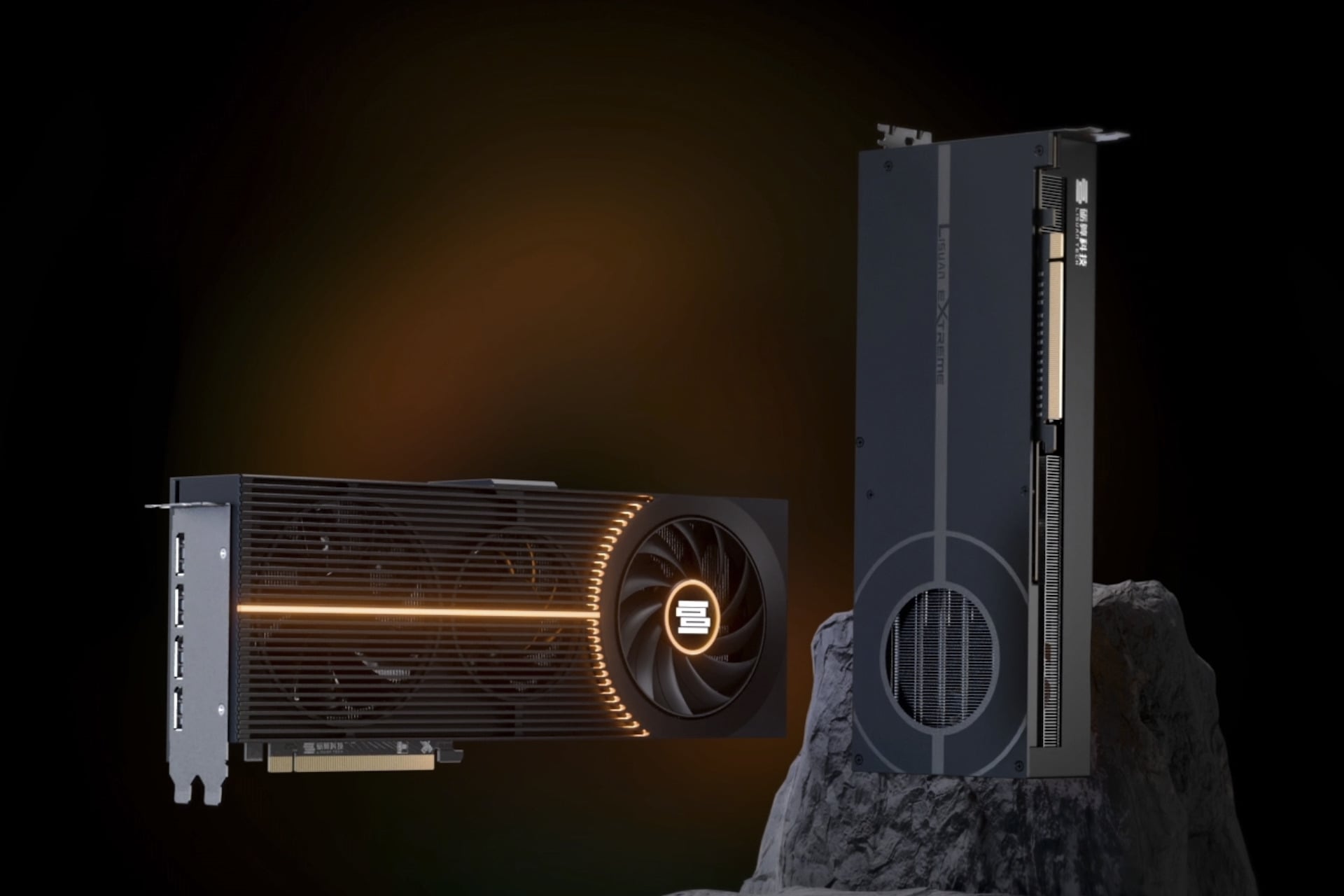
The first wholly China-made graphics card, unfortunately, won’t usurp Nvidia or AMD any time soon. Maybe it doesn’t have to. With GPU and memory prices making building a PC a losing proposition, Chinese brands just have to prove they can take over from companies that have all but abandoned consumer PCs.
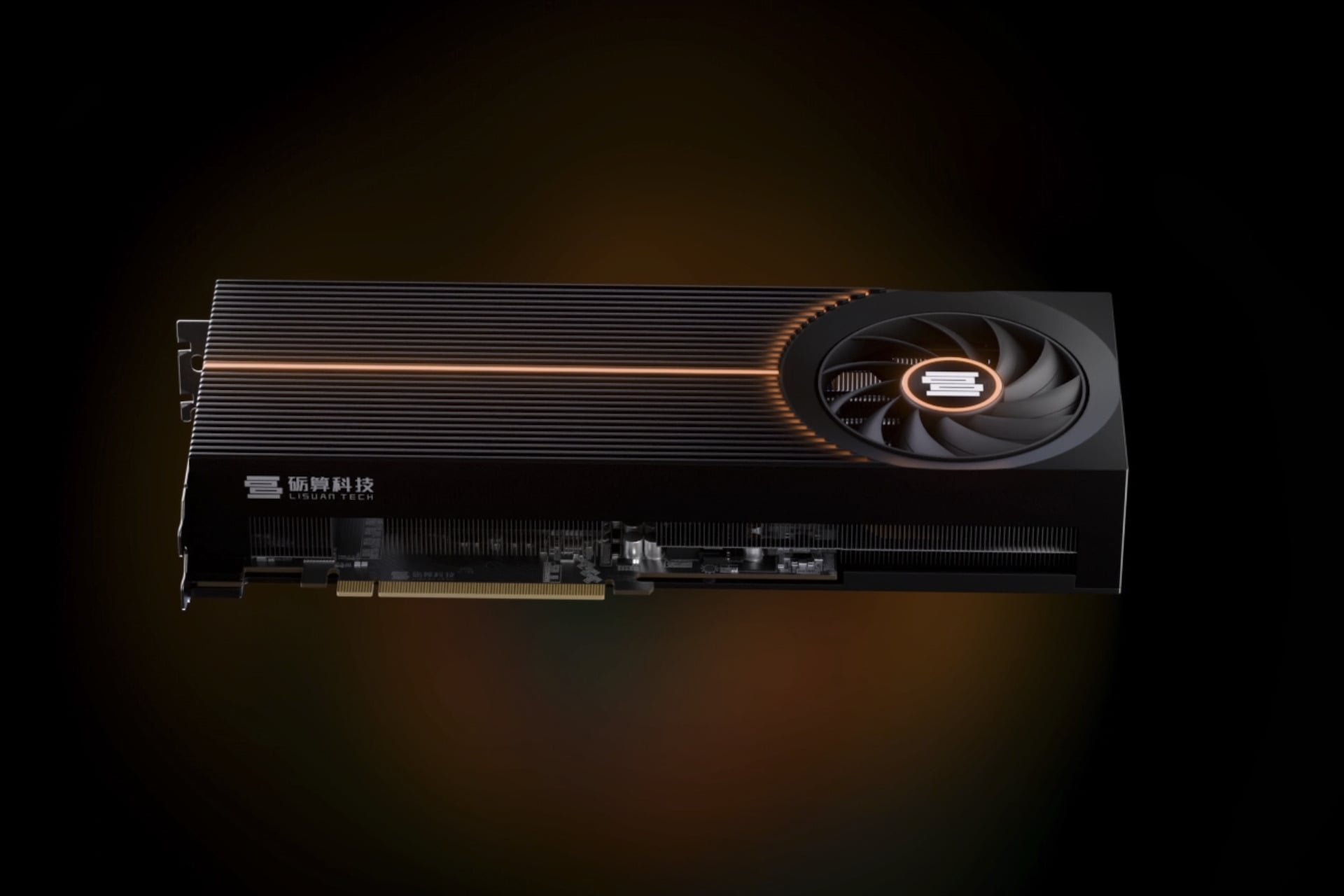
Chinese technology company Lisuan Tech’s first GPU, the Lisuan LX 7G100, is made entirely without Nvidia or AMD’s GPU microarchitecture. The company claimed on Chinese social media it already sold out of its original stock of 30,000 GPUs. Reviewers started slotting it into their PC rigs last week to determine just how capable it truly is, and the results are in.
Equivalent to just under $500 in Chinese yuan, the LX 7G100 competes with low-to-midrange GPUs like the Nvidia GeForce RTX 5060 Ti or an AMD Radeon RX 9060 XT. The GPU runs on 12GB of VRAM, though that doesn’t mean much when cards with just 8GB of VRAM are winning in performance by double digits.
YouTuber Chaowanke (spotted first by VideoCardz) offered benchmark comparisons between the China-made card and other major GPUs in the same family. In tests like 3DMark’s “Fire Strike,” the LX 7G100 hit scores around or just under an Nvidia RTX 3060—a 6-year-old GPU. An RTX 4060 reportedly scores 25% better than Lisuan’s GPU. Intel’s budget-friendly Arc B580 nets 44% better scores in tests like 3DMark’s “Time Spy.” In games, average frame rates for Cyberpunk 2077 running at 1080p on Medium graphics settings with FSR 3 upscaling and frame generation enabled only equaled around 88 average fps. An RTX 4060 can get 232 average fps.
These new GPUs are a confluence of rising tensions between Chinese companies and Nvidia, as well as an obvious gap in the market created by Nvidia’s terrible track record on graphics card prices. What makes the LX 7G100 interesting, despite poor performance, is how it’s a full-fledged GPU compatible with Windows and DirectX 12 as well as the latest Vulkan, OpenCL, and OpenGL gaming APIs. The market has been dominated by Nvidia, to a lesser extent AMD, and—to an even smaller degree—Intel.
PC builders are desperate for some company to produce a single ray of hope for affordable PC components. The market for RAM and SSDs is dominated by South Korea-based semiconductor companies Samsung and SK Hynix, as well as U.S.-based Micron. Each company has completely tuned their businesses to making the HBM (high-bandwidth memory) needed for AI datacenter and hyperscaler projects.
Last week, Chinese memory maker CXMT worked with major component maker Corsair on 16GB sticks of Corsair Vengeance DDR5 RAM. One user with these supposed new RAM sticks spotted CXMT as the manufacturer using CPU-Z software. Gizmodo reached out to Corsair to confirm if it was employing more RAM made by CXMT or whether consumers may expect lower prices in the future. We’ll update this post if we hear back.
At this point, we’ll take anything that may get us over the hump of ballooning memory and component prices.