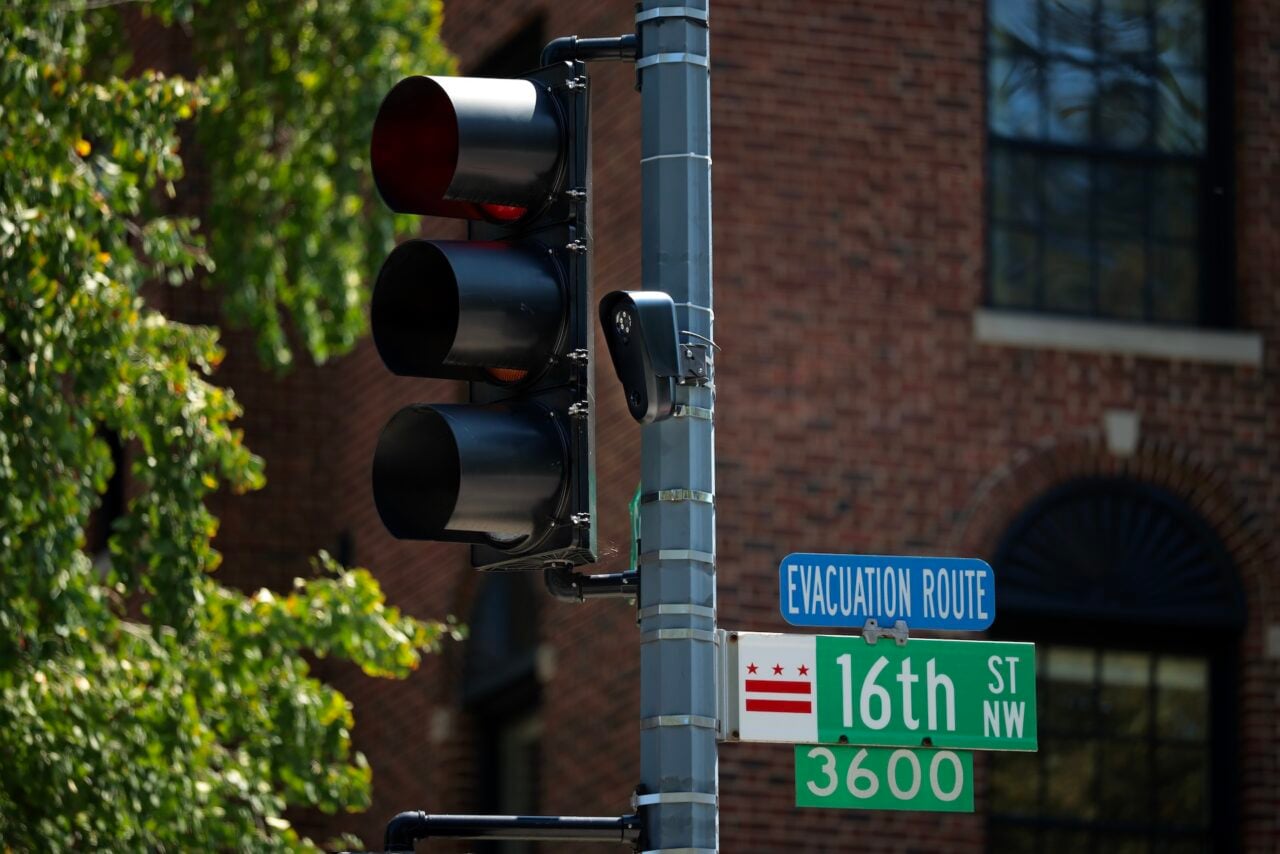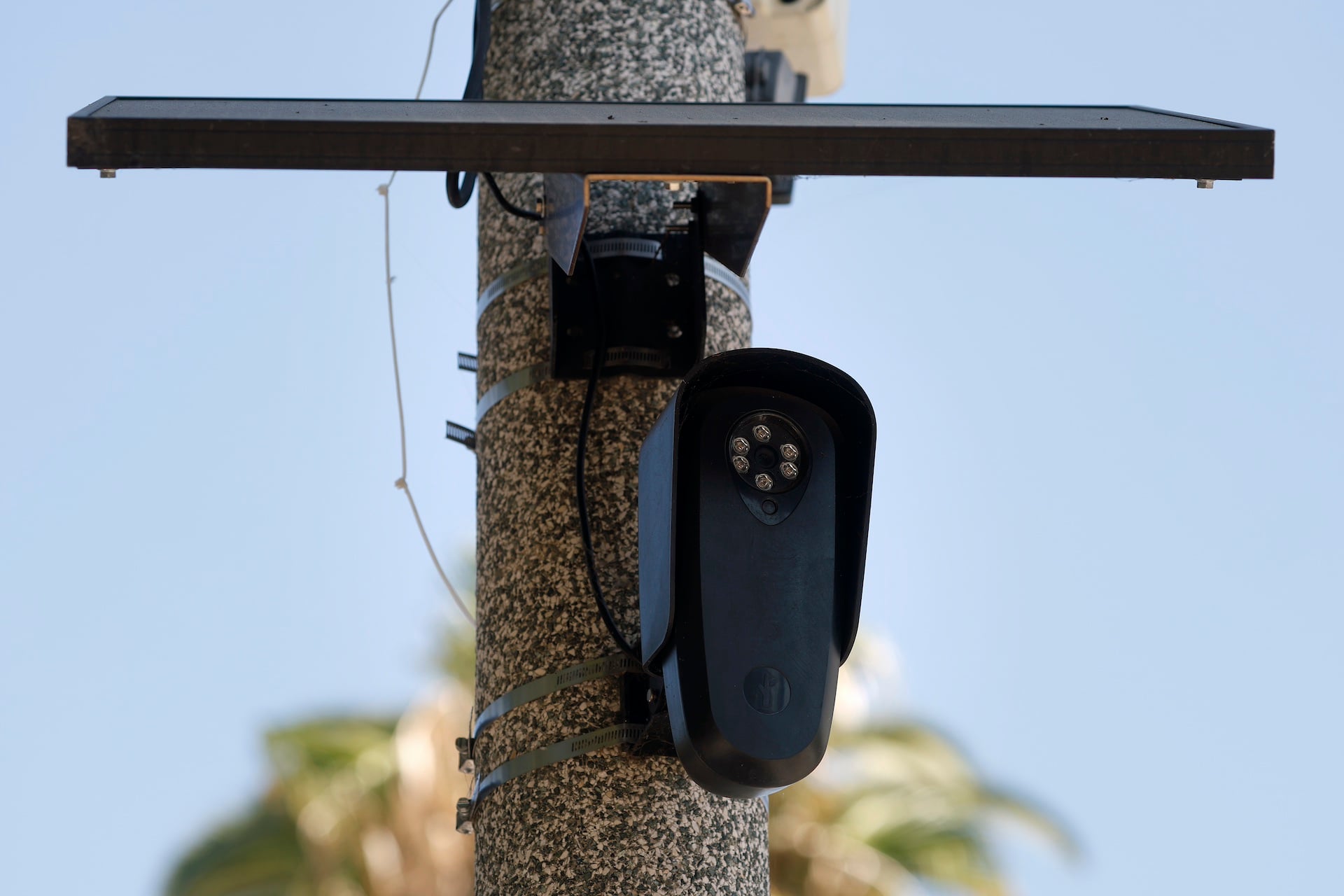
It’s been a tumultuous year for Flock Safety, the Atlanta-based technology company best known for the automated license plate readers (ALPRs) it builds for police departments.
Prosecutors in Marion County, Indiana, on Wednesday charged five Indianapolis Metropolitan Police Department officers with fraud and official misconduct, following investigations that found they had been using the Department’s Flock camera system to track people who were not suspected of any crime, including former romantic partners and women met while on patrol. One of the five officers, an eighteen-year veteran of the IMPD named Jonathan Schultz, was also charged with two counts of stalking; prosecutors found that in one case he lied to a woman by telling her he was an FBI agent and started following her to the gym and other locations, according to The Washington Post, which first reported on cops’ rampant misuse of Flock ALPRs to track and stalk women last month. The Washington Post’s investigation also found that at least fifty police officers had already been charged with using ALPRs for illegal purposes, in some cases for stalking.
Schultz and three of the other IMPD officers charged by prosecutors on Wednesday have been suspended and recommended for termination, according to a statement posted on X by the Department. The fifth officer, Abigail Cramer, resigned; she had been using Flock’s system to retrieve information on relatives of her wife’s ex-wife, who had previously been harassed by Cramer, according to the Post.
“Today is a deeply disheartening and disappointing day for IMPD,” agency Chief Tanya Terry said in a statement. “These individuals’ actions went far beyond a clerical error or a violation of department policy. These actions crossed into criminal conduct and shook the foundation of trust that our agency is built upon.”
The IPMD noted in its statement that the five officers’ alleged misconduct took place before the agency had implemented a new policy around its use of ALPRs, which included a requirement that all searches be directly related to a particular case or incident number, along with “stronger auditing to more quickly identify and investigate potential misuse and ensure every search is for a legitimate law enforcement purpose.” Following the Post’s report last month, Flock said it would roll out new measures designed to prevent future misuse among police departments. As of last month, the company reportedly operated more than 120,000 ALPRs across the United States.
Flock has become emblematic of broader fears among many Americans about the rise of a new AI-powered Big Brother, where ever-greater quantities of citizens’ personal data are surreptitiously gathered, parsed by inscrutable algorithms, and used for shady purposes. Like the many other startups selling AI tools to law enforcement, Flock has tried to position its tools—which also include a “drone-as-first-responder”—as solutions to help departments make faster, more informed decisions in the field. But a lack of regulation around how those tools are built and deployed means that they’re ripe for misuse and unforeseeable mistakes, which in the high-stakes realm of law enforcement can have serious consequences.
The many documented cases of cops misusing Flock’s surveillance and data-collection tools have fanned the flames of public protest against the company, which has included both old-fashioned picketing and a more guerrilla-style campaign of destruction against its cameras. It’s also become a focal point for some policymakers sensing the widespread anti-AI vibe in the approach to the upcoming midterms. Republican Florida Governor Ron DeSantis has ordered the removal of all Flock roadside cameras from the state by the end of the month, and Republican Senator Josh Hawley of Missouri launched an investigation last month into what he described as “an unprecedented national surveillance network.”
Hawley—who also serves as chairman of the Senate Judiciary Committee on Crime and Counterterrorism—held a Senate hearing on Wednesday to discuss how that network operated. The CEO of Flock and his counterparts at three other companies building AI-powered tools for law enforcement reportedly did not attend the hearing after being invited by Hawley.