On Saturday, a U.N.-backed effort in Geneva, Switzerland to hash out rules on AI and autonomous killing machines that started out with high hopes, along with a working paper from none other than the Pope, turned out to be a dud.
According to the wording of a report from the Associated Press, the effort “ran aground.” No binding rules or commitments were created, except for an agreement that talks will continue through 2028.
The effort was the 7th review by a group at the U.N.’s Office for Disarmament Affairs with the bizarre name “the Convention on Certain Conventional Weapons.” It was held in the U.N.’s Geneva office from November 16-20.
If you were getting your autonomous weapons news from X.com, it may have looked, for a moment yesterday, like something amazing had happened:
Step forward on autonomous weapons in #Geneva.
Switzerland welcomes the agreement at the 7th Review Conference of @CCW_UNODA to start work on an international instrument on lethal autonomous weapons systems #LAWS.
Much work lies ahead, but the process is now under way.
CCW… pic.twitter.com/78d7XACaeQ— SwitzerlandUN (@swiss_un) November 21, 2026
An X post from Switzerland’s U.N. representatives wrote that there had been a “Step forward on autonomous weapons,” and included a video of a speaker saying “This now concludes our consideration and adoption of the final document,” after witch the attendees break out in applause.
Unfortunately, it appears they were applauding a final document that was the U.N. equivalent of a text message that says “more soon!” According to unnamed activists cited by the AP, countries with large militaries like Russia and the U.S. prevented anything stronger from being added to the agreement.
Beatrice Fihn a Swedish lawyer whose antinuclear activism won the Nobel Peace Price in 2017 called the agreement “watered down.”
Early this morning, states failed to agree to negotiations on a new treaty on AI weapons. Despite strong public pressure and majority of states wanting a new treaty, the text was watered down to only “elaborate” on “an instrument” with unclear content & no settled legal status pic.twitter.com/QVZ1hEU6DE
— Beatrice Fihn (@BeaFihn) November 21, 2026
“Some will try to call this a success but it falls far short of what people around the world expected of their governments this week. It falls short of what the UNSG & ICRC have called for. & it fell short of what many states themselves described earlier this week as bare minimum,” she continued.
It’s probably too late to put rules in place before fully autonomous systems start killing people without human input. A New York Times report from August detailed how, this past summer, a Russian drone believed to be piloted by an autonomous system appears to have taken lethal action. The system both chooses and destroys valuable targets on the ground like propane tanks, and the report finds that in the process of doing so it may have killed three people including a 19-year-old university student named Tetiana Bubynets—with no human monitor available to tell it not to pull the trigger.
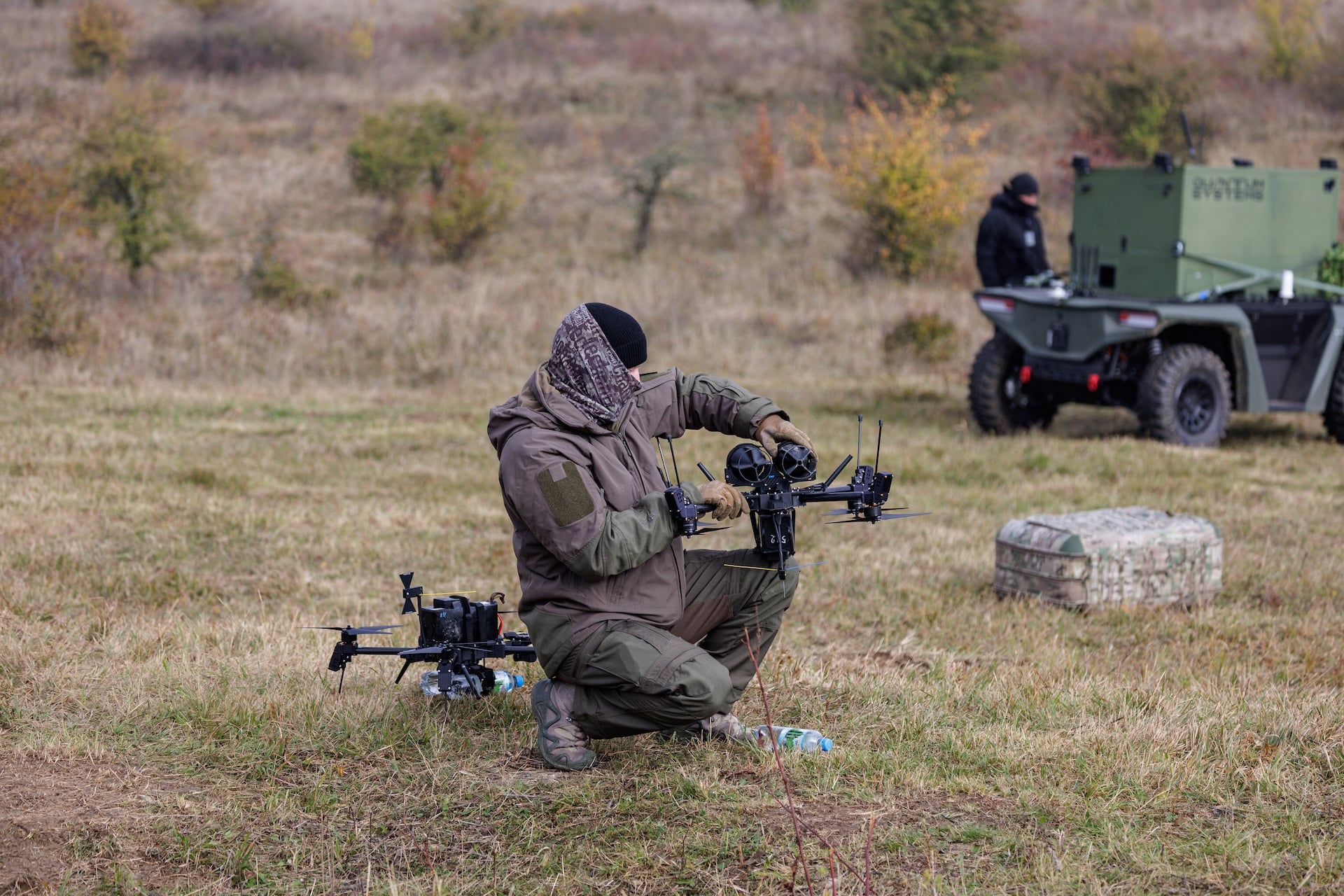
But it’s the U.S. that appears to be leading the world in sheer enthusiasm for autonomous killer robots. A new product simply called “Thunder” from Palmer Luckey-co-founded Anduril Industries is described by the defense blog Resilience Media “an autonomous ‘attack rotorcraft’ co-developed with Archer, aiming to complement (and potentially replace) the work of attack helicopters.”
The anime-style ad Anduril created to hype Thunder helps one imagine how the U.S. and allies such as the U.K. might employ fully autonomous, lethal drones initially—as an accompanying swarm of protector robots, in the air to protect human-piloted helicopters, with their lethality brought to bear, according to Resilience Media, “when the latter are proving to be vulnerable in drone-heavy environments.”

In another post on Saturday, Fihn wrote, “AI weapons are starting to be deployed on battlefields. As the UNSG and ICRC president said in August, ‘a failure to act quickly and decisively will cost lives’,” referring to a statement released by the International Red Cross. “This was a failure to act quickly and decisively,” Fihn added.