The OG Hubble deep field
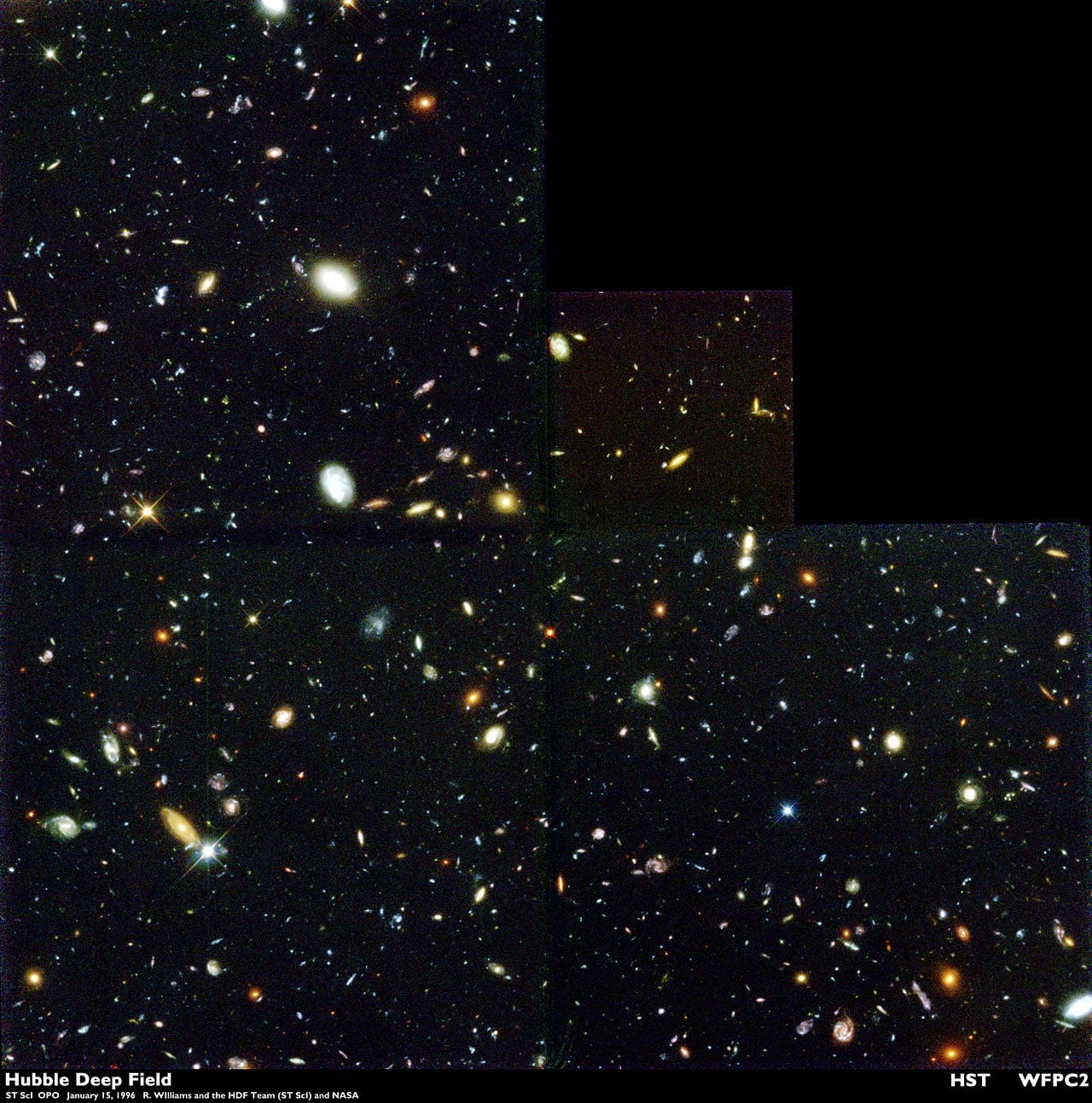
In December 1995, the Hubble Space Telescope focused on a seemingly empty patch of sky in the constellation Ursa Major to capture a groundbreaking “deep field” image of deep space. This project, done over 10 days, was inspired by the intriguing findings from earlier deep-space observations made by Hubble, NASA says. The idea was to circumvent light from our own Milky Way and nearby galaxies to peer as far back as possible into the universe’s history. At the time, media outlets commonly referred to it as Hubble “seeing the Big Bang.”
The deep field presented a staggering tapestry of nearly 3,000 galaxies in various developmental stages, some so ancient that they offered a glimpse into the nascent universe. This image profoundly expanded our comprehension of the universe’s evolution and the complex processes of galaxy formation, but it also made us feel very, very tiny.