Multiple leaks hint that Intel may be formulating plans for a cheaper, less powerful processor that could power a new generation of gaming handhelds—ones that don’t demand well over $1,000. However, unless Intel can somehow conquer all-consuming RAMaggeddon, new handheld PCs will be dead in the water unless the average gamer can actually call them “cheap.”
Specs cited by VideoCardz propose the next chip is called the Arc G3 Play. It’s a cutesy name for handhelds that will certainly seem underpowered compared to what’s available now. The new chip could have a CPU configuration wholly dependent on eight E “efficiency” cores. The Arc G3 and Arc G3 Extreme that launched earlier this year contained two additional P “performance” cores and two extra LP “low-power” cores. This means it’s a wholly eight-core configuration that is going to mean the chip is even more dependent on GPU capabilities than before.
In that vein, Intel may be slashing the number of GPU cores from 12 Xe3 cores on the Arc G3 Extreme and 10 Xe3 cores on the lower-end Arc G3 to just four. Now, we need to pull the underwear out of our crevice, calm down, and consider that reducing GPU cores by two-thirds does not necessarily mean you’ll get two-thirds the amount of performance. At the same time, we expect these handhelds to push lower wattage TDP (thermal design power) with smaller batteries, likely up to 25W. Other, more expensive gaming devices aim for around 35W max TDP.
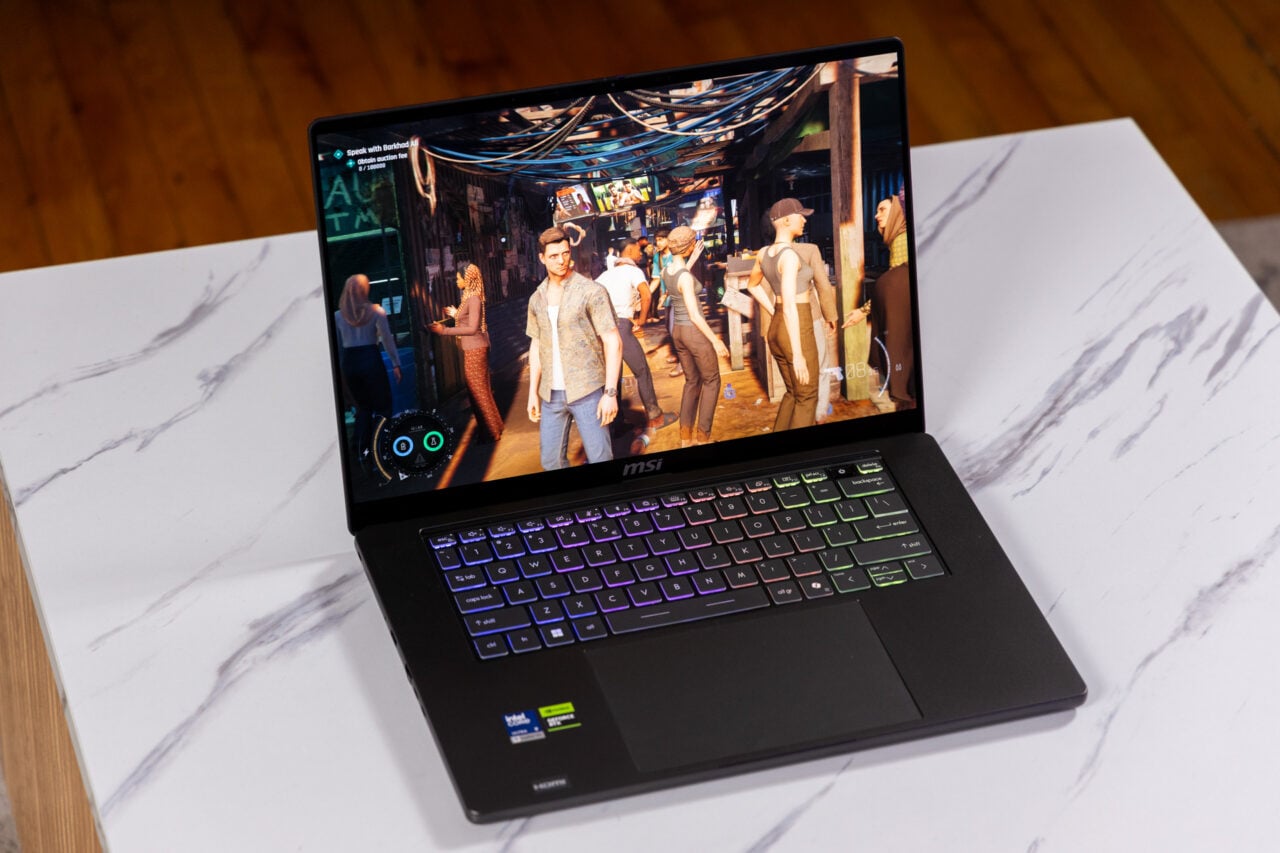
The Arc G3 series is based on Intel’s current Panther Lake series of lightweight laptop chips. Some of those processors are already running a four Xe3 GPU core configuration. For instance, a Dell XPS 14 with an Intel Core Ultra 7 355 does much worse than the same laptop with an Intel Core Ultra X7 358. The latter chip contains the full 12 Xe3 GPU cores and twice the number of CPU cores. That results in close to 60% lower scores in some real-time graphics benchmarks for the Core Ultra 7 355, such as in 3DMark “Time Spy” tests.
It’s clear this proposed Arc G3 Play is going to be a much, much lower-end chip than its current counterparts. It seems to position itself next to competing chips from AMD, specifically last year’s Z2 Go chip exclusive to the Lenovo Legion Go S and the Z2 A only found in the Asus ROG Xbox Ally. Currently, the ROG Xbox Ally is the cheapest of its kind at $600. The Legion Go S is the worst offender, demanding $990 when not on sale.
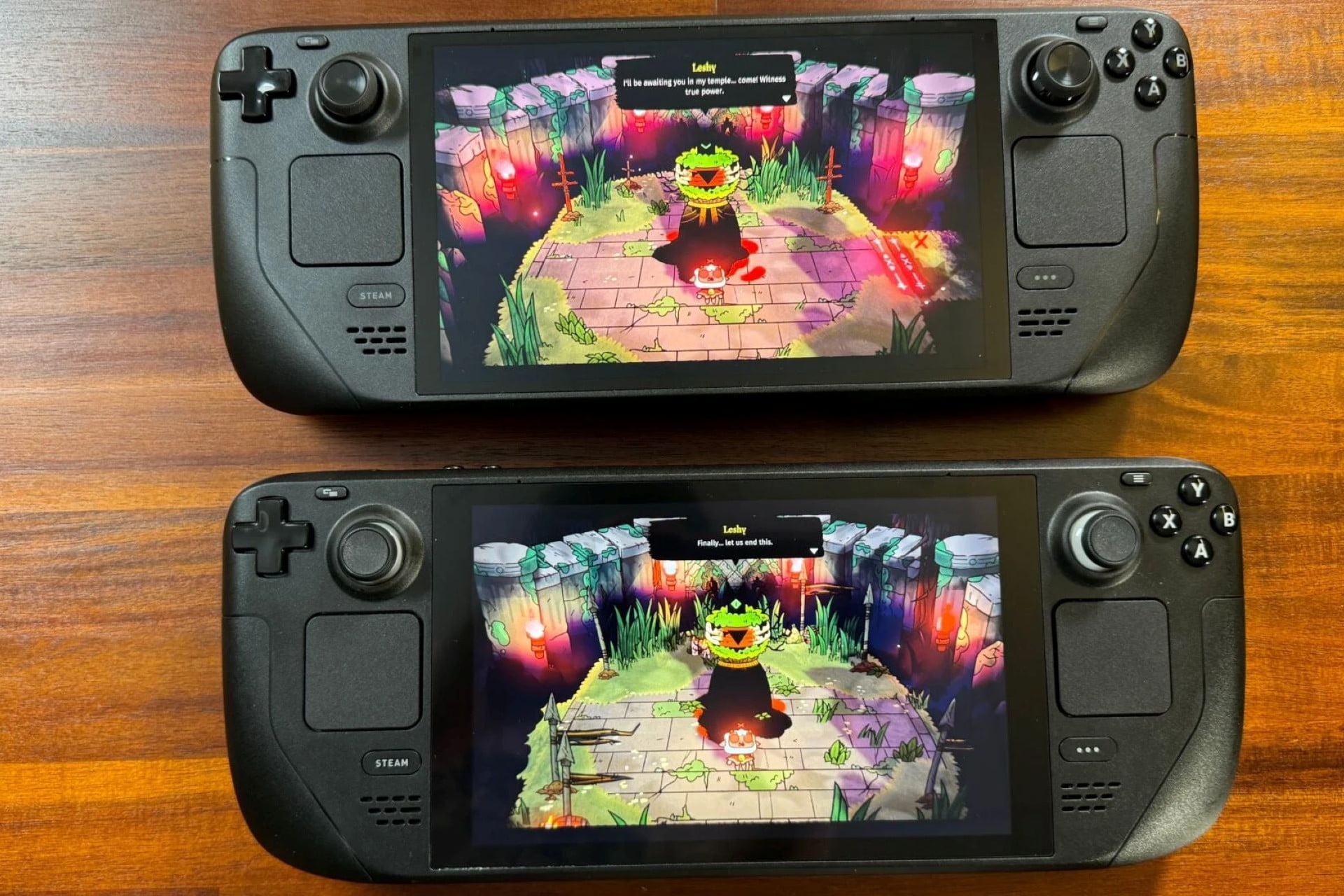
VideoCardz proposed Intel could try to make this handheld chip for devices that cost $800. At that cost, these handhelds would need to sell players on something wholly unique, rather than just giving us Steam Deck-level performance for an obscene price. I expect Intel to push its XeSS software even harder with this generation, perhaps even emphasizing new forms of frame generation to make up for the limited native power.
There was a time when we could actually consider the $500 handheld a good proposition for players looking to take their PC gaming on the go. That was the heyday of the Steam Deck, before RAMaggeddon forced Valve to push the price to $789 for a minimum-specified Steam Deck OLED. There are still many retro game emulators in the $200 to $300 price range, though that market is being squeezed by memory prices just as hard as the major players. Currently, the cheapest Arc G3 Extreme handheld you can buy is an Acer Predator Atlas 8 for $1,450. Judging by these current costs, we may be fruitlessly hoping for a pricing miracle.