Somebody needs to keep mobile gaming alive through these dark times. Thankfully, the company we least expected to make a graphics-centric chip, Intel, is now touting its Intel Arc G3 as the next big thing for handhelds.
The chipmaker has been hinting since CES 2026 that it’s working on an “Intel Core G3.” It turns out that it’s actually releasing two processors: the Intel Arc G3 and the Intel Arc G3 Extreme. As the name suggests, the “Extreme” version features the higher-end Arc B390 GPU, while the lower-end counterpart uses the Arc B370. Both chips are using the same 18A process node as Intel’s Core Ultra Series 3 chips, but this mobile version includes two P (performance) cores, eight E (efficiency) cores, and four more low-power E cores. Compared to Intel’s laptop chips with twice the number of P and E cores, the Arc G3 puts the GPU front and center.
What does all this “Arc” talk actually entail? Intel hasn’t yet offered many details about its new chip, though it has more time to get into the nitty-gritty during Computex 2026. As far as GPU capabilities go, the Arc B390 integrated graphics processing unit is the same as the one found in the Intel Core Ultra X7 358H and Core Ultra X9 388H. It includes 12 Xe3 GPU cores and 12 ray tracing acceleration cores. Don’t expect to max out your Forza Horizon 6 settings on a handheld any time soon, though. The GPU supports a maximum TDP, or thermal design power, of 80W. We doubt any lower-power handheld with a limited battery will be able to max out that TDP.
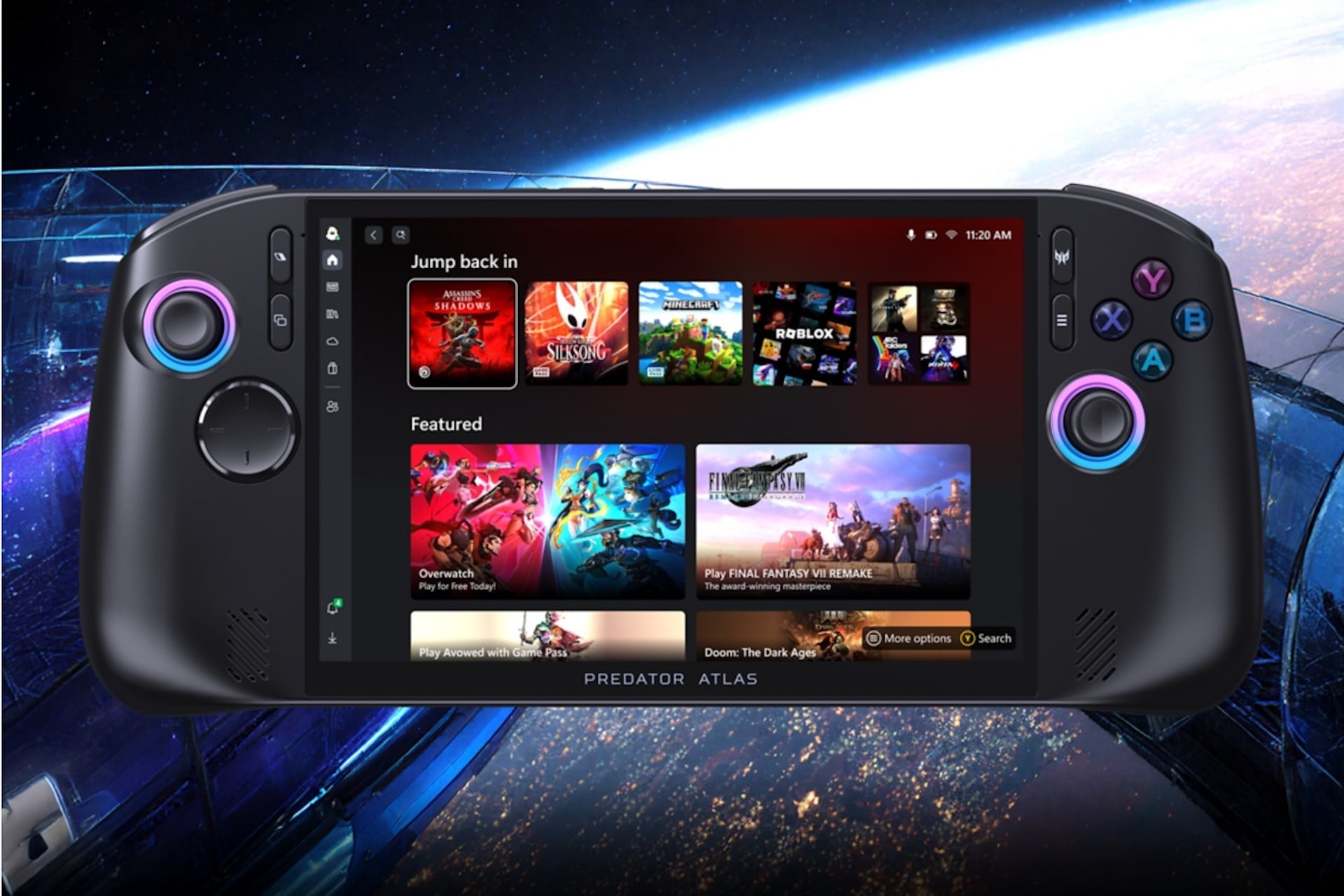
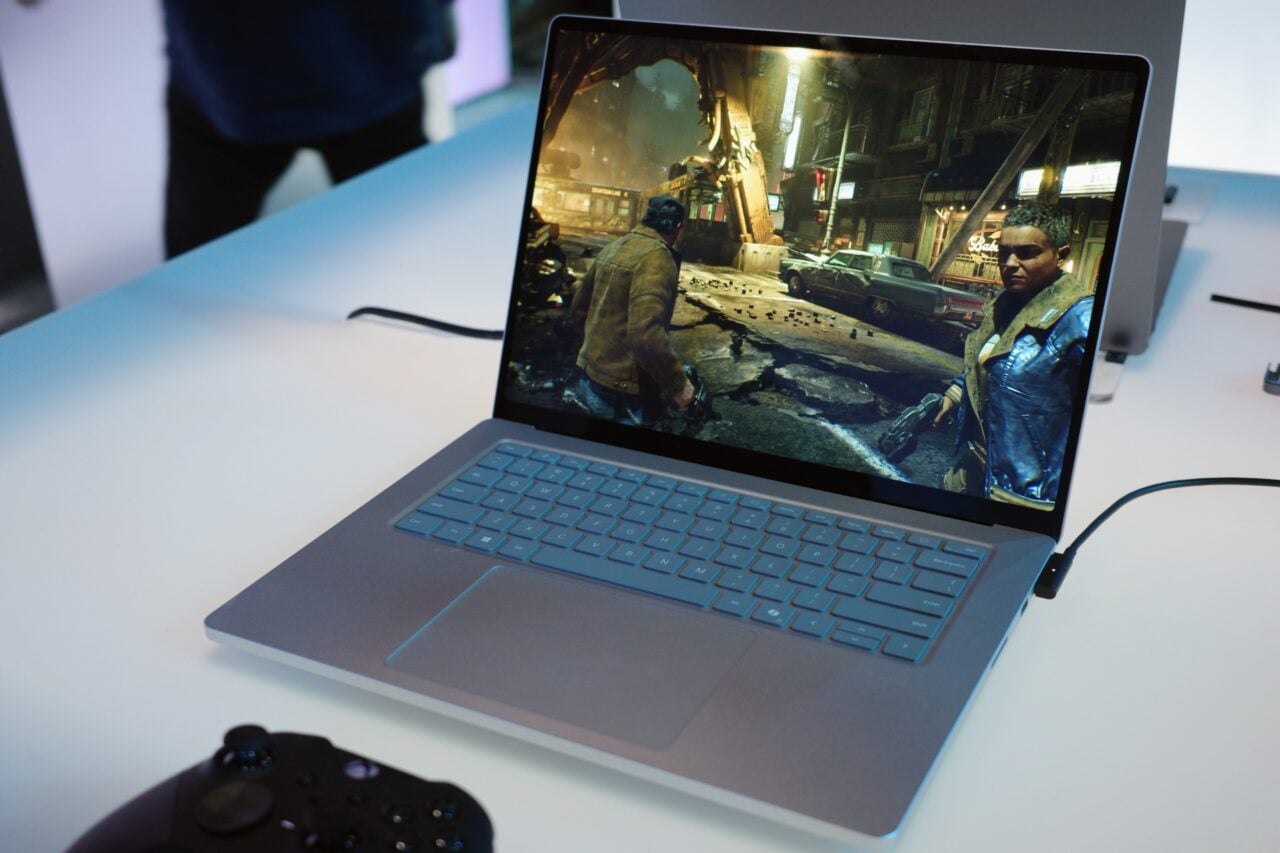
One of the first handheld to support this processor may be Acer’s Predator Atlas 8. Without enough time with Intel-based handhelds, we have no way to know just how well they may perform compared to systems packing AMD’s current Ryzen Z2 Extreme. However, we do have a strong sense of how Intel’s iGPU runs 1080p games on devices like the Dell XPS 16 and the Asus Zenbook Duo. Which is to say, it’s surprisingly capable of hitting playable framerates, especially if you can rely on Intel’s own blend of XeSS upscaling.
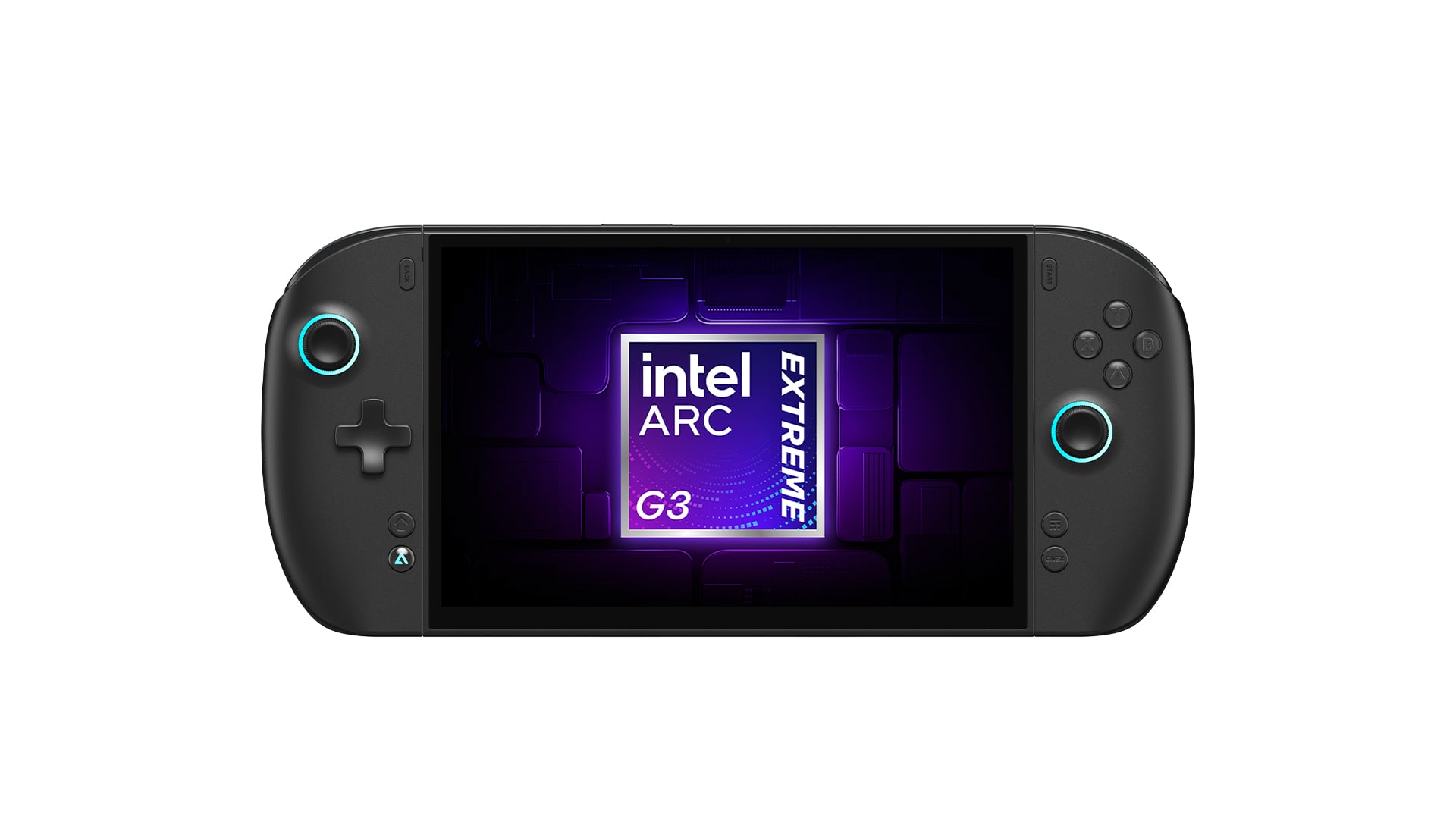
OneXPlayer, a company known for boutique gaming handhelds, also showed off its upcoming Arc G3-based OneXPlayer 3 handheld Thursday. It features removable controllers that attach to an 8.8-inch OLED display. The handheld also comes with a detachable keyboard to turn it into a small-form PC on the go. OneXPlayer is planning to host an Indiegogo crowdfunding campaign for its handheld sometime in mid-to-late June, though we still don’t know how much it may cost.
The last handheld PC with Intel inside was the MSI Claw 8 AI+, but it was powered by a full-scale laptop chip, the Intel Core Ultra 258V. MSI’s 8-inch handheld actually performed very well in Gizmodo’s own tests, making us imagine what would happen if Intel used its GPU architecture in a device dedicated solely to 1080p gaming.
Aside from MSI’s Claw, Intel has let AMD run away with mobile gaming chips for the last few years. But the long-promised Ryzen Z2 and Ryzen Z2 Extreme also didn’t deliver the kind of generational performance to justify handheld prices that quickly exceeded $1,000.
We still don’t know how much handhelds with Intel’s new chips might cost. Laptops with Intel’s graphics-capable Panther Lake haven’t been cheap, and we don’t expect the Arc G3 platform to be any less costly.
This week, Valve spiked the price of its Steam Deck OLED to nearly $1,000 for the 1TB option. That handheld sports a four-year-old custom AMD processor, one that performs worse than any of the more recent Ryzen Z series. We can hope we won’t see $2,000 Arc G3 Extreme handhelds, but if the RAM pricing apocalypse continues, we can only hope for the best and expect the worst.