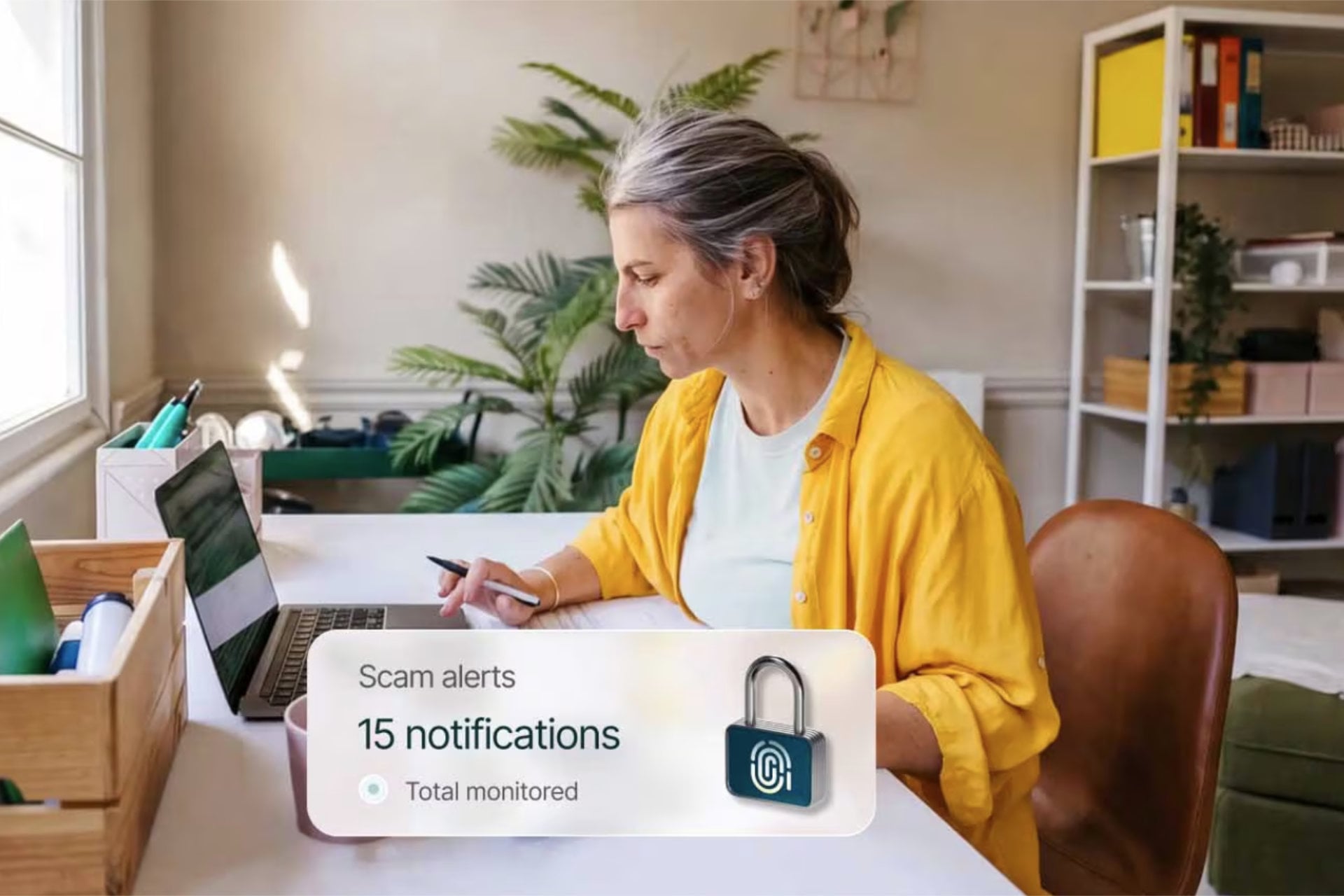
Gen Digital announced on August 19 that LifeLock would begin reimbursing members for money lost to scams, a benefit that sits outside what identity theft insurance normally pays for. The company wrapped it in a wider relaunch: a redesigned app, a new logo and three tools built for fraud that is happening now rather than fraud discovered months later.
The new features are worth separating from the branding. Real-time scam verification lets a member check whether a suspicious message or offer is fake while it is still in front of them. Card Exposure Control looks for card details circulating online and gets them removed. Enhanced anomaly detection watches linked financial accounts for unusual activity.
“In the wrong hands, AI can now forge a face, a voice, even a whole identity, making scams faster, more convincing and harder to spot than even a few years ago,” said Ian Bednowitz, general manager for LifeLock. The company points to its own Fearless Planet Index (launched earlier this year) which it says recorded more than 120 million phishing attacks in a recent 30-day window.
The reimbursement is tiered, and the tiers matter: LifeLock Core (at $10.42 a month billed annually) includes no scam reimbursement at all; Advanced ($16.67) covers up to $5,000 and Total ($29.17) covers up to $10,000. All three sit on top of the identity theft reimbursement that has always been LifeLock’s headline number which runs from $1.05 million on Core to $3 million on Total.
Compare LifeLock’s Scam Coverage
Put those figures next to research LifeLock published in February and the ceilings start to look modest: That study was conducted by Dynata among 1,000 American adults in late November 2025 and it found that more than one in four taxpayers had been a victim of identity theft with an average loss of $8,401 and individual losses reaching $75,000.
The comparison needs a caveat that LifeLock would fairly insist on. Tax refund fraud of the kind measured in February usually falls under the identity theft side of the policy where the ceilings run into the millions, not the scam bucket which is designed for money a victim was persuaded to hand over. The two are different products inside the same subscription. What the $8,401 figure does give is a sense of scale, and $5,000 is on the wrong side of it.
Where LifeLock Still Leads
None of that changes the fact that LifeLock is offering something most of its rivals do not. Scam losses have historically been the gap in identity protection: the policy pays when someone steals your identity, not when someone talks you into sending money. Coveron, Nord Security’s competing service, does cover online fraud up to $100,000 but it has nothing like LifeLock’s real-time verification or its restoration specialists. We compare both against Aura, IdentityIQ and Surfshark in our guide to the best identity theft protection services.
LifeLock also still carries the largest identity theft ceiling on the market at $3 million, adds $1 million for stolen funds on its top tier, and includes dark web monitoring, social media monitoring and automatic data broker removal on every plan, including the cheapest. Its annual plans carry a 60-day money-back guarantee and unlike much of the category it does not run a two-year introductory rate that doubles on renewal.