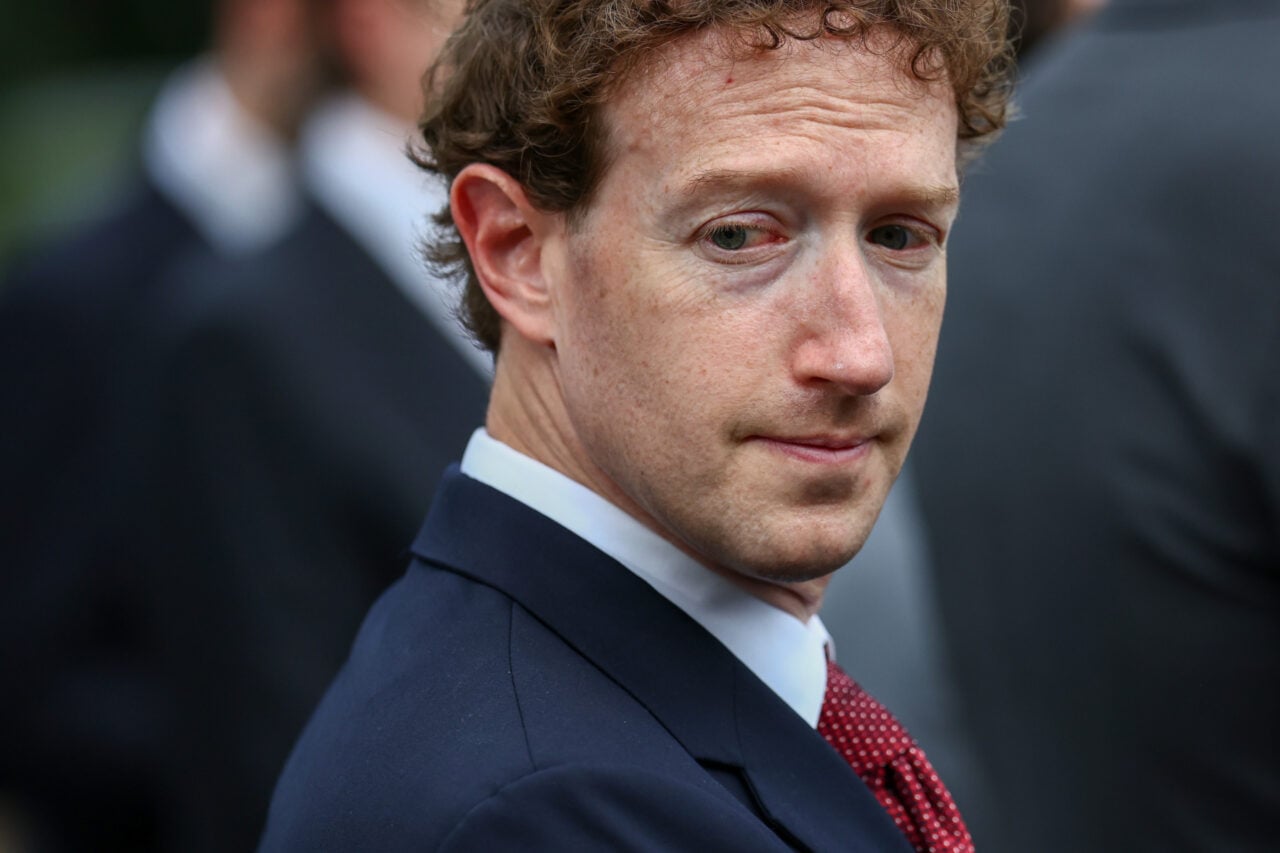
Mark Zuckerberg became a multibillionaire by building Facebook, the platform which more than any other ushered in the age of social media. His wealth has steadily grown since then as he’s tried—with varying degrees of success—to capitalize on one cultural trend after another: the metaverse, AI, and Gen Z haircuts, just to name a few.
His latest culture vulture endeavor? A predictions market app, apparently.
According to a Tuesday report from the New York Times, Meta is currently developing a smartphone app that would work similarly to apps like Polymarket and Kalshi, through which users can place bets on events as far-flung as the outcome of sporting events, to the fluctuations of the stock market, to the success of overseas military operations.
Referred to internally as “Arena,” Zuckerberg’s planned prediction markets app is reportedly being built by a small team within Meta and would operate separately from the company’s other apps, which include Facebook, Instagram, WhatsApp, and Messenger. Citing anonymous sources, the Times report also said it was possible the project would be killed before it becomes publicly available. Unlike Polymarket and Kalshi, users of Meta’s app would not bet actual money, but would rather be rewarded via a video game-like point system. The unnamed sources also told the Times, however, that eventually making it possible to bet money through the app wasn’t entirely off the table.
The not-so-glorious rise of prediction markets
Prediction market apps first went viral among political aficionados during the 2024 U.S. presidential elections and have since become a major cultural phenomenon.
Kalshi, founded in 2018, announced a valuation of $22 billion in May—a figure double that which the company had reported just six months earlier. The total value of bets made on prediction market apps hit a new record of just a little under $30 billion last month, a jump of 588% from the same time the previous year, according to data from Dune, a data analytics site tracking the cryptocurrency industry. Most of that’s a losing bet, though: An analysis conducted by the Wall Street Journal and published last month found that the vast majority of all profits within prediction market apps go to a tiny minority of betters.
Zuckerberg isn’t the only one with dollar signs in his eyes as he sets his sights on prediction markets. Donald Trump Jr., the president’s eldest son, is reportedly serving as an adviser to both Polymarket and Kalshi, and the family’s media company has launched its own prediction market site called TruthPredict.ai. The uppermost wager on the site’s homepage: “Trump Wins 2028 Election”; at the time of this writing, 60% have voted “Yes,” 40% “No.”
Regulators are eyeing prediction markets, too
But the industry’s explosive popularity and profitability has also attracted the attention of federal regulators. In one high-profile case from earlier this year, a U.S. army soldier with access to classified military information allegedly won more than $400,000 after he placed bets on Polymarket related to Operation Absolute Resolve, the U.S. military’s operation in Venezuela that culminated in the abduction of the country’s president, Nicolás Maduro, and his wife. The soldier was later charged by federal prosecutors for using nonpublic information for personal gain.
Last month, the House Committee on Oversight and Government Reform—an investigative unit within the U.S. House of Representatives—launched a probe into Polymarket and Kalshi aimed at understanding how they enforce against insider trading and other abuses.
Meta will undoubtedly be paying close attention to how the legal landscape surrounding prediction markets changes in the coming months. But where many people see a Wild West, Zuckerberg very likely sees a Gold Rush.