Tech companies keep trying to “reinvent” the PC with the help of AI, and it only has amounted to chatbots stuffed into every crevice of the laptop experience. Well, not to sound hyperbolic, but I’ve wrapped my mitts around what is the most eclectic laptop-like device ever devised, one that isn’t relegated to any one OS and its set of apps, all because it runs almost everything through AI.
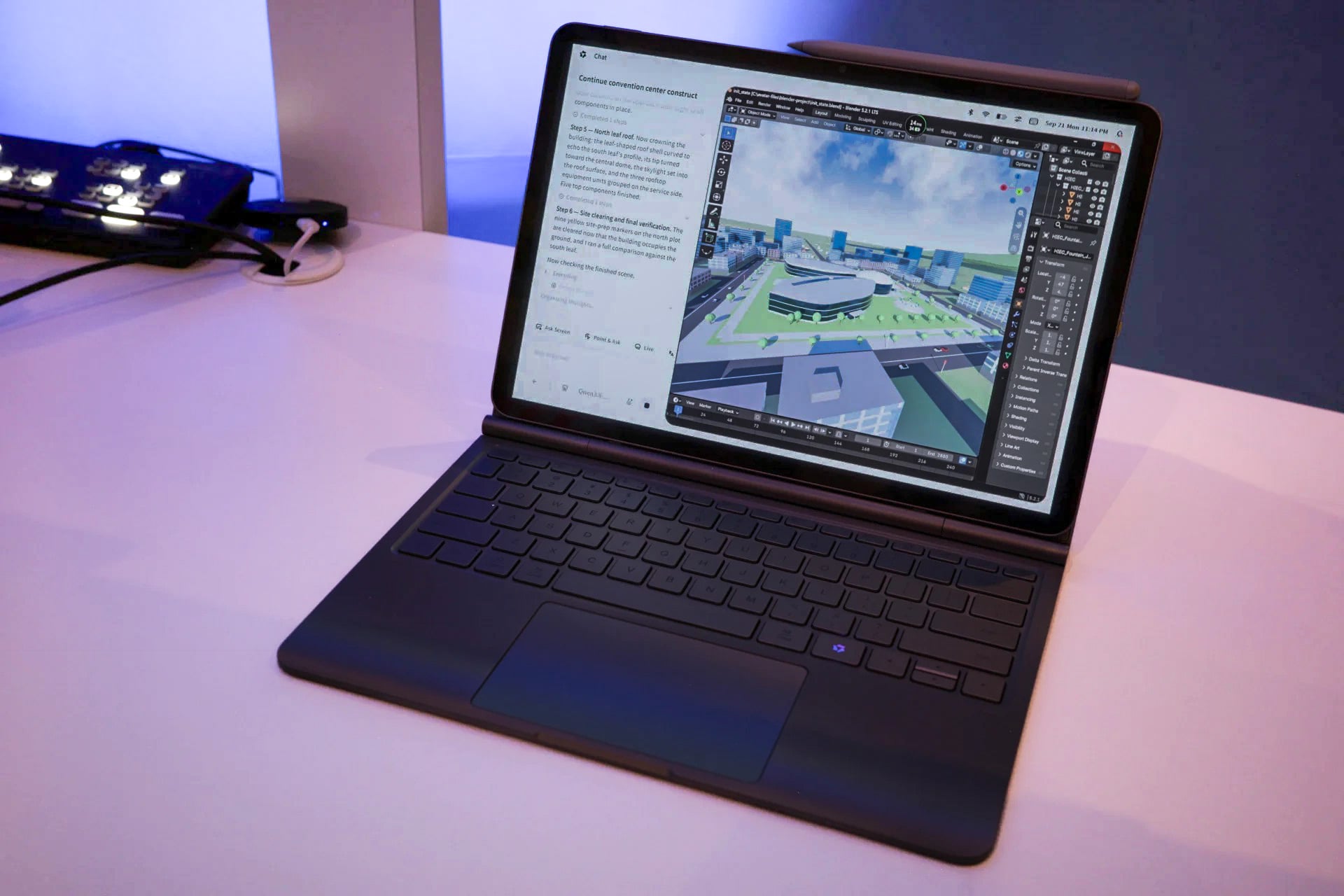
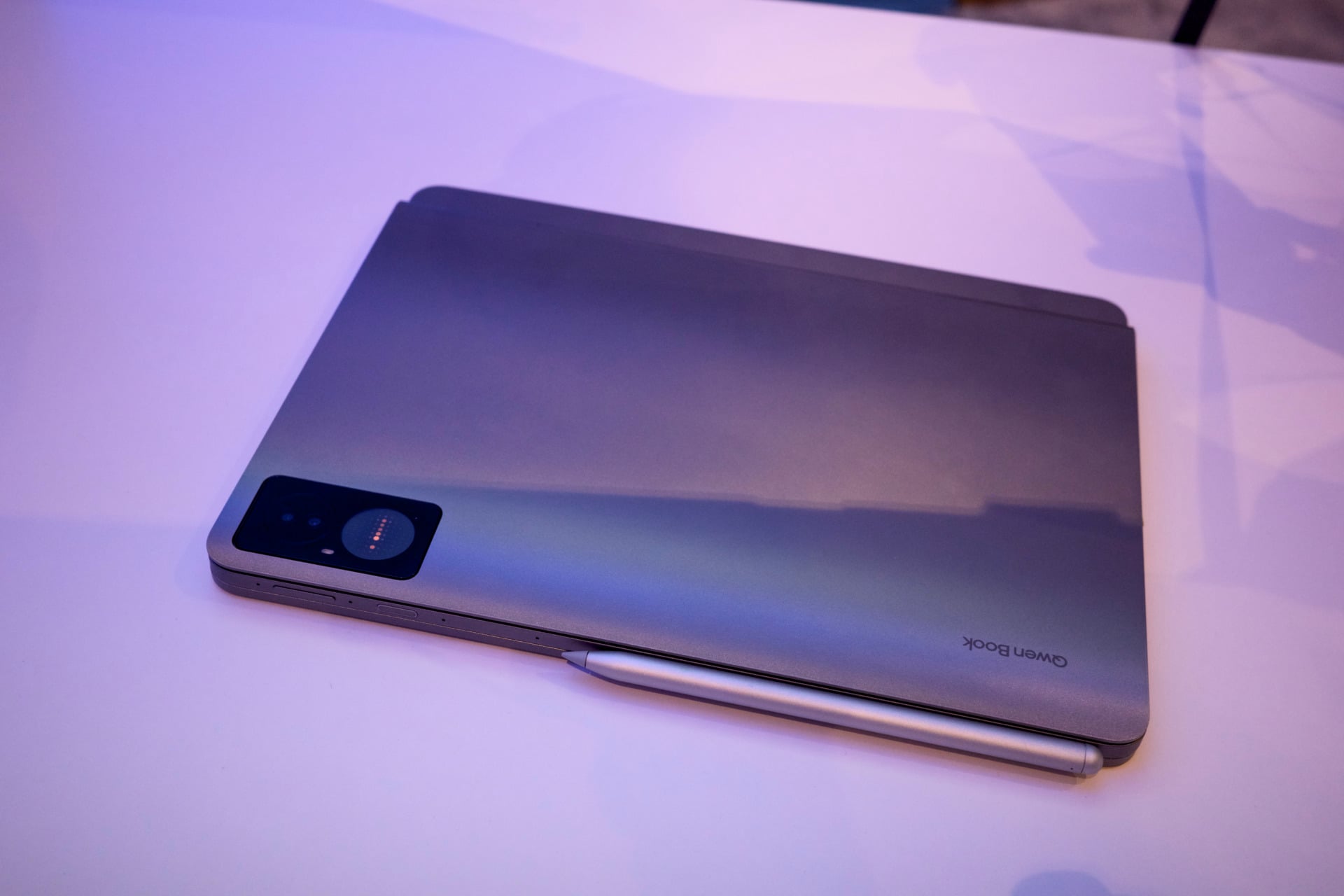
Chinese tech monolith Alibaba showcased its AI-centric QwenBook laptop this week with little initial information to go on. I had the chance to actually use the laptop at Snapdragon Summit. Let’s just say that it’s equal parts intriguing, baffling, and exasperating. In essence, the PC is a convertible design with a tablet that magnetically adheres to a sturdy keyboard mount. There’s also an accompanying stylus to use the device like your typical iPad.
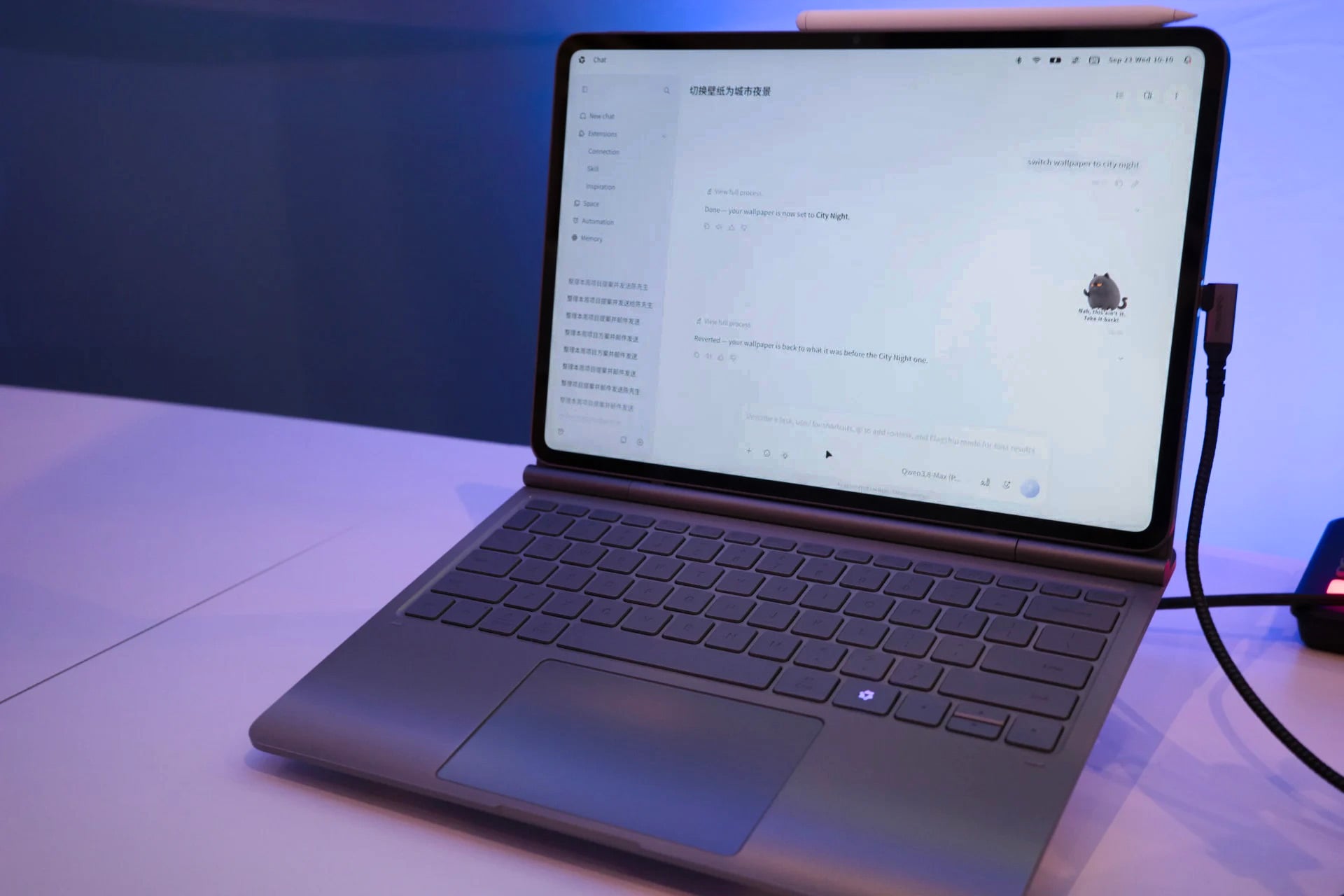
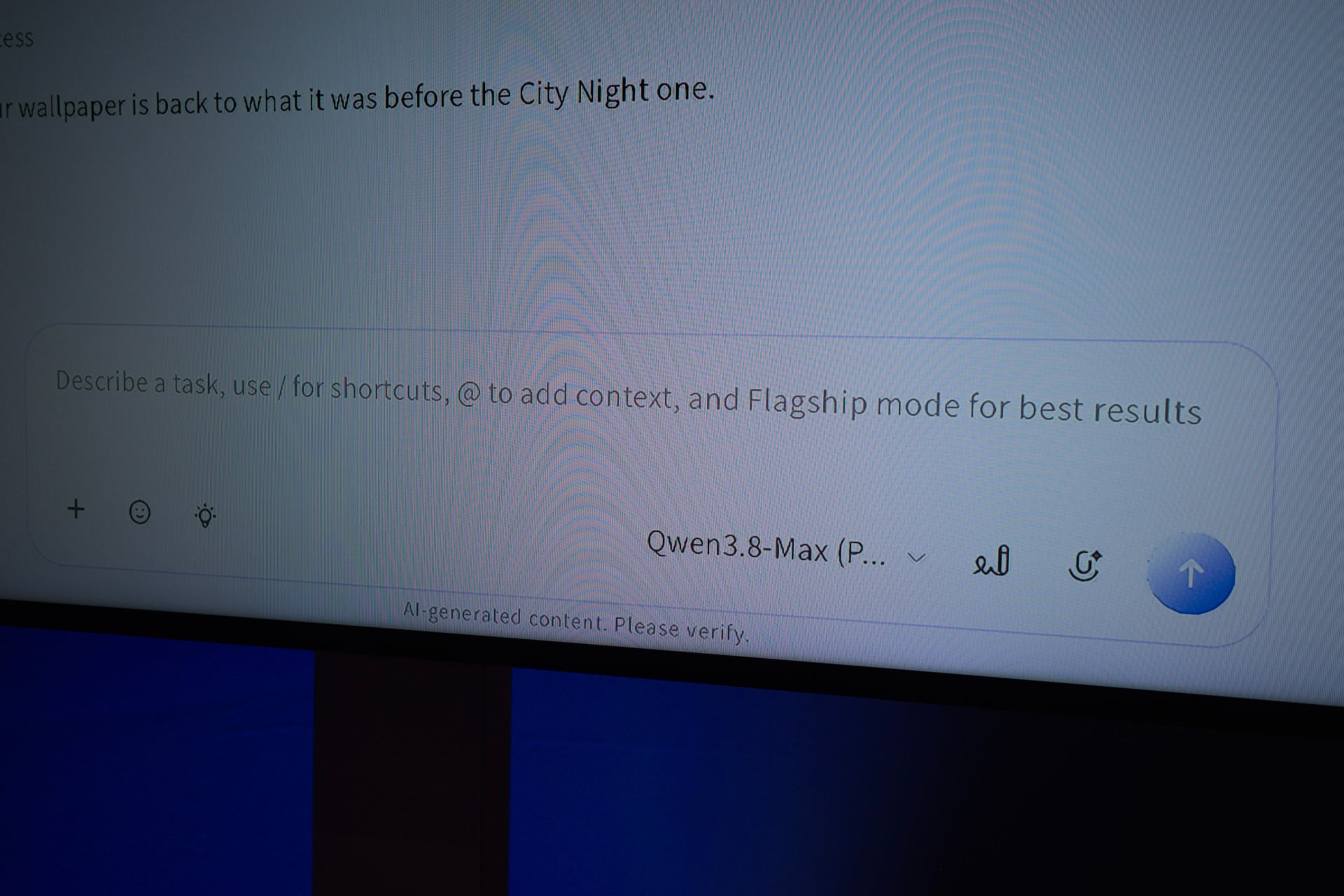
It gets more ludicrous from there. The QwenBook runs several on-device models as well as larger models like Qwen3.8-Max—Alibaba’s massive 2.4 trillion parameter model—through the cloud. Users are expected to make use of this chatbot interface to not only run the QwenBook but also to bring up apps from across the spectrum of operating systems, including a Windows, Android, or Linux environment. You can even run multiple apps from different operating systems at the same time.
Those demonstrating the Alibaba laptop couldn’t answer how the AI was accessing each separate OS environment, but it doesn’t seem like the QwenBook is running any simultaneous emulation. Instead, it seems like AI is literally handling everything on the backend and is simply using the 2-in-1 laptop to display Qwen’s output. Alibaba calls this “OS as a harness,” though even after using it, Alibaba couldn’t give me an idea how much direct control users have over each of these various Windows, Android, or Linux environments.
QwenBook is a low-powered PC in its own right, and you still have access to a native Linux terminal and a few other native calendar and camera apps. Compare that to Googlebooks, Google’s own attempt to combine Android and ChromeOS inside its own customized Linux environment. Those lightweight laptops can also get a Linux terminal going, though only as a virtual machine. They can’t run any Linux apps, either.
It’s especially apparent what’s going on when you learn what’s powering this device. Alibaba went with a Qualcomm Snapdragon 8 Elite Gen 5 chip, last year’s flagship Android chip. That makes the QwenBook more akin to a MacBook Neo, which is powered by Apple’s older-gen A18 Pro mobile chip. Compared to Apple, which touted its chip’s performance even in a device many times the size of its iPhones, the Qualcomm chip isn’t actually doing all that much for Alibaba’s device. For instance, the newest Snapdragon 8 Elite Extreme Gen 6 is supposed to be capable of running midrange AI coding models directly on-device.
This device is the epitome of PC fans’ fears of a future where they don’t own their computing power. Alibaba added a special AI key on the keyboard, which is supposed to call up these chatbot interfaces. However, it’s better to think of it as another oddball device you probably won’t see in the U.S. in any shape and form. For last year’s entertainment, Qualcomm trotted out a Humain laptop, a PC running Qualcomm’s Snapdragon X2 Elite chip whose main claim to fame was using a specialized Windows OS wrapper and a special “Humain” key to bring up an agentic chatbot interface. We’ve heard nothing about that laptop since then.
There’s more to the QwenBook that Alibaba didn’t actually demonstrate, like its supposed ability to vibe code new apps into the OS for your own use. The agentic tasks are also supposed to run independently, even with the laptop closed. There’s a small screen on the back to give users an indication if it’s performing any of your supposed tasks. You can also use a phone app to tell the PC to start running some of these tasks remotely.
The QwenBook does keep files local and lets you run a few native apps, though it’s a wholly AI-centric laptop. And at the point that you’re using cloud-based AI for everything, why even have a laptop at all?
(Full disclosure: travel and lodging were paid by Qualcomm, and Gizmodo did not guarantee any coverage as a condition of accepting the trip).