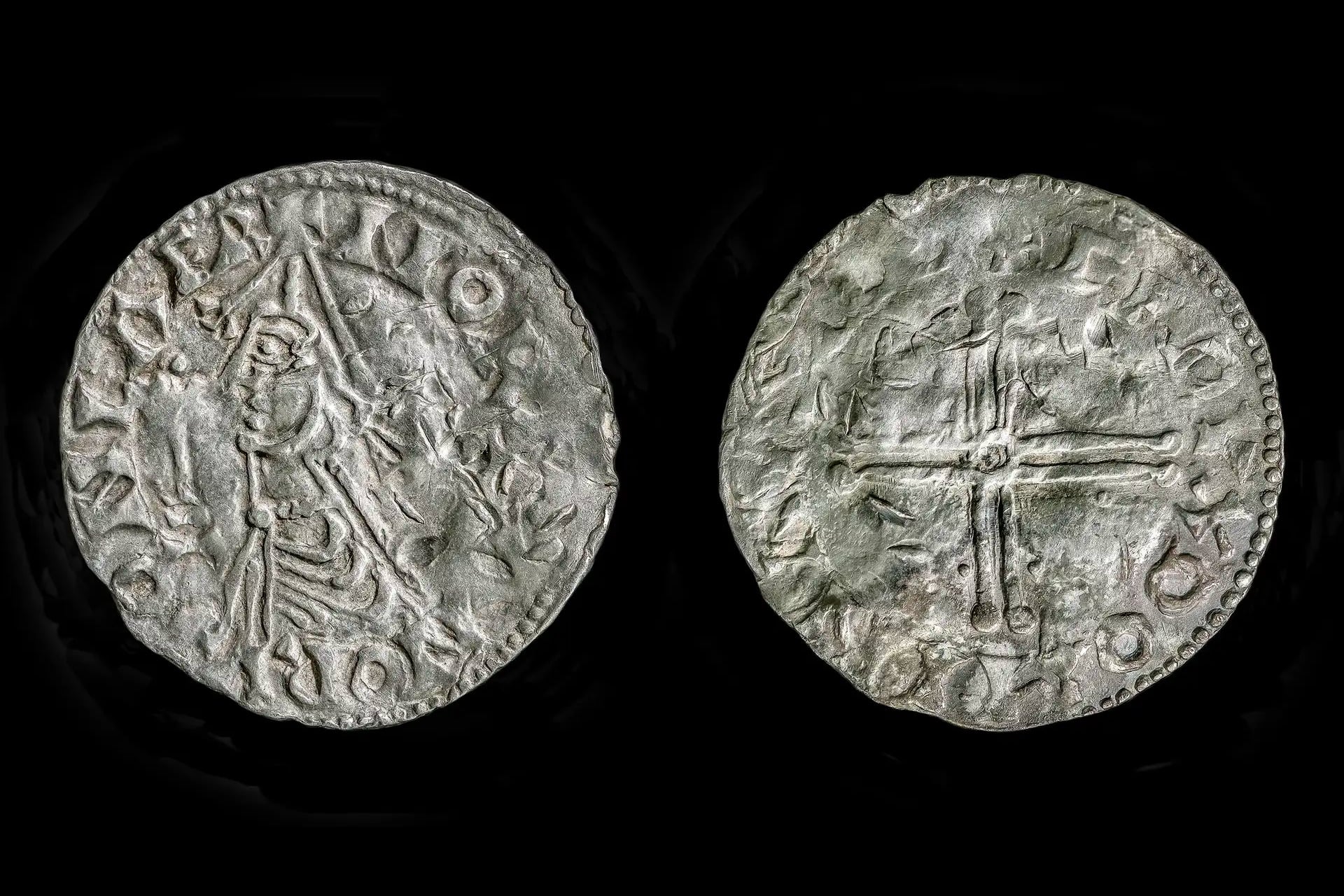
Earlier this year, Norwegian metal detectorists struck the archaeological equivalent of gold: an enormous hoard of Viking Age coins. Since then, excavations have raised the total number of coins to 5,500—including one particularly special coin that may have witnessed the reign of an iconic monarch in Norwegian history.
In a recent announcement, the University of Oslo’s Museum of Cultural History reported the discovery of a coin with the inscription ONLAF R+ NORMANORV, or “Olaf, King of the Norwegians.” On one side is a left-facing bust wearing a conical battle helmet, while a cross and a Christian acclamation are inscribed on the reverse. If the interpretation is correct, the coin would be a much-awaited addition to the few historical artifacts directly linked to Olaf Haraldsson, whom the university describes as having had a greater effect on Norway’s “political, religious, and legal history than any other Norwegian king” in the 11th century.
“It was a very special moment,” Anne Skogsfjord, an archaeologist at the museum involved in the excavations, said in the announcement. “I realized that we had found a national treasure.”
Exponentially important
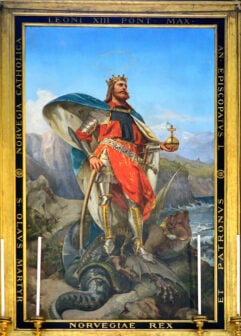
Olaf Haraldsson ruled over Norway from 1015 to 1028. According to the museum, Olaf was integral to Norway’s conversion to Christianity. Relatedly, coins issued during his reign were symbolic of his authority as a “Christian king of European standing,” Gullbekk said in the latest statement. In fact, it’s very likely that Olaf himself chose the design of these coins—perhaps he was even present when they were struck, he added.
But for such an iconic king, fewer than 20 of his coins have survived to this day, and most of them outside Norway, too, according to the museum. What’s more, the last time experts found a coin resembling that from the Mørstad Hoard was in 1924—more than 100 years ago.
Growing excitement
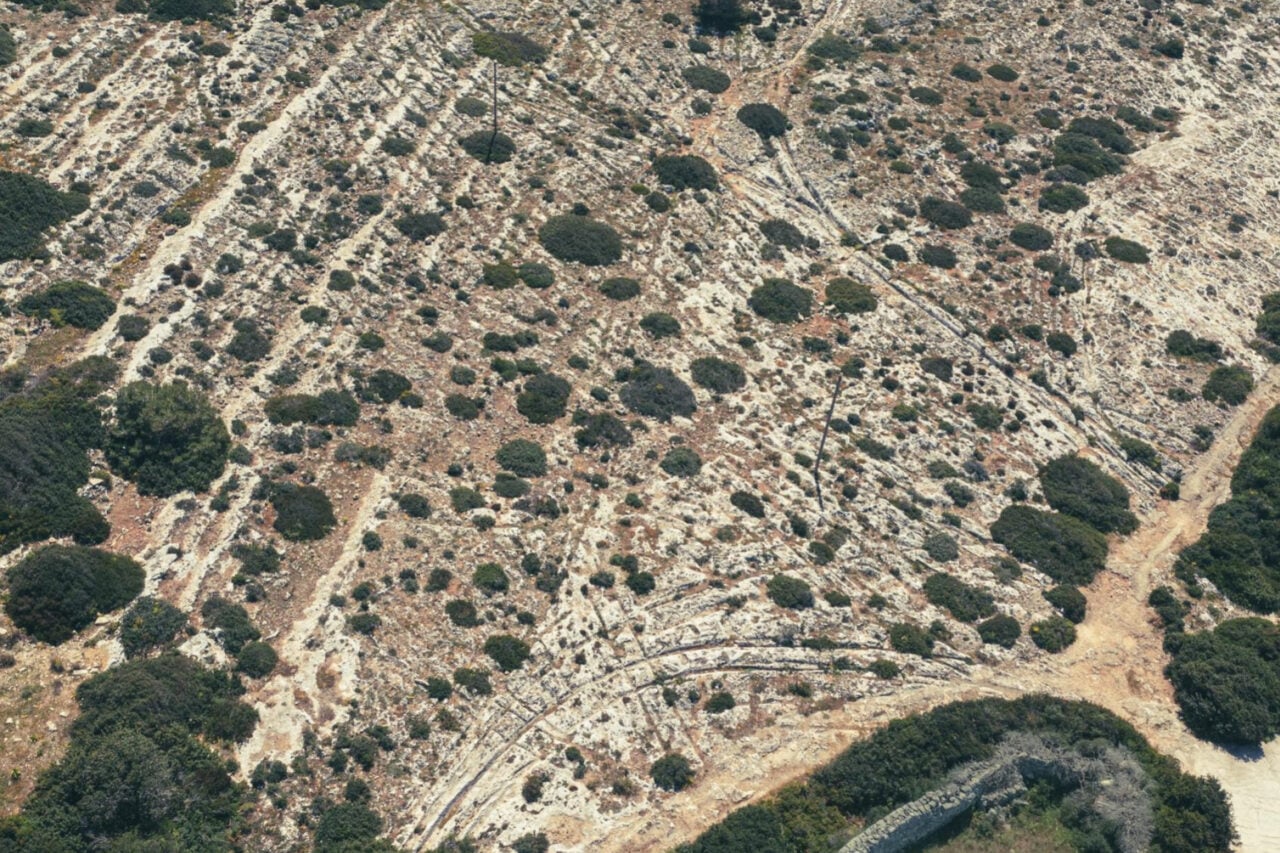
Meanwhile, the coin hoard, dubbed the Mørstad Hoard, was discovered at Rena, in Norway’s Innlandet county, in April this year. Needless to say, the initial discovery—19 silver coins—on its own had great academic significance, and the detectorists immediately alerted authorities to their find. When the public first heard of the news, the hoard consisted of 2,970 coins, which already made it the largest collection discovered since 1866.
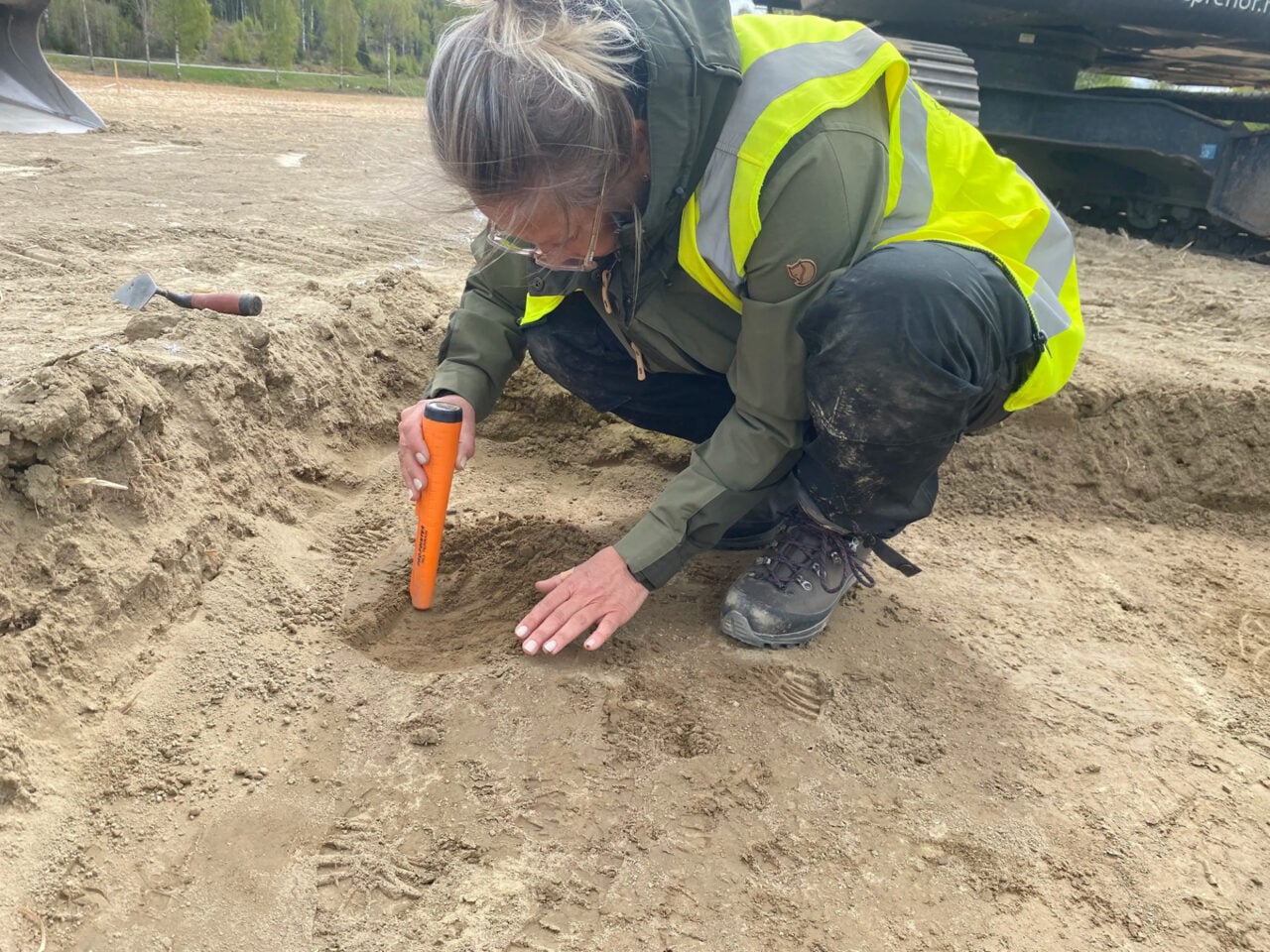
A month later in May, the research team reported that the count had grown to 4,772—larger than all of the previously known large Viking Age hoards combined. Svein Gullbekk, an archaeologist involved in the project, explained in the May statement that over 95% of the coins come from what is modern-day England and Germany. Combined with previous knowledge on extensive iron production in the region, the abundance of coins may hint at the scale of iron trade at the time, as well as Norway’s position in international trade. And now, that count has risen even more—to a whopping 5,500. But authorities with the museum say it may even go up to 6,000.
‘Held in the king’s own hand’
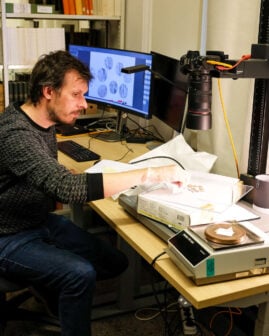
The Olaf coin emerged as the research team was cataloging the coins. As for the coin itself, it was struck between 1024 and 1028, so near the end of the Viking Age. Both sides have small knife cuts, which could mean that the coin was actually used by people at the time. But Skogsfjord recounted how initially, the team’s rough sorting placed the Olaf coin in a pile issued by an English monarch. So one can imagine the excitement when it turned up during a long, tedious process of sorting thousands of coins.
“This is branding,” Gullbekk said, in describing the distinct design of Olaf-issued coins. “It is entirely possible that this very coin from Mørstad was once held in the king’s own hand.”
According to the museum, the bulk of the field excavations concluded in late September. Experts are still cataloging the coins, and given the sheer volume of the hoard, this discovery may be one of many more to come. And for the lucky folks in Norway, the Olaf coin will be on public display at the museum for a temporary exhibition from November 20, 2026 to March 28, 2027.