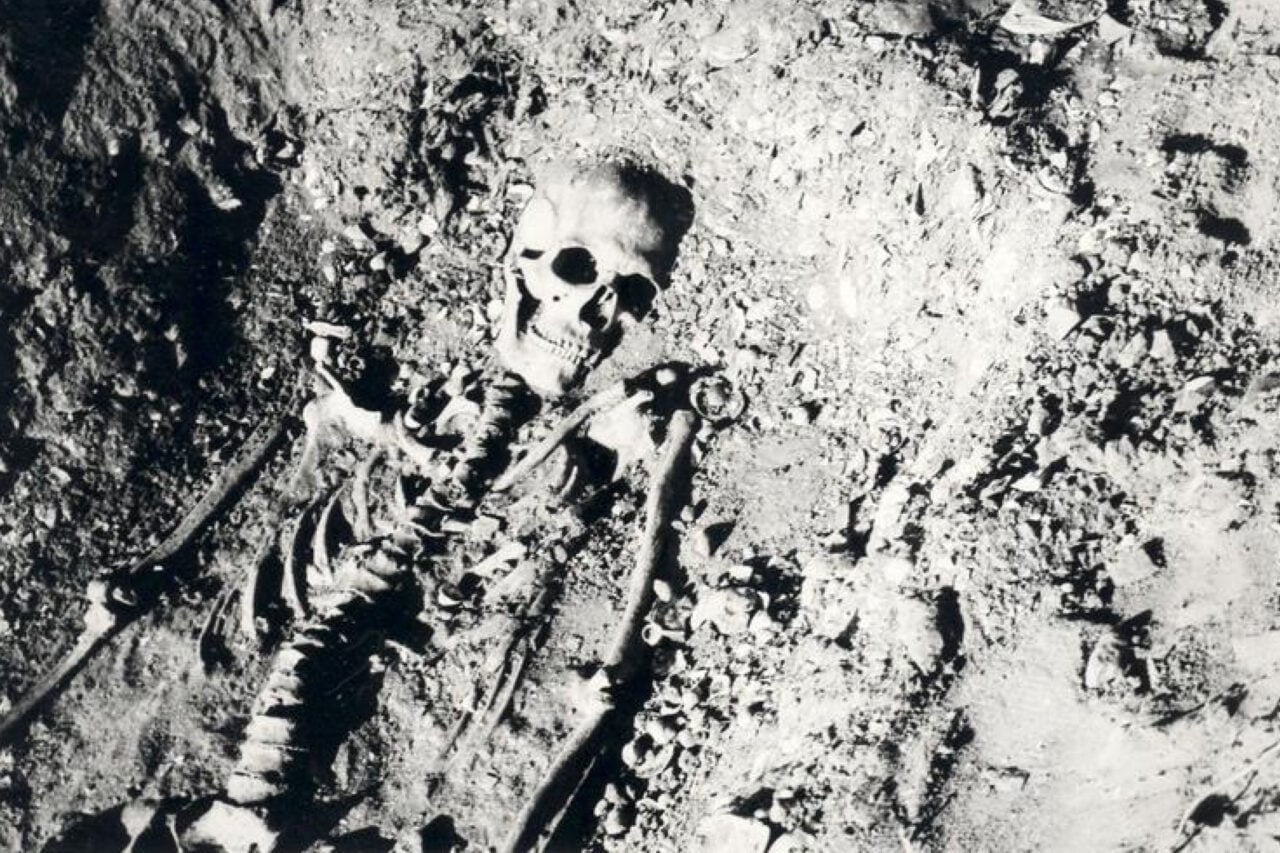
Archaeologists in Egypt have uncovered a cemetery more than 2,000 years old, with numerous tombs and burials likely belonging to members of the middle class.
The discovery is made significant by the impressive diversity of burial styles, coffins, and archaeological finds, which emerged in the Tell Abu Bello archaeological area in Menoufia Governorate. The Egyptian Ministry of Tourism and Antiquities announced the discovery in a statement on Wednesday.
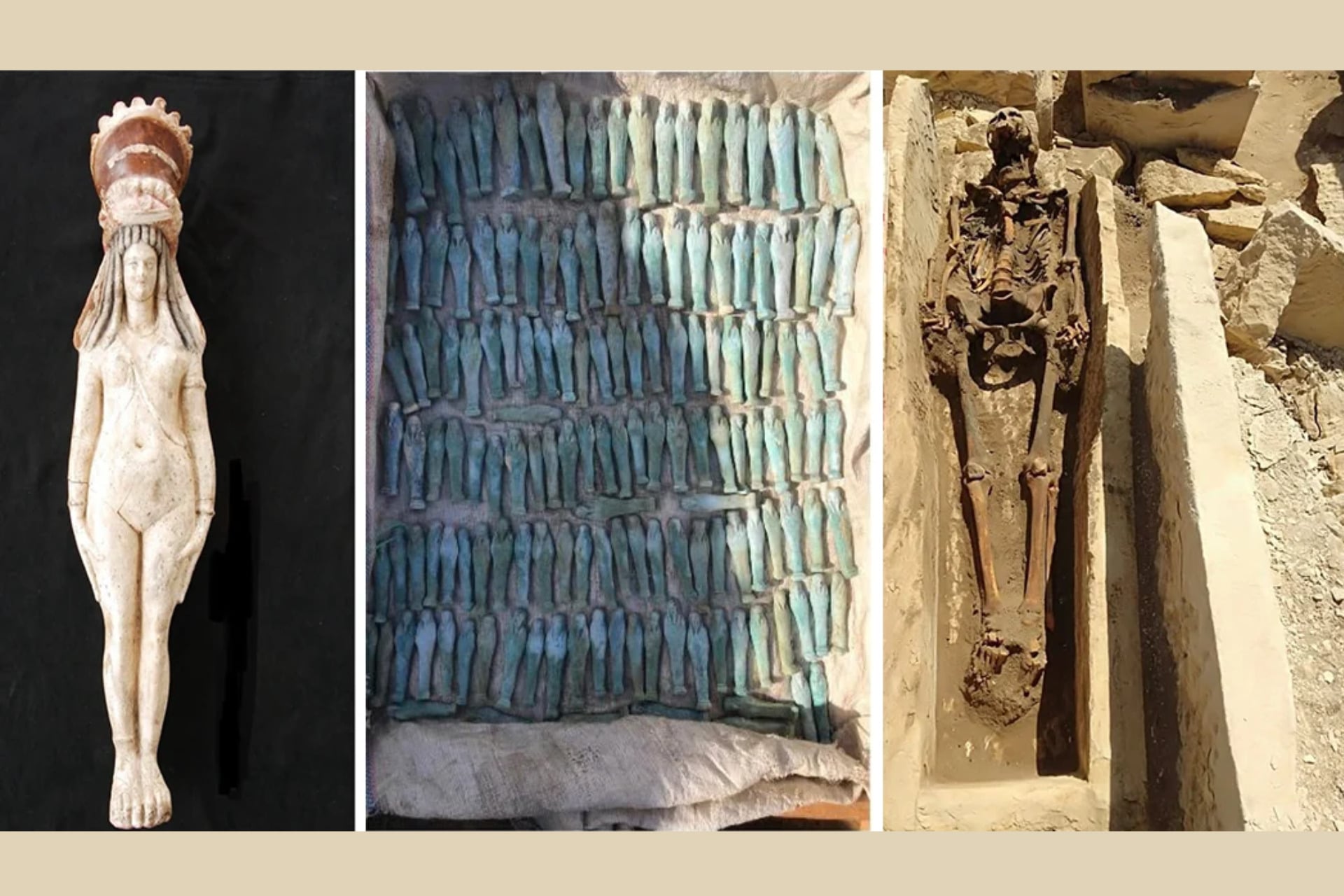
The graves are from Egypt’s Late Period (around 664 to 332 BCE), Ptolemaic Period (around 332 to 30 BCE), and the start of the Roman Period (around 30 BCE to 395 CE). The team from the Supreme Council of Antiquities found a great diversity of burials: stone coffins, pottery coffins, the remains of wooden coffins, mud-brick domed tombs, and a tomb made with limestone.
The number of burials and coffins in an open burial courtyard marks the discovery as a first of its kind for Tell Abu Bello, said Hisham El-Leithy, Secretary-General of the Supreme Council of Antiquities.
There were specifically hundreds of stone coffins, some of which were lidless or shattered because of past vandalism and quarrying activity. Archaeologists also found many remains from various kinds of pottery coffins (a widespread kind of ancient Egyptian coffin). Some had caricatured human features and others bore a direct human representation.
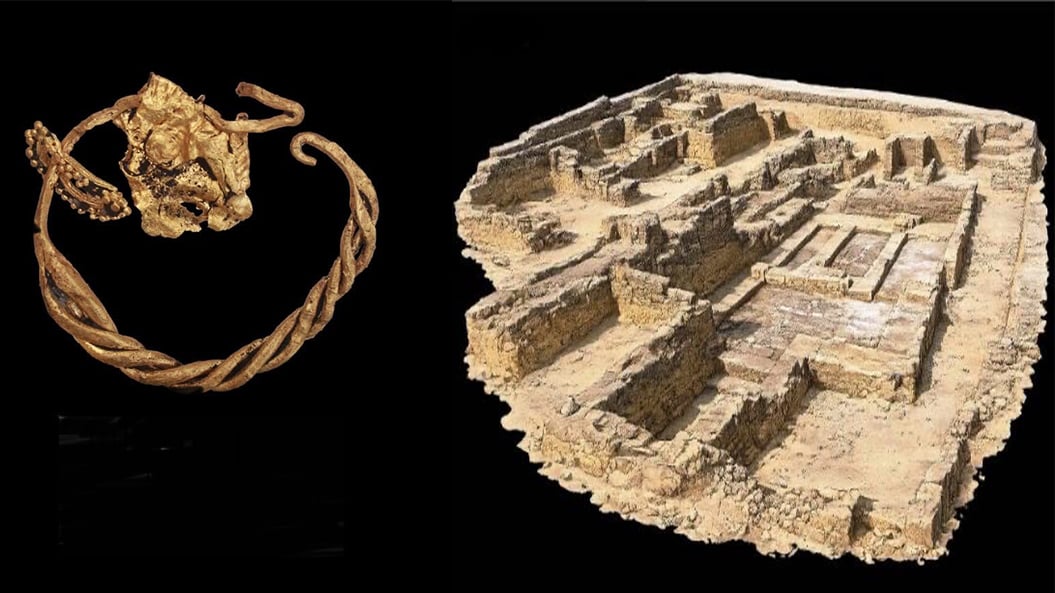
Furthermore, the team unearthed poorly preserved human remains whose analysis revealed traces of embalming materials and resins and remains of yellow, red, blue, and gold cartonnage (an ancient funerary material) and plaster. There were also two falcon burials, golden tongues, an earring, small amulets, a necklace pendant, golden strips, scarabs, offering tables, small limestone statue heads, small sphinx statues, and fragments from Horus statues.
The recent discoveries help provide insight into the development of funerary customs in different historical periods, said Sherif Fathy, Egypt’s Minister of Tourism and Antiquities.
But wait, there’s more! The archaeological site additionally yielded many faience ushabti statues, Isis-Aphrodite terracotta statues, and part of a lid of a clay vessel in the shape of Isis-Aphrodite on a lotus flower with her child Harpocrates. Ushabtis were figurines put inside tombs to work for the deceased in the afterlife. As the name suggests, Isis-Aphrodite was a fusion of the ancient Egyptian goddess Isis and the ancient Greek goddess Aphrodite.
The cemetery is associated with the ancient city of Teranothis, which sits on the edge of Wadi El Natrun, a historical region where ancient Egyptians extracted natron salt used in mummification. Preliminary analyses of the finds indicate that the burial ground was probably made for members of the middle class, though further work will help shed more light on the kind of society that buried its dead here. Archaeologists are set to continue excavating at the site.