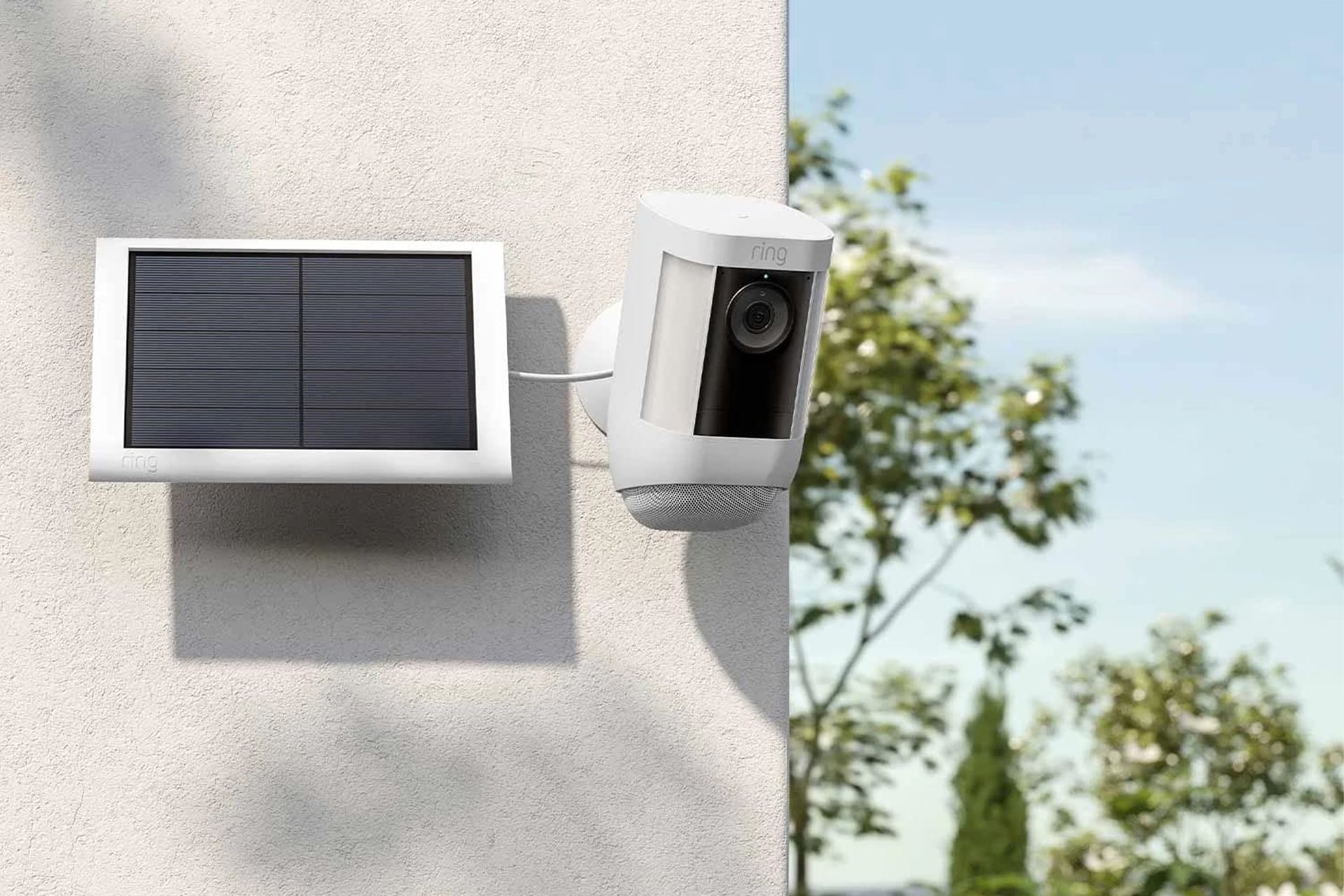
Home security systems have become super affordable with the rise of smart camera systems like those you’d find across Ring’s lineup. Beyond just the video doorbells the brand has skyrocketed into popularity, Ring also has a series of indoor and outdoor cameras that are simple to install.
The issue is that most of them are battery operated. Now, this isn’t a problem per se—after all, it means you can set them up anywhere without worrying about being near an outlet—but it does mean you will find yourself needing to take them inside to charge every few months or so. That can be a bit of an inconvenience, especially if you’ve installed them in difficult to reach places, requiring you to bust out the ladder from the garage each time you do so.
You can eliminate this burden entirely with the help of a Ring Solar Panel. These second-generation solar panels happen to even be on sale at the moment. Normally, you could grab one for $60, but the 20% discount brings them down to just $48. Amazon also sells a two-pack which is discounted down from $120 to $96. That’s exactly double the price of one so there is no inherent savings in buying the two-pack like sometimes you find when buying a bundle of multiple products.
The Ring Solar Panel is designed for use wit the Outdoor Cam Plus, Outdoor Cam (Stick Up Cam), Stick Up Cam Pro, Spotlight Cam Plus, and Spotlight Cam Pro. Setup is super easy. The panel just plugs into the camera via the built-in USB-C connector. For older models, there is a barrel plug adapter to allow for backwards compatibility. This ships with the unit at no added cost.
Optimal Performance
You have some flexibility in where you install the panel itself nearby the camera it is linked to. The included USB-C cable is 6.5 feet long (2 meters). The adjustable arm can be rotated a full 360 degrees and tilted up to 180 degrees. It’s recommended to position the Ring Solar Panel in a way that it is receiving at least two or three hours of sunlight each day for optimal performance. Setting the panel at a 45-degree angle toward the sky will enable the best results. If you’re in the northern hemisphere, it should be angled facing south. If you’re in the southern hemisphere, point the solar panel north. Long bouts of cloudy or inclement weather days may lead to you needing to bring your camera in for manual charging, but likely will be far less frequently than without the panel at all.