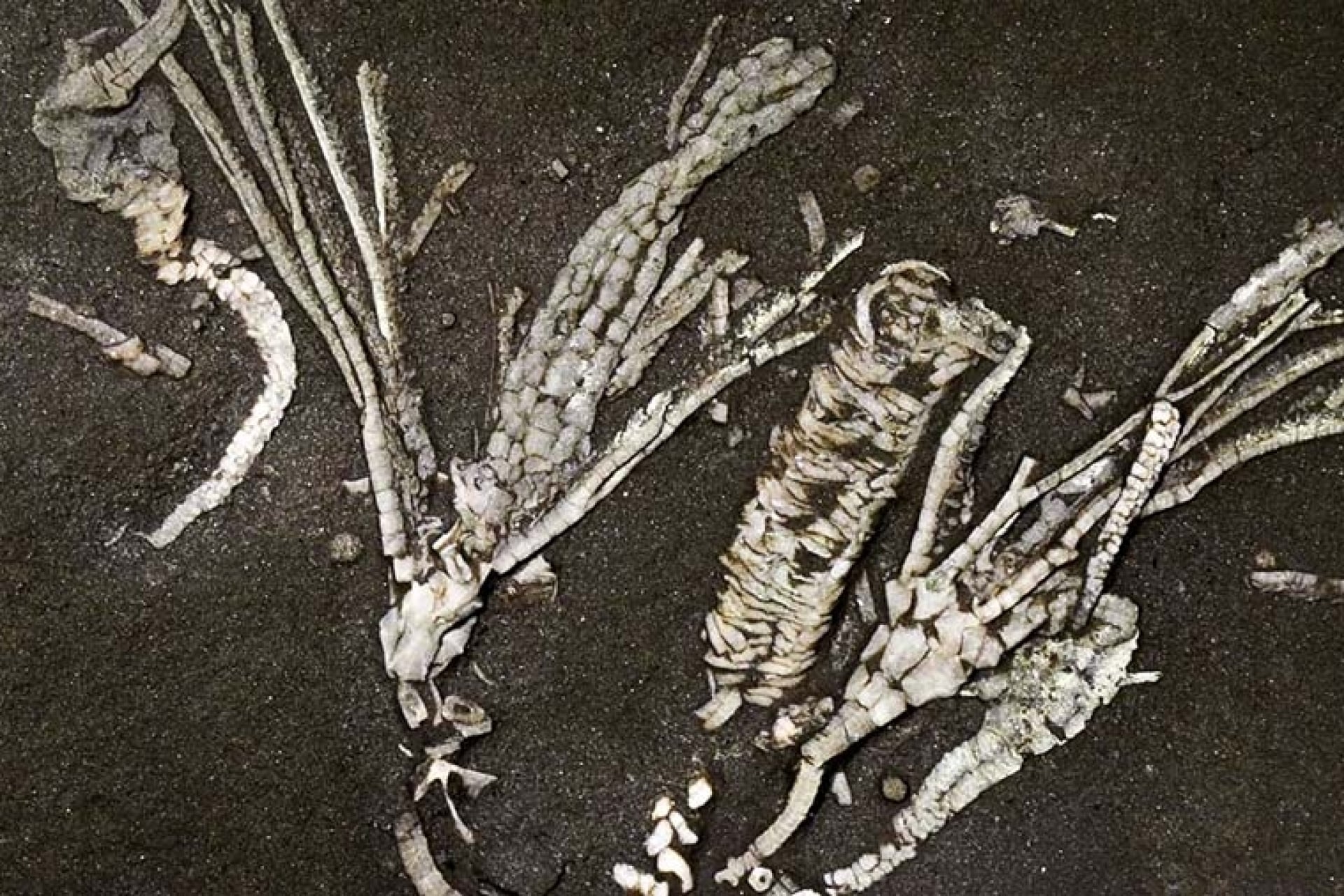
Scientists believe that Earth’s earliest life included ancient forms of crinoids, or the relatives of modern starfish. Crinoid fossils pop up by the millions, but a truly lucky discovery has found the second-ever crinoid fossil with preserved tissues.
As with many big finds in paleontology, the team behind the study spotted the fossil of the crinoid Dendrocrinus simcoensis in a small, relatively unknown collection, in this case a local museum in Montreal, Quebec. The researchers discovered that the fossil dates back to around 450 million years ago, which was even older than the previous and only known example of soft tissues preserved in crinoids. The team anticipates that the fossil will provide renewed insights into marine ecosystems from long ago. A paper detailing the findings was recently published in Royal Society Open Science.
“Soft tissue preservation like this is a one-in-a-million, so it was incredibly exciting to discover such a rare and unique fossil,” Lena Cole, the study’s first author and a paleontologist at the University of Oklahoma, told Gizmodo. “Beyond the initial discovery, I find it fascinating that we can use exceptionally preserved fossils like this one to better understand how extinct crinoids fed, behaved, and interacted with each other, providing us with an amazing glimpse into the lives of these ancient sea creatures.”
Imagining life long gone
For obvious reasons, it’s usually stiffer, stronger parts of an animal that survive long periods of wear and tear. As a result, many fossils tend to be comprised of skeletal plates or shells. Although it’s not impossible, it’s very rare that soft tissues like skin, eyes, or internal organs remain intact, Cole explained.
Of course, that doesn’t devalue the information we’re able to get from skeletal fossils. But because we’re mostly in the dark about everything else, scientists rely on evolutionary cues from related animals to make educated guesses about what an animal might have looked like. That also means our understanding might change over time, however. (One popular example is the debate over whether the Tyrannosaurus was feathered, fluffy, or scaly.)
One-in-a-million
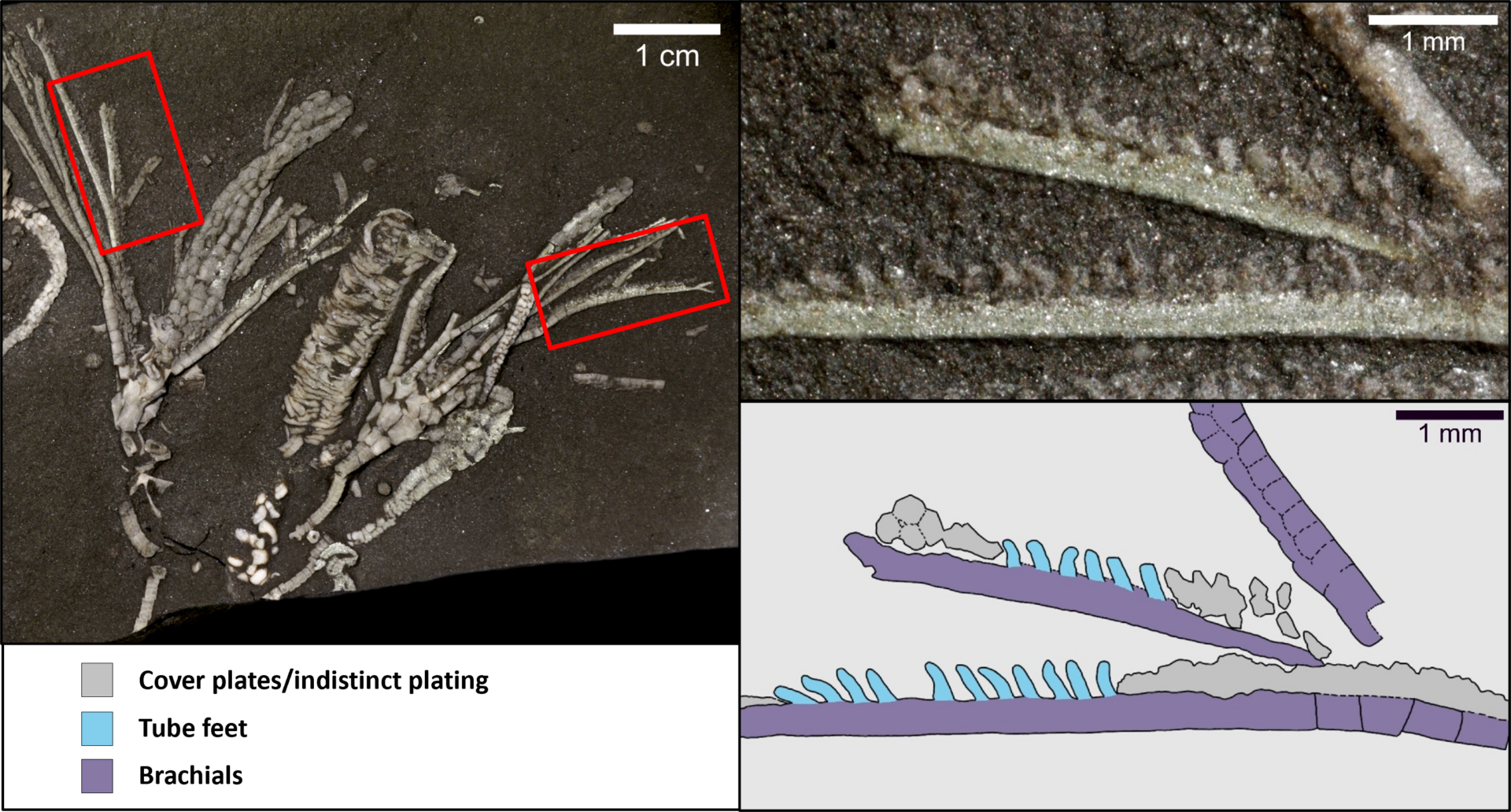
In that sense, the latest discovery was truly a lucky find. According to Cole, it appears that the fossilized creature lived and died under “unusual conditions,” in which the crinoid was quickly buried in fine mud, blocking out oxygen until minerals coated and fossilized the soft tissues. Also, tube feet are central in understanding the lifestyle of crinoids, as the animals use the feather-like appendages to find food and navigate water currents, she explained, which adds to the value of the fossil.
To confirm that they were truly looking at tube feet, the researchers studied the fossil’s overall skeletal features and compared the shape to other fossils from the same species, as well as those from living crinoids. As a result, they were able to “confidently” assign the fossil to a crinoid group from the Paleozoic (between 541 and 252 million years ago), in addition to the presence of tube feet, according to the paper. By comparing the fossil to its modern relatives, the team found that this ancient crinoid would have “fed and behaved very differently,” Cole told Gizmodo.
“Fossilized soft tissues from long-extinct species are very rare, but they can show evidence of features well outside the range of variation we see in living species,” Cole said. “By comparing ecological ways of life for extinct and modern species, we can understand how patterns of evolution have changed through time and what factors shaped the modern biosphere we see today.”