You are what you eat. Also, what you eat might be how old your bones will look hundreds of years from now.
A new paper, published in npj Heritage Science, found a surprising blind spot for radiocarbon dating: fish in freshwater. Specifically, the natural carbon-14 content in lakes and rivers and how that ends up in fish is “much more complicated to correct for” than terrestrial food sources, the paper notes. Uncorrected for, radiocarbon dates for fish-eating humans can be off by up to 1,000 years, although the margin likely varies by region. The team found the effect present in six out of 27 people buried at some of Denmark’s 140 medieval monasteries.
“The results make it abundantly clear that this is a major problem,” Kaare Lund Rasmussen, the paper’s first author and an archaeometrist at the University of Southern Denmark, said in a statement. “And not just in Denmark, but probably across the rest of Europe too.”
The reservoir effect
Since its introduction in the 1940s, radiocarbon dating has become a hallmark of archaeological research. Living organisms absorb the radioactive isotope carbon-14 into their tissues, simply by existing. The isotopes start to decay when that organism dies, according to an explainer by the University of Chicago, where chemist Willard Libby developed this technique. By counting how many carbon-14 atoms remain, scientists can estimate how long the organism has been dead—hence, its “age.”
“This sounds simple,” the team wrote in the new paper, but there are various complications related to the environment in which an organism mostly lived. Flowing rivers and lakes have approximately 15% less carbon-14 content due to older sediments dissolving carbonates into the water. This change in carbon-14 content is referred to as the “reservoir effect,” according to the paper.
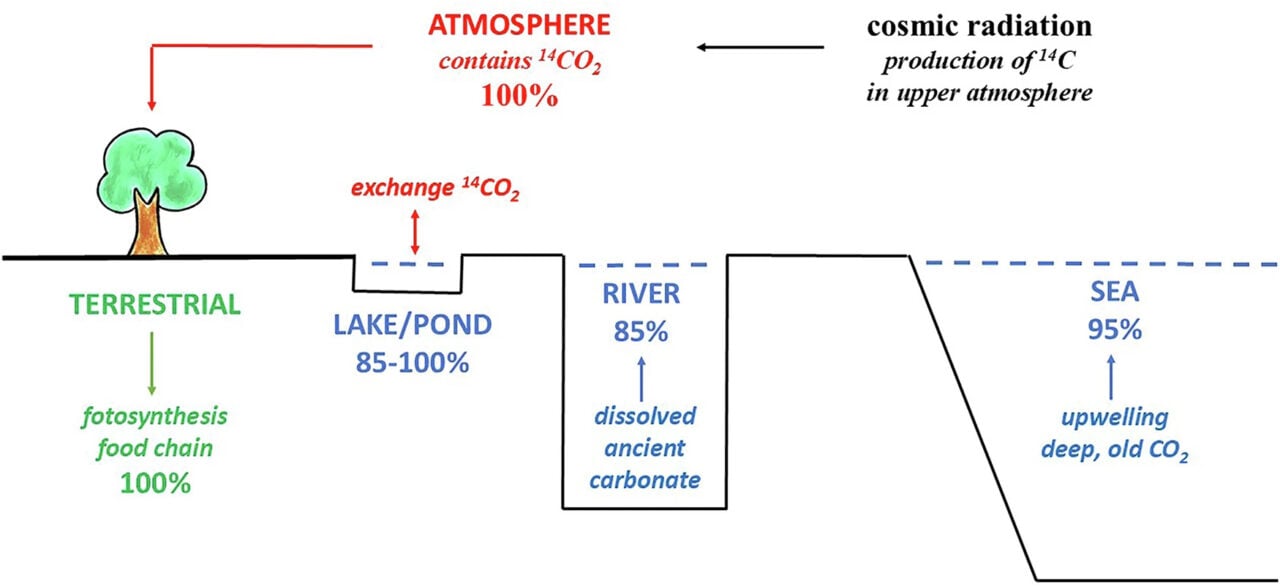
“In extreme cases, a fish from the Rhine, for example, can appear up to 1,300 years older than a land-based organism that lived at exactly the same time,” Rasmussen explained. “But that does not mean you can simply subtract 1,300 years from the date of a person who ate freshwater fish. Quite the opposite.”
No bad patterns?
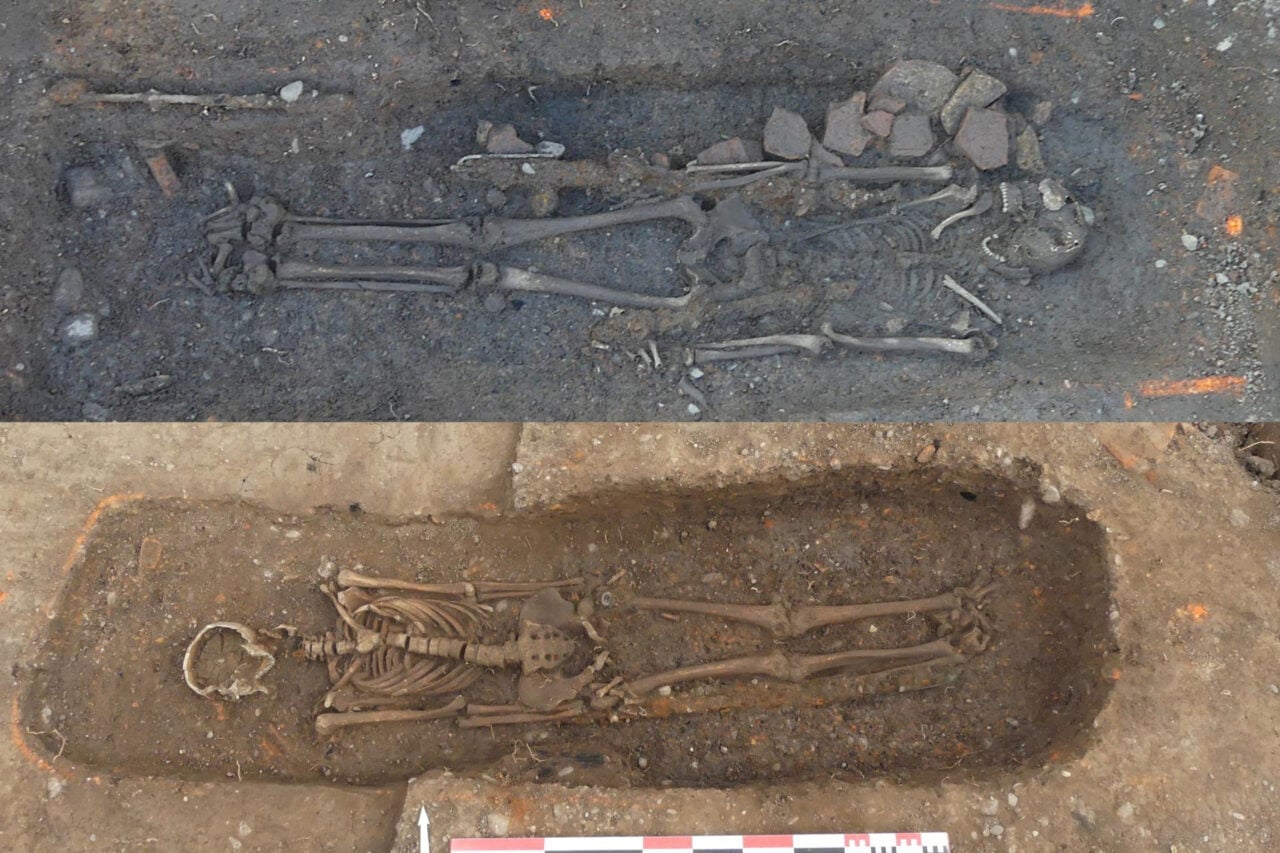
For the latest work, the team turned to 27 skeletons previously discovered across medieval Danish monasteries. For context, previous radiocarbon dating hinted at some weird inconsistencies. One individual, IIIB9, died sometime between 1100 and 1155 CE. But the monastery that became his final resting place wasn’t founded until 1236. Another person supposedly died around 976, so 200 years before the monastery even existed.
Clearly, one of these dates would have to be incorrect. Either we’re wrong about the monastery, or—if you want to get real creative—maybe the bodies were removed and buried again when the monastery was completed. Not that experts have found any evidence to support the latter idea, of course. But that’s the thing: incorrect radiocarbon dates prompt incorrect or dubiously supported hypotheses.
The ‘freshwater trap’
From archaeological and historical records, the researchers knew these individuals mostly ate fish. In other words, the reservoir effect might be tampering with our evidence—and the scientists’ hunch appears to be correct. Measurements of nitrogen-15, which offer clues about a person’s diet, showed that the six people dated incorrectly very likely consumed a lot of freshwater fish.
“The particular problem with freshwater is that the effect varies enormously,” Rasmussen added. “It can range from zero to 1,000 years.”
From now on, the “freshwater trap,” as the team calls it, should be considered when studying medieval remains. But again, things will vary a lot by region, so a good start might be to consider other indicators, like nitrogen-15, the team suggested.