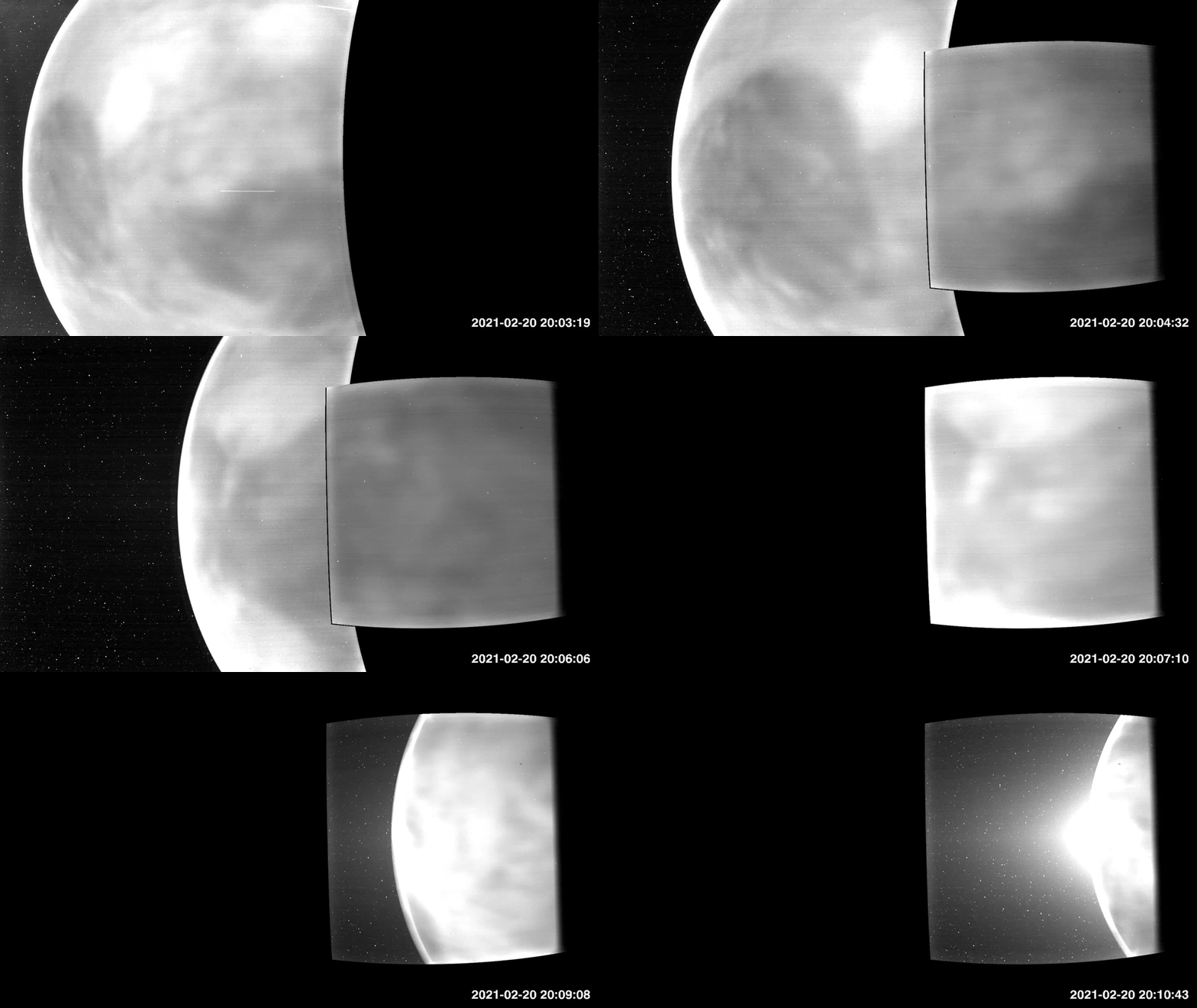
Images from the Parker Solar Probe’s record-setting pass by the Sun last year are finally available.
The spacecraft survived scorching temperatures at a record proximity, and is expected to send details of its close call in the new year.
Parker Solar Probe will break its silence on Friday—that is, if it survived its closest approach to the Sun.
At 3.8 million miles from the Sun's surface, Parker Solar Probe will be the closest a human-made object's ever been to our host star.
The spunky probe's final gravity assist around Venus will put it on track to break records near the Sun next month.
Europe’s Solar Orbiter has captured surreal video of the Sun’s atmosphere, revealing a slew of fascinating—and jaw dropping—stellar features.
The Parker Solar Probe flew through a coronal mass ejection in 2021, finding clues that are helping to unravel the mystery of space weather.
The upcoming eclipse, occurring during the solar maximum when the Sun regularly expels material into space, could offer a unique viewing experience.
Everything you need to know ahead of the historic total solar eclipse on April 8.
The quest to “kiss the Sun” has led to unprecedented distance and speed records, as Parker continues its historic exploration of our host star.
The intrepid little spacecraft flew through a coronal mass ejection, helping scientists understand space weather.
The small spacecraft stared straight at the source of solar wind, likely uncovering the process that drives the violent bursts of plasma.
The innermost planet to the Sun looks astonishingly close—and small—in the latest view from an extreme probe.
The blast of hot gas stretched 2 million miles—and probably more.
Parker is designed to study the Sun, but the plucky probe is unexpectedly teaching us new things about Venus.
The NASA spacecraft has made its first direct contact with the Sun's atmosphere, a historic achievement.
These spectacular fireballs hit Earth’s atmosphere at a shallow angle and sometimes even ‘bounce’ back into space.
Dust grains traveling in excess of 7,000 miles per hour are now smashing into the probe around once every 15 seconds, sparking unexpected reactions.
The Solar Orbiter and BepiColombo will pass on either side of our neighboring planet.
During its third flyby of Venus, NASA’s Parker Solar Probe recorded natural radio emissions from within the Venusian atmosphere. The finding is confirmation that Venus’s upper atmosphere undergoes major changes in accordance with the Sun’s 11-year cycle, providing new insights into this enigmatic—and utterly hostile—Earth-like planet. The Parker Solar Probe was designed to study the…