Lack of Light May Protect the Reef
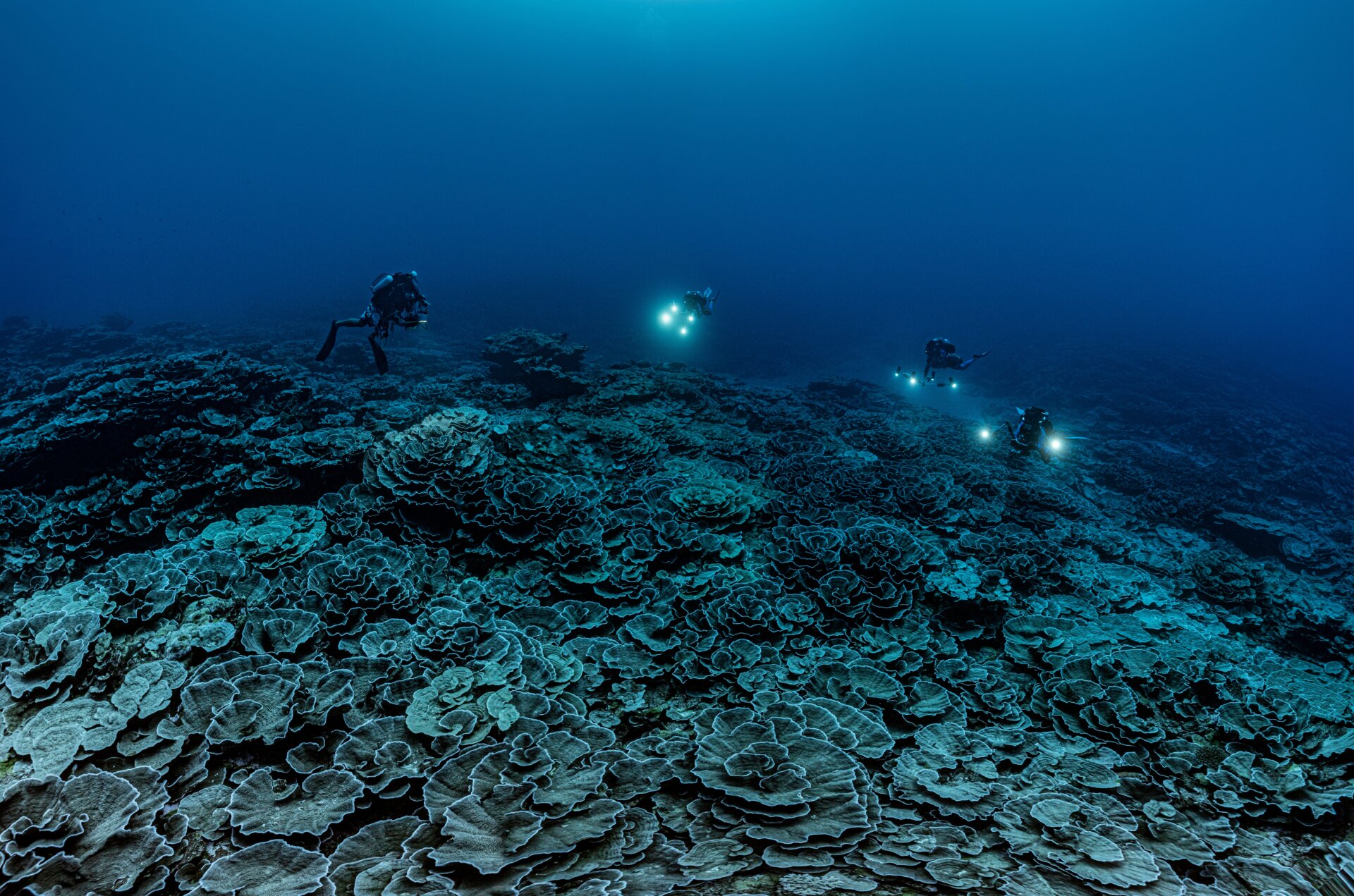
This lack of light also explains the corals’ unique shape on this reef—and why it may have survived in an ocean that’s increasingly deadly to other corals. Corals in regions of the ocean with more light often grow in branch-like shapes, which could make them more vulnerable to rising temperatures. This coral, like others in the mesophotic zone, had to maximize its surface area in order to take advantage of the low light, resulting in the petal-like pattern. That could make it hardier than other types of coral to the impact climate change is having on the oceans.
“We think that deeper reefs may be better protected from global warming,” marine biologist Laetitia Hédouin told CNN. “So the discovery of this reef in such a pristine condition is good news and can inspire future conservation.”