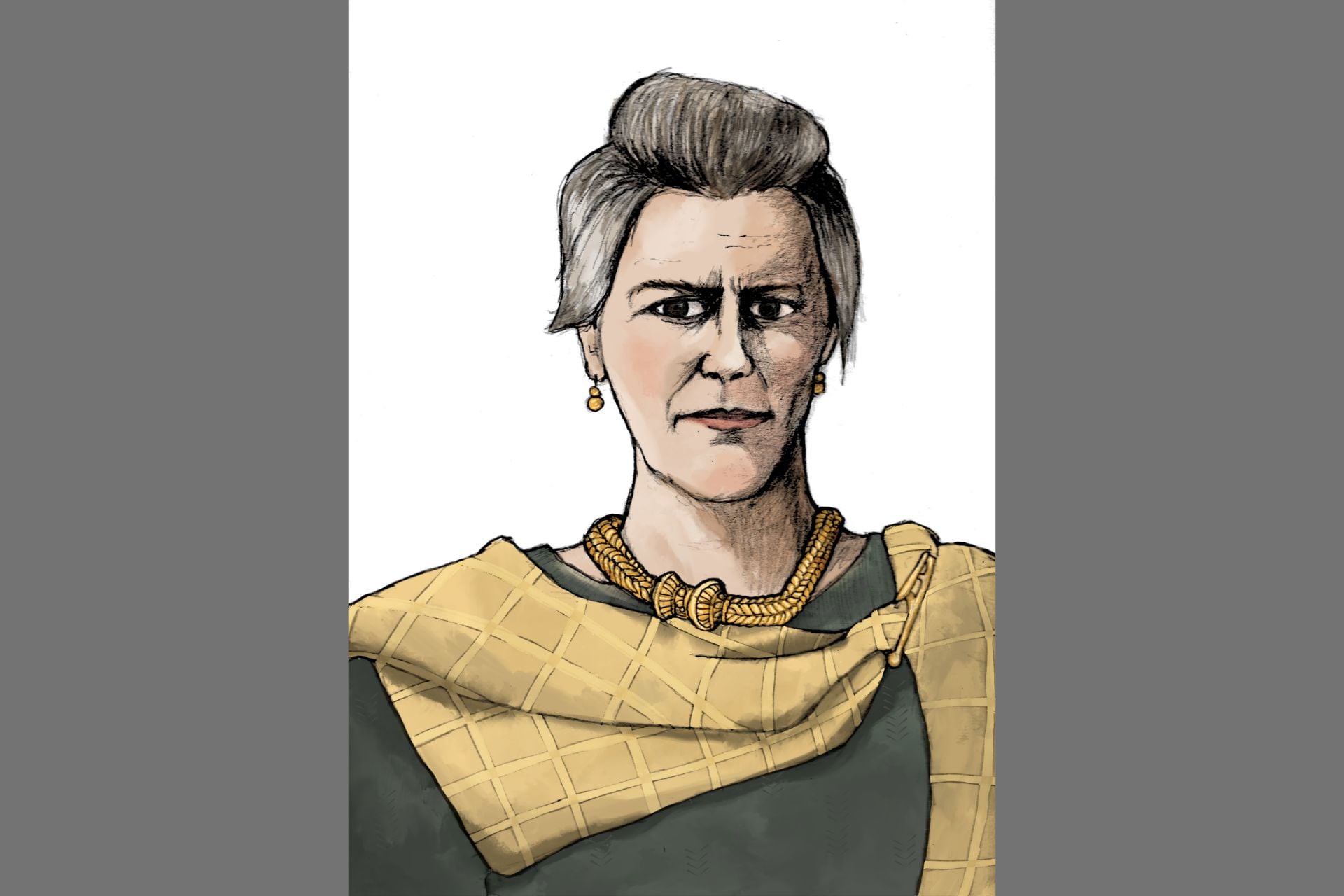
The land now known as Great Britain was ruled by tribal leaders for hundreds of years before most of it was taken over by the Roman Empire in the first century CE. Some researchers are now looking to reshape what we know about one of the Iron Age “kings” who had a pivotal role in this conquest.
Archaeologists at Bournemouth University in the UK have been studying the late Iron Age in Britain. In an article out today, research leader Miles Russell makes the case that a tribal ruler named “Verica,” who is typically described as male, was almost certainly a woman. The team’s work is the latest to indicate that British society in these times was largely governed by women leaders.
“Verica was a major player in the story of how Britain became a Roman province and has been discussed in many books, papers and articles, but has always been misgendered,” Russell, the director of archaeological fieldwork at Bournemouth, told Gizmodo.
The case for a female Iron Age king
The British Iron Age was characterized by the newfound availability of iron as a common material for tools and weapons in the area. It lasted from about 750 BCE to CE 43, ending with the invasion of troops first sent by Emperor Claudius. Though northern tribes did successfully repel the empire’s further expansion, most of the region remained under Roman control under the name Britannia for nearly 400 years.
The team’s reassessment of Verica’s identity is part of a larger endeavor studying the transition between these periods, called the Durotriges Project.
Verica, also known as Berikos, was a Roman ally and leader of the Atrebates tribe, whose territory covered parts of southern Britain. Around 40 CE, Verica was removed from power, and the ousted ruler fled to Rome. According to Cassius Dio, a prominent Roman historian in the 3rd century CE, Verica then persuaded Claudius to send his troops to Britain, setting the stage for the Roman invasion. What happened to Verica afterward, including whether they ever got to reclaim their lost territory, remains unknown.
While Verica is usually referred to as a male king, there are plenty of reasons to believe otherwise, Russell says.
For starters, female names in this era commonly ended in an “a”—a trait seen with Cartimandua of the Brigantes and Boudica of the Iceni, two other prominent tribal leaders during this time known to be women. Coins issued by Verica were also sometimes labeled with the Latin word “Rex,” signifying their Roman support. While “rex” is often translated to mean “king,” Russell says the term itself is gender neutral. Moreover, Verica’s coins are starkly different in appearance from other coins issued by male kings of the period.
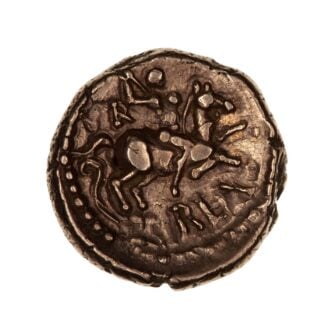
“The distinctive imagery deployed by Verica show slender, bare-breasted and overtly female equestrian warriors. No other coin-producing Iron Age leader in Britain put female warriors on coins,” Russell said.
Assuming Russell and his team’s argument is right, the finding would reconceptualize the history of this crucial time period.
“It helps reshape the political landscape of Iron Age Britain, giving evidence for three powerful female leaders, Cartimandua, Boudica and Verica, with Verica arguably being the most significant, for without her, it’s likely that Rome would never have invaded,” he said.
Russell notes that early historians like Cassius Dio didn’t specify Verica’s gender either way. Dio and other writers may even have included Verica and the former slave Narcissus in their retelling of this invasion as a way to emphasize their perception of Claudius as a weak leader.
“Having an ex-slave get the soldiers to fight and a barbarian woman from Britain make policy decisions, fits the trope of Claudius being ineffective and subtly undermines Claudius’ achievement,” Russell said. Later historians, meanwhile, may have simply assumed that Verica was a man due to their own biases about the inherent weakness of women.
Russell is discussing the team’s research on Verica in an article published today for Current Archaeology; it will also be presented in more detail as part of his upcoming book on a different Iron Age ruler named Caratacus.
Matrilocal Britain
Far from being an exception, Verica’s reign seems to have been nothing unusual in Iron Age Britain.
Last year, Russell’s team and others published a study looking at the ancient genomes of people in the region. They found evidence that men tended to move into their partners’ communities, while many family trees could be traced back to a single woman. These findings, Russell says, “point to a matrilocal society where men ‘married in’ and moved to join their wife’s community rather than the other way around, perhaps indicating that land passed down the female line.”
It’s certainly possible we may yet learn more about Verica and her tribe from future excavations or better DNA analysis of surviving bone. In the meantime, Russell hopes that people can look at “the ancient past with an open mind and realize that not everything we believe from history and from ancient historians, especially Roman ones who were more than a little biased in their outlook, is necessarily true.”