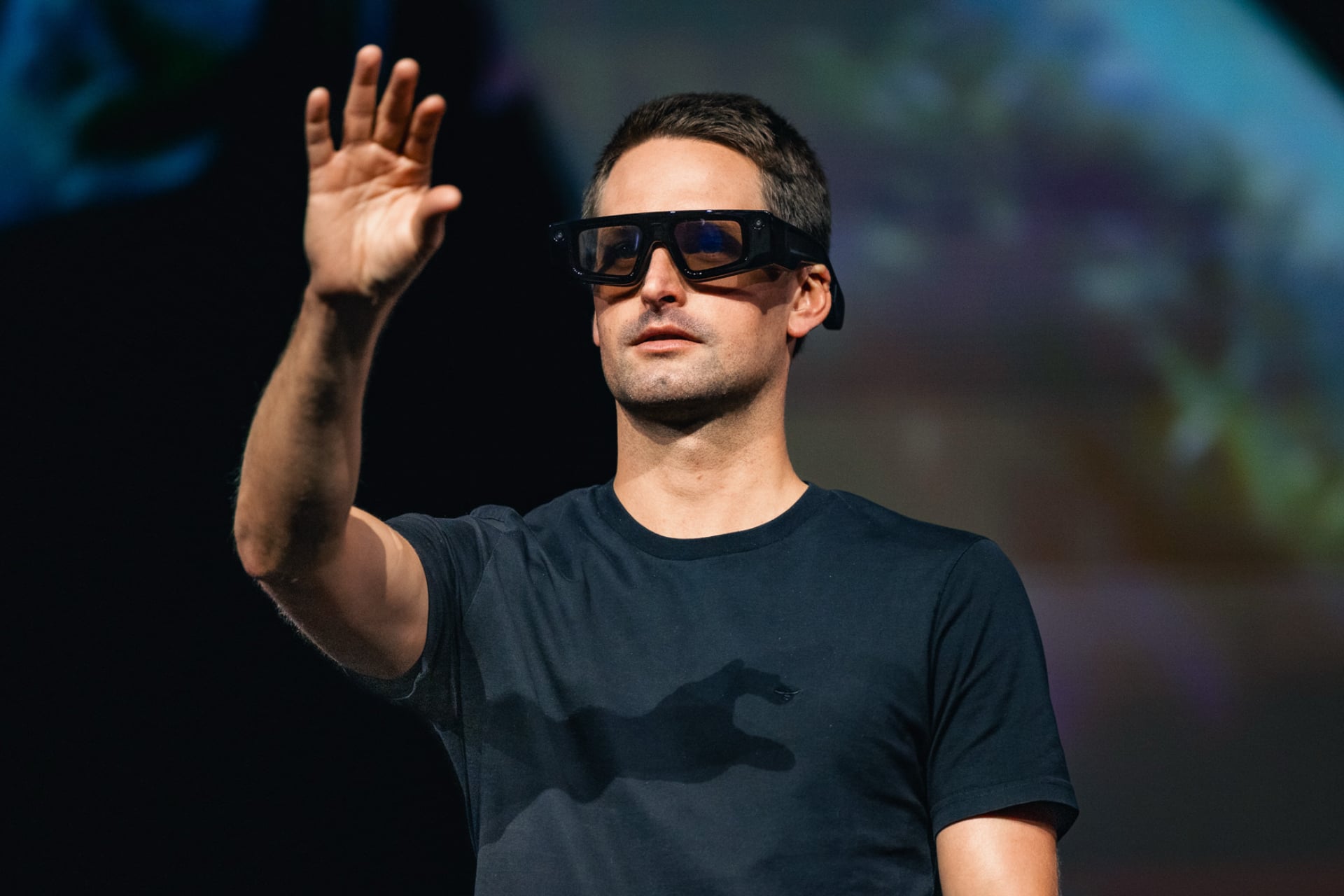
Lawmakers and advocacy groups aren’t the only people with strong thoughts about Meta’s smart glasses. Apparently, Snap CEO, Evan Spiegel, has some opinions, too. In an interview with YouTuber David Senra, Spiegel had some choice words about Meta’s reputation in the space. Spoiler alert: he’s not a huge fan.
“It’s much more harmful for [Essilor]Luxottica than it is for Meta. I think Meta needed to partner with Luxottica because the Meta brand is not something that people want to put anywhere near their face,” Spiegel said. “I think that Meta really needed [the partnership].”
Spiegel also forecasted the partnership as potentially ill-fated for EssilorLuxottica, the maker of Ray-Bans, which, of course, teamed up with Meta to make its Ray-Ban Meta AI glasses and the Meta Ray-Ban Display.
Evan Spiegel talks Snap Spectales vs. Meta Raybans.
Feels a vertically-integrated approach targeting higher end (eg. Tesla with Roadster, Apple with iPhone) is the move for smart glasses.
Also, says brand association is risky for Luxxotica:
“I think it’s much more harmful for… https://t.co/tOx4LTpX6Q pic.twitter.com/LqOBbVz05T
— Bearly AI (@bearlyai) April 12, 2026
“What’s challenging for Luxottica is that they took like the most iconic, crazy-high-margin product and they destroyed the margin and then they associated with Meta,” Spiegel said. “We’ll see if that pans out over time, if that was the right brand choice for them, but I can definitely see why Meta needs to camouflage their brand, which I think a lot of people don’t resonate with and don’t like.”
On one hand, Spiegel isn’t wrong. Meta, to no one’s surprise, seems to be actively trying to torch the reputation of its semi-successful smart glasses, either through collecting and mishandling user data or through its nightmarish potential plans to add facial recognition—both of which are privacy landmines in their own right. By most metrics, Meta’s presence in the smart glasses world is becoming an increasingly toxic one, and that’s not even counting the fact that lots of people are averse to putting cameras and AI in glasses at a fundamental level, regardless of privacy practices or nuance.

On the other hand, Snap hasn’t been particularly successful in its own endeavors on the AR glasses/smart glasses front. Spectacles, Snap’s AR glasses, have been around for quite some time, but are still pretty unwieldy and big. The latest generation is also still just for developers and creators, which isn’t exactly a glowing endorsement of its own success in the space, nor is it an indicator that people are itching to wear smart glasses made by Snap on their faces.
Even without having major success of its own, though, Spiegel isn’t wrong. There’s a reason why the Ray-Ban name has traditionally taken precedent over Meta’s in Ray-Ban Meta AI glasses, and it’s not Meta being generous. Whether the partnership will blow up in EssilorLuxottica’s face is too early to tell, though. Meta has sold a surprising amount of smart glasses so far, but competition from Google, Samsung, and maybe even Apple looms large. In the meantime, Meta is making itself a pretty big punching bag, and plenty of other names in the space are content to take their swing.