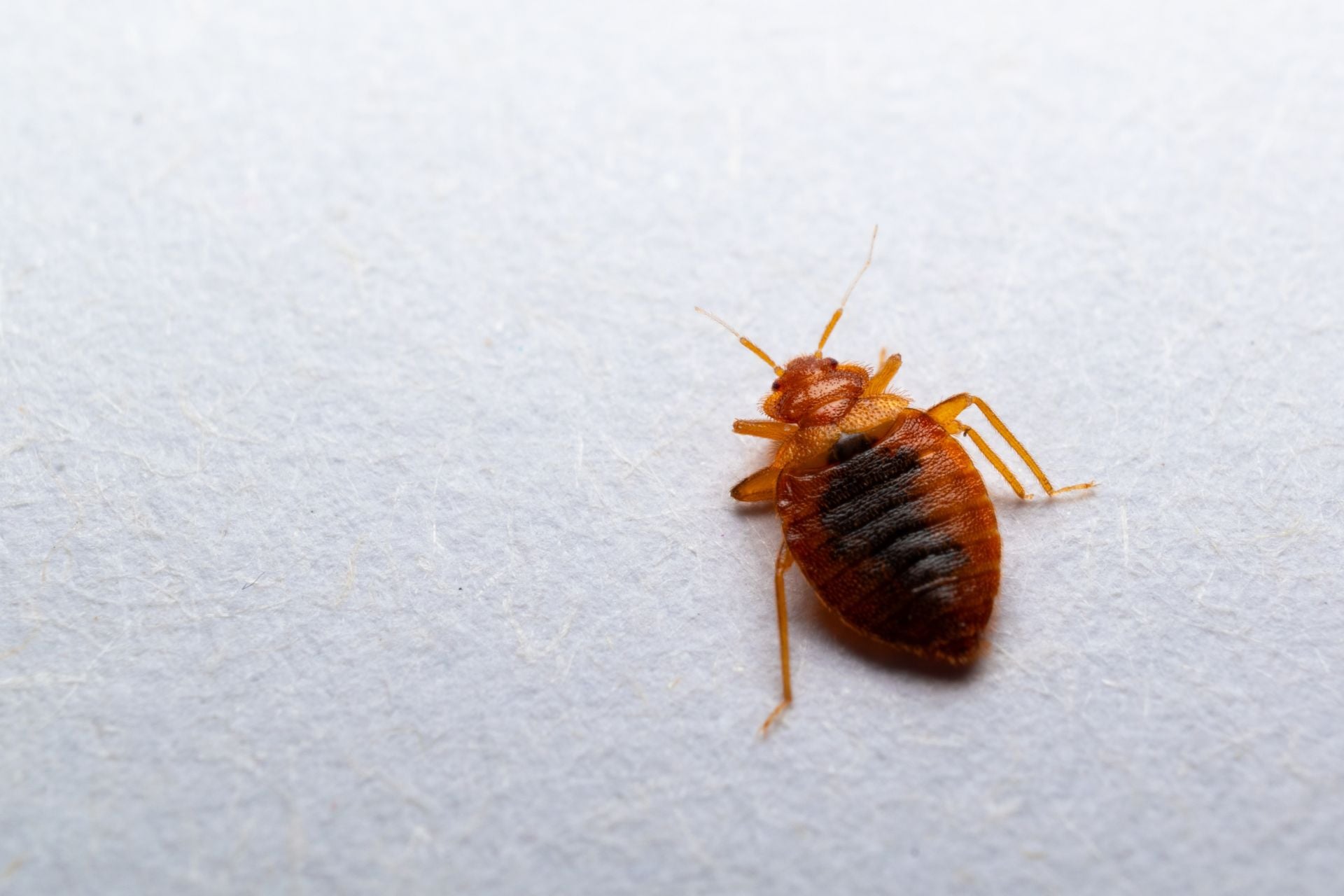
Few living things strike as much fear or disgust in us as a parasite. But in his upcoming book, Hidden Creatures: Luscious Leeches, Bashful Botflies, and the Wondrous, History-Shaping World of Parasites, entomologist Dino Martins is hoping to stir up a different feeling in people toward these free-riders: admiration.
Martins takes readers on a tour covering many of the parasites that have plagued humanity for millennia, from tapeworms that sap our vitality from inside the gut to bed bugs that feast off our blood during our most vulnerable hours spent sleeping. Nestled within tidbits on the biology of these parasites and the scientists who helped us better understand them, he also weaves in beautifully written passages detailing his upbringing in Africa and the years he’s spent studying nature up close.
I reached out to Martins to talk about why he chose to delve deep into parasites, his own personal least favorite encounter with one, and the larger lessons these real-life vampires can teach us about the world and our place in it. The following conservation has been lightly edited for grammar and clarity.
Ed Cara, Gizmodo: Can you tell us a little bit about the origin of this book?
Dino Martins: Well, several things happened.
I was in the process of finishing up 10 years of being in a leadership position at various institutions, first the Mpala Research Center, then the Turkana Basin Institute. And there was this moment where I just realized that so much was changing in the world, and people just really needed to understand it at this deeper level. Things like the shifts in science funding, which I was personally affected by—we actually had a big grant working on ticks and mosquitoes and that was pulled away.
I realized that there were so many competing narratives, there was so much misinformation, there was so much anxiety and all this other stuff out there. And the one thing that could sort of bring people together was the story of nature. And I felt that this was the moment for me to tell that story.
It’s something I’ve really wanted to do for a long time. I’ve done lots of natural history writing, but this was my first attempt at actually doing something that was non-fiction—but also a narrative—and that was targeted at a popular science audience to try and reach as broadly as possible to just share that sense of wonder and discovery. And also, being Kenyan and being based here mainly in Kenya, I really wanted Africa to feature strongly in this. While it is, of course, a global story, I do tell a bit of the story of East Africa and my own story. And so everything came together.
I was also encouraged by my editors and several colleagues who are scientists as well as storytellers. The last few years I’ve been involved in a literary festival here in Kenya called the Macondo Festival, and it was started by one of the people who very kindly provided a quote for the book, Yvonne Adhiambo Owuor. She’s a novelist, and she’s been encouraging me to really think about how to get the message of science across to others. And in talking with colleagues, mainly African scientists, but others, too, we came to a realization.
If we think about the science being done right now, it’s better, deeper, broader, more holistic, and more data-rich than science has ever been, since even the age of the enlightenment. When you look at some of the papers we’ve published—we’ve had papers in Nature and Science, some involving hundreds of authors from around the world—they’re so rigorous, they’re so good. But the gulf between that quality of the science and the world’s understanding of science and the need to absorb science, not just at an intellectual level, but at an emotional and even a spiritual level, there’s this wide gulf. And I thought, okay, what can I do here? Well, maybe I can be this little bridge between the public and science.
Gizmodo: In your professional career, you’ve often studied pollinating insects like bees. So what made you want to focus on parasites specifically for this book?
Martins: I actually did work on another book about bees at the same time, that will come out next year. But that’s a great question. And it was the same one that my editors, the publisher, the agent, all asked me.
I’ve spent a lot of time out in the field with my students and teaching some courses, and then also just leading some field courses where we have rangers, members of the public, naturalists, and young scientists all come. And I noticed the one thing that people care about, if they’re not that passionate about the environment, is that they care about their health. And parasites just really grab people’s attention. Because yes, they’re so disgusting, and you don’t want to look, but you can’t help but look, and you don’t want to know, but you need to know. They’re coming to get you, so you better learn about them.
And so I weighed this carefully. I discussed it with lots of colleagues, and I just felt at this moment in time, this is a book that will hopefully reach people. Because we’re also facing all these immense challenges in terms of change across the planet. Whether we think about the covid-19 pandemic, the Ebola outbreak, and now the screwworms running wild in Texas, everybody on this planet is going to be touched by a parasite in one way or another.
Gizmodo: One of the things I loved about the book was your recounting of personal encounters with the parasites you write about, some of which ended more disastrously than others. Was there ever any bug or other kind of parasite that even made someone like you shudder?
Martins: That actually has happened a number of times.
But particularly, the liver fluke was really so wonderful and horrifying at the same time. I wrote about going into a slaughterhouse to find some flukes. And coming from a rural family, where we kept livestock, all these different animals that I developed a close connection with, and then seeing this parasite emerging from the carcasses in the slaughterhouse, it really gripped me. And there’s also the fact that it’s a complex organism. It’s not just like some bacteria or fungus, it’s actually looking at you in a way and thinking and making decisions and behaving. I just found those horrifying.
I will say one thing though: Even the most horrifying parasite, the more you learn about it and just from an evolutionary sense, how sophisticated and remarkable their lives are, I might be horrified, but also, I’m going to take my hat off to you. Because to have evolved this life cycle is so brilliant.
Gizmodo: You cover a wide variety of parasites in the book, but were there any that ended up on the cutting room floor?
Martins: Oh absolutely. Writing this kind of book has been a real learning experience for me as a scientist in being concise and constructing the story and trying to tell it in a in a gripping way.
The book was actually more than a third longer than it actually is now. And the two editors I had were brilliant. But it was a painful process to cut down that one-third. There were so many examples of absolutely incredible things I had written about and wanted to include, but didn’t.

The screwworm, for one. I do talk about maggots in the book and I had actually focused on screwworms as an example, but then we decided it was getting a little bit too much in that one section. When I wrote about ticks, there’s this tick that we encounter in the book that’s on the puff adder. Well, that same genus of ticks has evolved to live in the Galapagos on marine iguanas, and then it’s also found on sea snakes, which is just like, oh my goodness. These are terrestrial organisms, they’re blood feeders, and now some of them are living in the ocean, parasitizing these other creatures. It’s like parasites are these aliens that can sort of move between worlds.
There were things that I wanted to mention from my childhood. The Congo floor maggot is this maggot that comes and feeds on you when you’re sleeping like a vampire and then sneaks away. I mean literally half of all life is parasites. I could have included another million examples. So that was part of the challenge in writing this, and the lesson I learned from the editors is: Look, you’ll get to talk to lots of people, you’ll get to tell this story in many other ways.
Gizmodo: To close things out, what do you hope readers most take away from your book?
Martins: There’s a couple of things that I’d really love people to get out of this.
One would to either kindle or re-kindle the sense of wonder that I think every young person, every child has about nature, and to help them realize that nature is complex and wonderful. But if we’re going to learn about the beautiful things, we also have to learn about the bizarre things. Otherwise, we don’t have a complete picture. And not having a complete picture actually is dangerous to our health, to our communities, to our animals, to our families, everybody. So I really want people to feel inspired to go out there and look at things closely, to really learn about things, and question things.
I think there’s also this other part of the book, and I did it as subtly as I could because one must be careful with any sort of political messaging. But we’re living in at a time where the world is becoming increasingly nationalistic and populist, inward looking politics all over, which are having massive repercussions for science. And I wanted to point to these historical examples where we as humanity, with all these absolutely eccentric, weird, and wonderful scientists, we were able to solve some of the biggest challenges we ever faced.
We’ve come a long way in understanding and dealing with things like malaria, for example. We did that because people across cultures, across borders, across empires, challenged those boundaries. And I presented those examples. I’ve done them as as a Kenyan, trying not to be judgmental of the past, but saying, look, this is what happened, this is how it played out. And if we didn’t do it at that time, the world that we all live in now would be very, very different. We would not have all these incredible benefits that we have of modern life.
I always say to my students, we live in the best of times, we live in the worst of times. And the best of times has come about as a result of collaboration.
Many scientists are being careful about politics right now, and rightly so. But the fact is that, putting all politics aside, whatever your feelings might be, is that you and I are biological creatures on a biological planet, subject to the same rules of nature and evolution that all other species are subject to. And so I think my last message out of the book to everyone would be: We are special, but we’re actually not that special. We cannot outrun evolution, and we never will.
Hidden Creatures: Luscious Leeches, Bashful Botflies, and the Wondrous, History-Shaping World of Parasites will be published July 7 by Penguin Random House.