Hollywood is full of “what if” scenarios—actors who famously turned down projects (like Will Smith and The Matrix) or directors who didn’t get to make the movie they dreamed about (see: Jodorowsky’s Dune). But sometimes, a scuttled project turns around and makes another one possible, and a cinematic classic emerges.
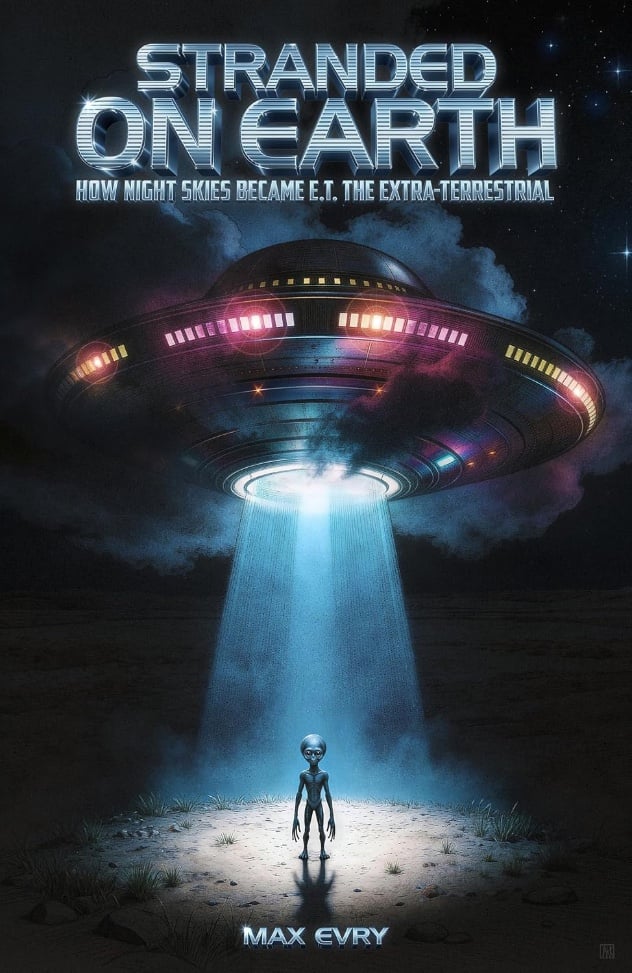
That scenario is woven into the backstory of Steven Spielberg’s E.T. the Extra-Terrestrial, and it’s the subject of a new book by writer and film journalist Max Evry titled Stranded on Earth: How Night Skies Became E.T. the Extra-Terrestrial.
Read on for an exclusive excerpt from Evry’s book, including an introduction (and photos!) provided by the author to add even more context.
EXCLUSIVE EXCERPT: Rick Baker’s 1980 Night Skies Alien Test Informed E.T. and “Made Yoda Look Like a Toy”
By Max Evry
Steven Spielberg’s E.T. the Extra-Terrestrial was for many years the most financially successful motion picture ever made, and still maintains beloved status among fans. While the sweet film about the friendship between a young boy (Henry Thomas) and a good-natured alien from outer space may have touched the hearts of the world, many do not realize it began life as a far more sinister film.
Night Skies was Spielberg’s intended follow-up to Close Encounters of the Third Kind, only this time he would focus on far more malevolent aliens who encroach upon a rural farm family with terrifying intentions. With a story by Spielberg and a screenplay by John Sayles (The Howling), the unmade sci-fi horror film Night Skies was to be directed by noted production artist Ron Cobb (Conan the Barbarian) with practical creature effects by none other than future Oscar-winner Rick Baker (Men in Black, Thriller, Ed Wood).
At the time Baker was still an up-and-coming makeup effects artist, and was just setting out to create his landmark work on John Landis’ An American Werewolf in London when he got the call from Spielberg to create the five nefarious ETs for Night Skies. Although he and Spielberg would eventually have a dramatic falling out, Baker’s early work on the project before it was revamped into E.T. clearly had an impact on the designs ultimately credited to Carlo Rambaldi.
The whole saga is recounted in Stranded on Earth: How Night Skies Became E.T. the Extra-Terrestrial, the new non-fiction account by author Max Evry (A Masterpiece in Disarray: David Lynch’s Dune) that follows the winding road of development which not only gave us E.T. but also Poltergeist, Gremlins, and many other famous films. In the following excerpt, Baker, his then-business partner David Robert Cellitti, as well as others explain how their newfound company EFX Inc. set about to create the first videotaped test of Night Skies’ Skar, the evil alien creature who would eventually evolve into E.T. Also included are frame grabs from the test, which was discovered and restored by Evry and then passed on to Baker (who recently edited a montage for Instagram).
Rick Baker’s studio at his house on Hortense Street in Studio City was essentially a workshop taking up the back of the home as well as the garage area. At the time it was mainly Baker and wife Elaine, along with mold maker Gunnar Ferdinandsen as well as Rick’s right hand man Doug Beswick. In the midst of all this, a friend of Baker’s introduced him to a young sculptor named Tom Hester in his early 20s.
“I had no idea who Rick Baker was,” says Hester. “I liked monster movies, but wasn’t following them as a fan. I met him when he was gearing up for American Werewolf. He asked if I would be interested in working on that. I said, ‘Yeah, sure.’ I started with him in the summer of 1980 and, just before we really got going on werewolf stuff, he asked me if I wanted to help with this test he was doing. That was the Night Skies test.”
A lot was riding on the Skar test conducted on July 1, 1980, since Spielberg’s reaction would keep the Columbia seed money flowing for R&D. They could also firmly establish the EFX facility in preliminary set up on Farmdale Avenue. The producer had been wowed by Baker’s initial design of the lead 4-foot-tall alien Skar, whose humanoid facial features were offset by a bizarre body with a dog-like ribcage, frog-like legs, and a ridged tail. The creature’s posture was “hunched like an ape” when walking, giving it a proper stalking stance. A reptilian green-hued fiberglass sculpt of Skar’s upper body got Baker the okay for a test build of the functional character he described as “a real badass.”
Baker explained his inspiration: “The way the arms join on was based on an Indian rhinoceros, which has these weird fleshy folds where the arms fit in. I also collected a bunch of tadpoles at one point, had them develop into toads in my office. The very first casting I did in resin of the Night Skies alien I painted up in greens and grays and yellows. Then—when I got the prototype put together—I decided to paint him more in fleshy tones.”
After four months of work and $70,000 spent, the “crude” prototype alien had only been constructed from the torso up, thus rested on a table with slave servo mechanisms (also known as “Waldos”) for the wrist, elbow, and arm run through the body from underneath. Lever action routing control cables were responsible for head and finger movement. Instead of bone mechanics moving underneath rubber like his ape creation Sidney in The Incredible Shrinking Woman, Baker experimented with rubber “flesh” sliding over stationary bone. He referred to this process as “anatomation.”
“David Cellitti was saying, ‘You know, you should come up with a bullshit name for what we do,’” according to Baker. “On the prototype head I had cables pulling an attachment to the foam, and it would actually move over the bone. The bone remained in place as it really would. I had an actual jaw joint cast from a human skull, the way the jaw fits into a little socket there, and it could move from side to side just as well as up and down. That’s why we came up with the name ‘anatomation,’ but it was just a BS thing.”
The test itself is a marvel to behold. In the edited 10-minute MOS version sent to Spielberg, it begins on a wide of the half-finished Skar with its arms outstretched and fingers moving Nosferatu-like against a black backdrop. It then cuts to a closeup, with Skar doing all manner of expressions from snarling to screaming, then smiling as a hand pets its head, showing the versatility of the puppet’s “unlimited” ability.
We then cut to a medium shot where the missing lower torso is out of frame. Here we see similar expressions combined with articulate hand and arm movement, such as when it fights Baker who is trying to strangle it. Notably, we see the neck extend considerably when a punch is thrown, confirming a similar aspect to E.T.’s ability. This stretch-and-retract motion would be demonstrated many more times.
According to Baker, part of the reason this prototype came off E.T.-like is “it wasn’t necessarily supposed to be Skar, just a generic alien. The design I did for Skar was a little more mean looking than this one.”
Again like E.T., it drinks a can of beer and acts drunk. Outtakes show it pouring liquid from one cup to another. For the hell of it, it also blows bubblegum, then looks surprised when the bubble bursts. Closeups emphasize emotions like scheming and confusion alongside subtle fluctuations of the throat, throbbing of the brow, fluttering of eyelids, even a sneeze. The eyes dart here and there. Skar’s skin is shiny with glycerin, some of which rubs off on a hand interacting with it. Veiny arm muscles flexed while the stomach expands and contracts for breathing.
The final images show its E.T.-like four-fingered hand curling into a middle finger salute. There is no question: Skar was light years ahead of anything else in the movie creature field of 1980. It felt truly alive.
The crew felt alive too. In the hour-long unedited version of the test with sound, the group of artists are having a blast, hyped by the magic of what they were making happen.
This author had a digital scan made to preserve the VHS test, which was presented to Baker: “Looking at this video, which I haven’t seen in many years, the worst part about it is that was the first time we even played with it. First time I got enough people together to work it. It could be so much better if we actually rehearsed, and they had some experience with it. You can hear me saying, ‘Do this! Do that!’”
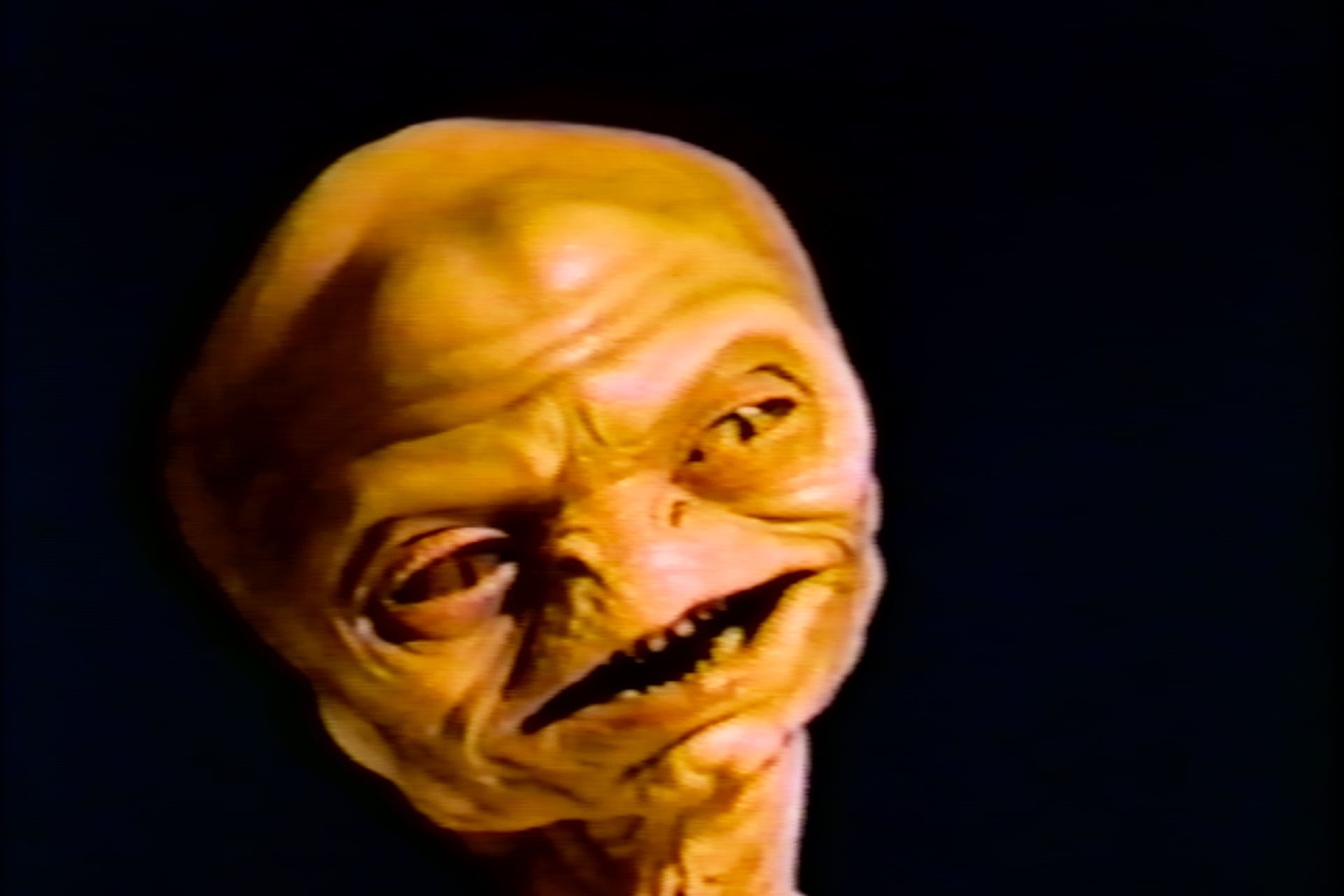
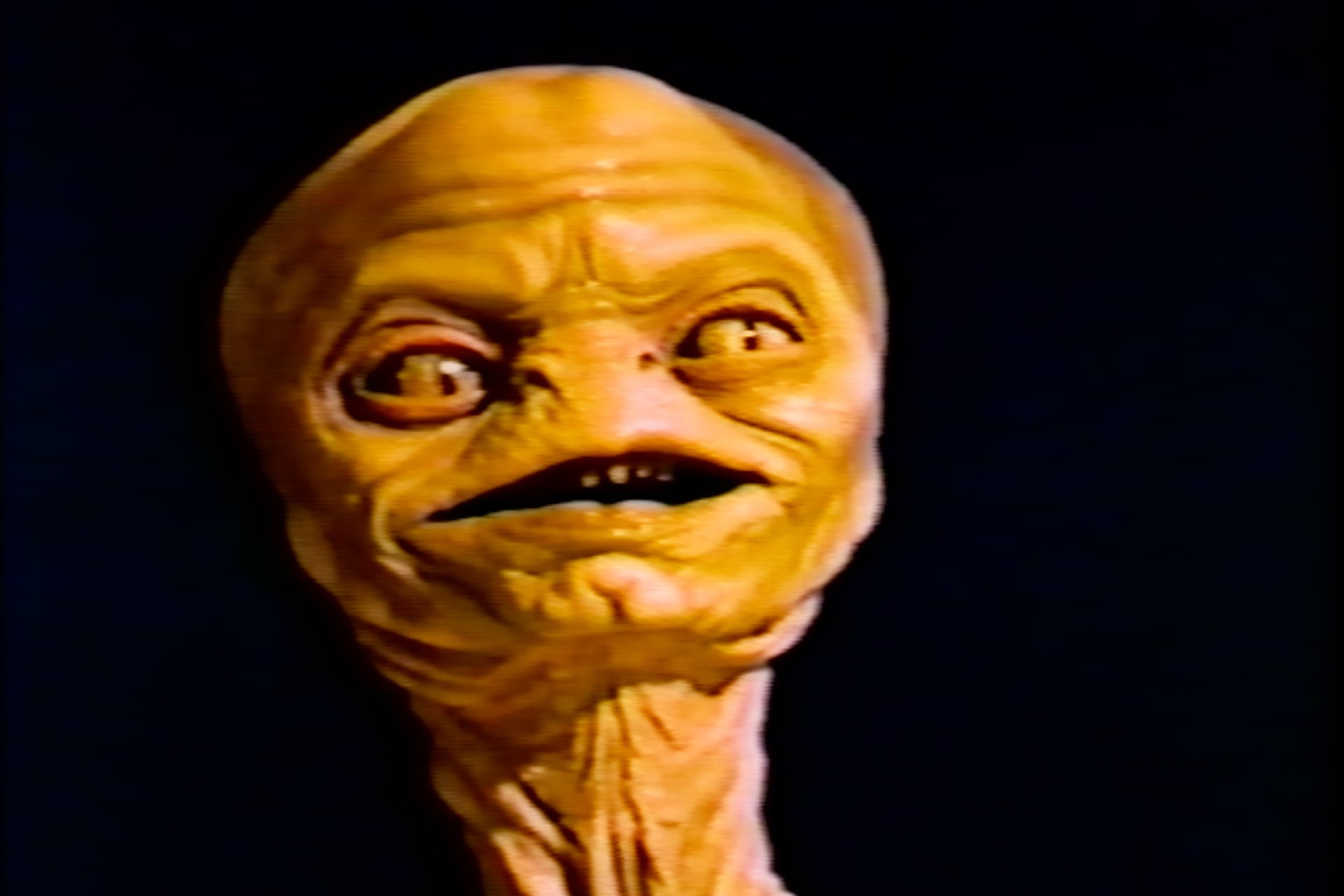
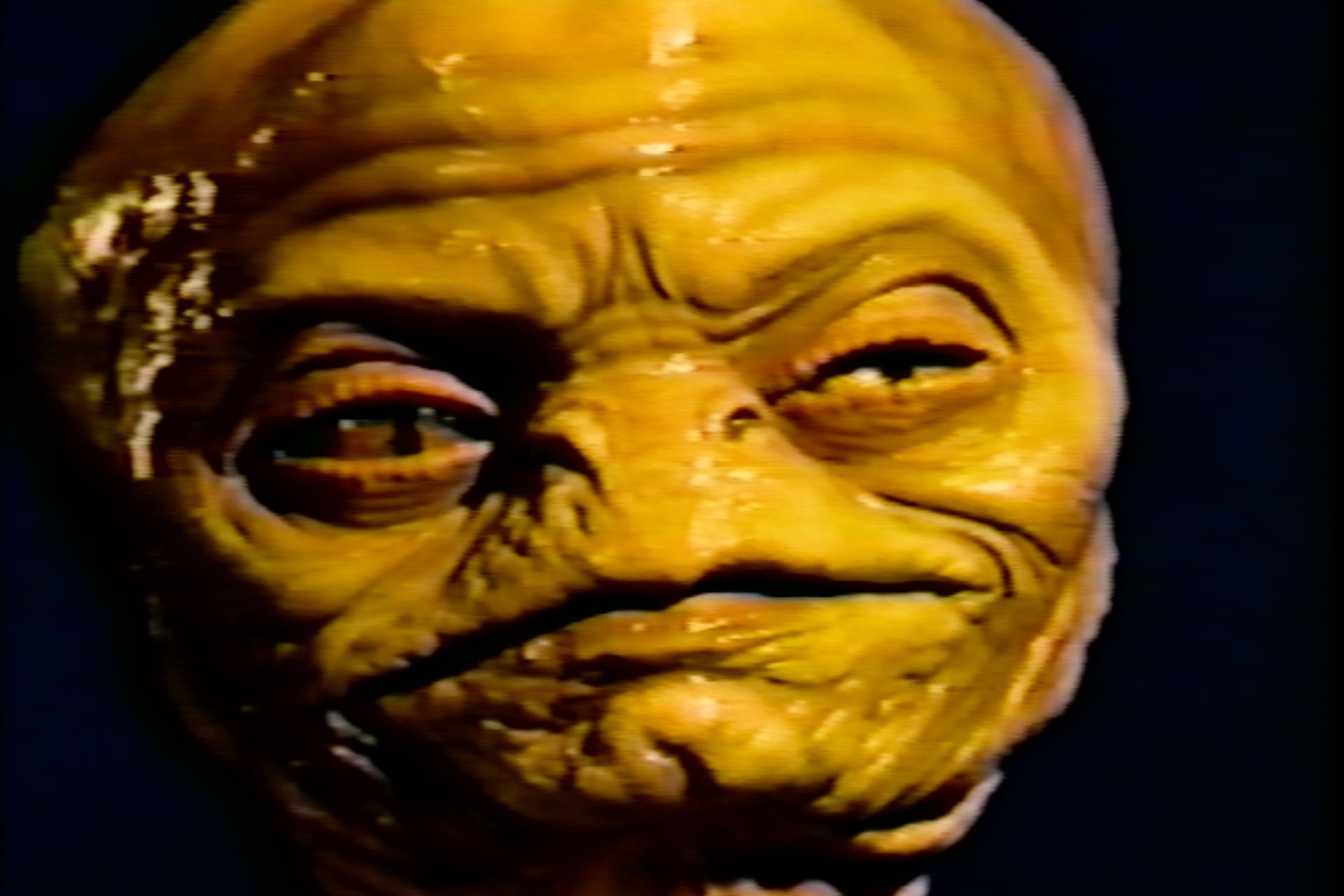
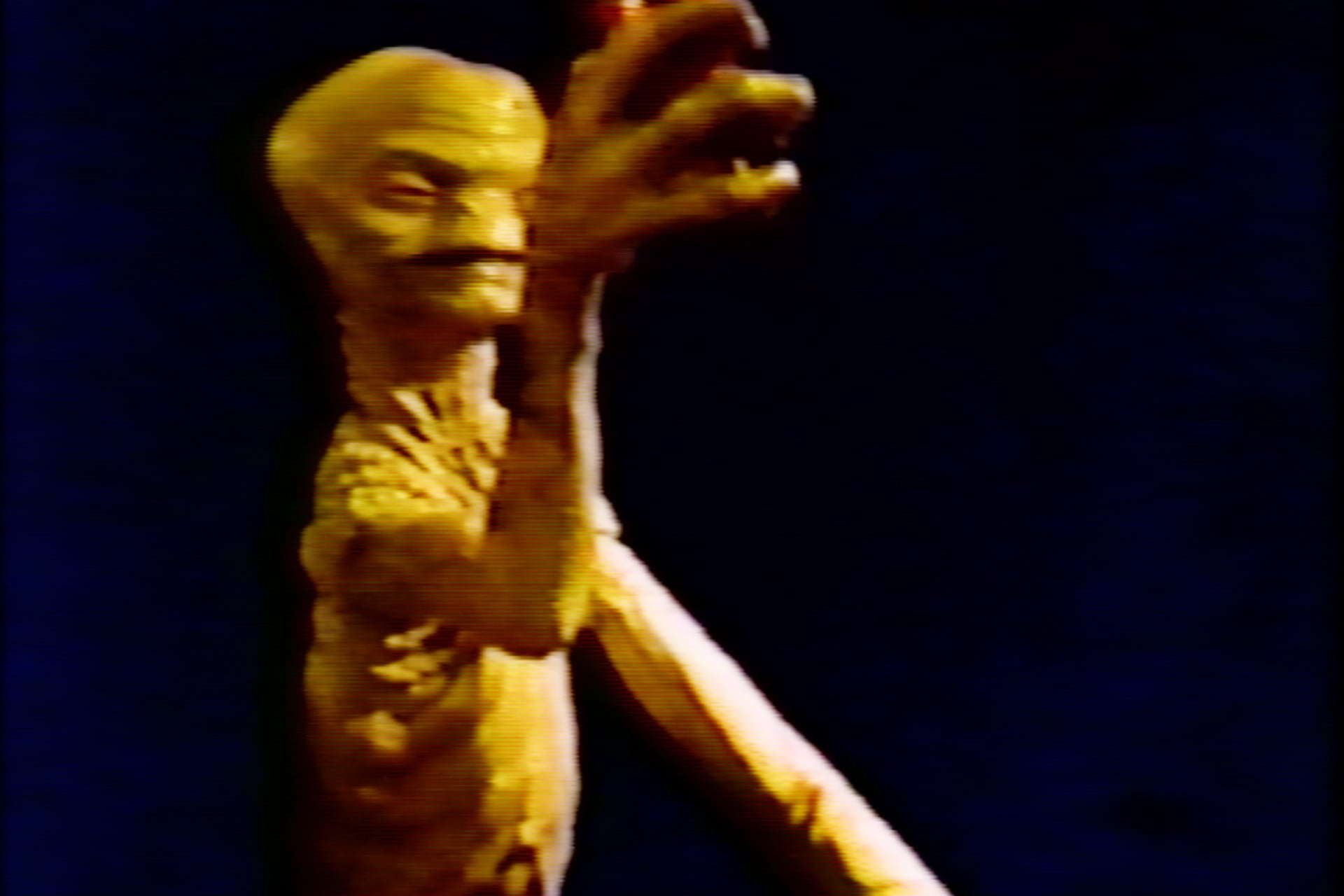
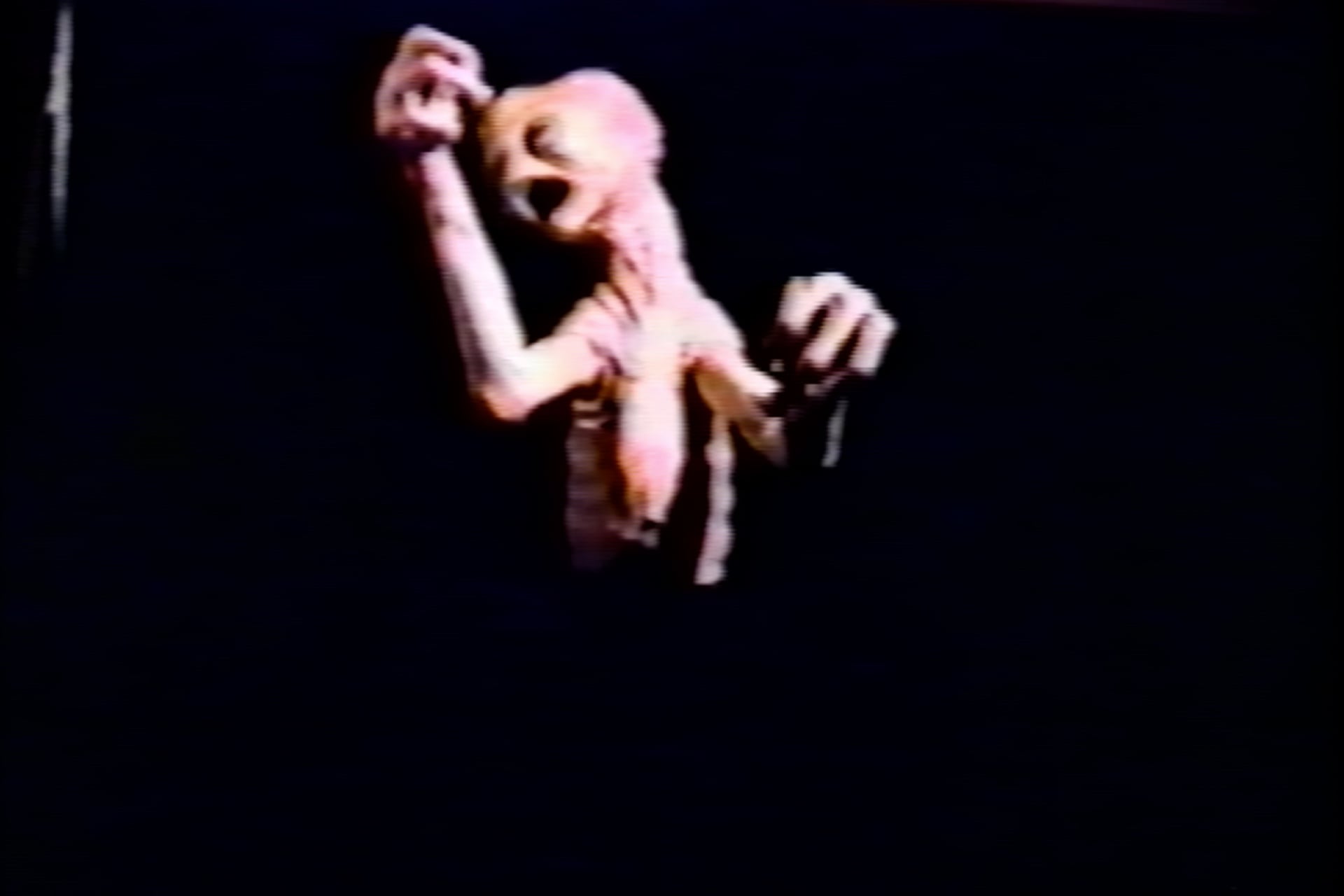
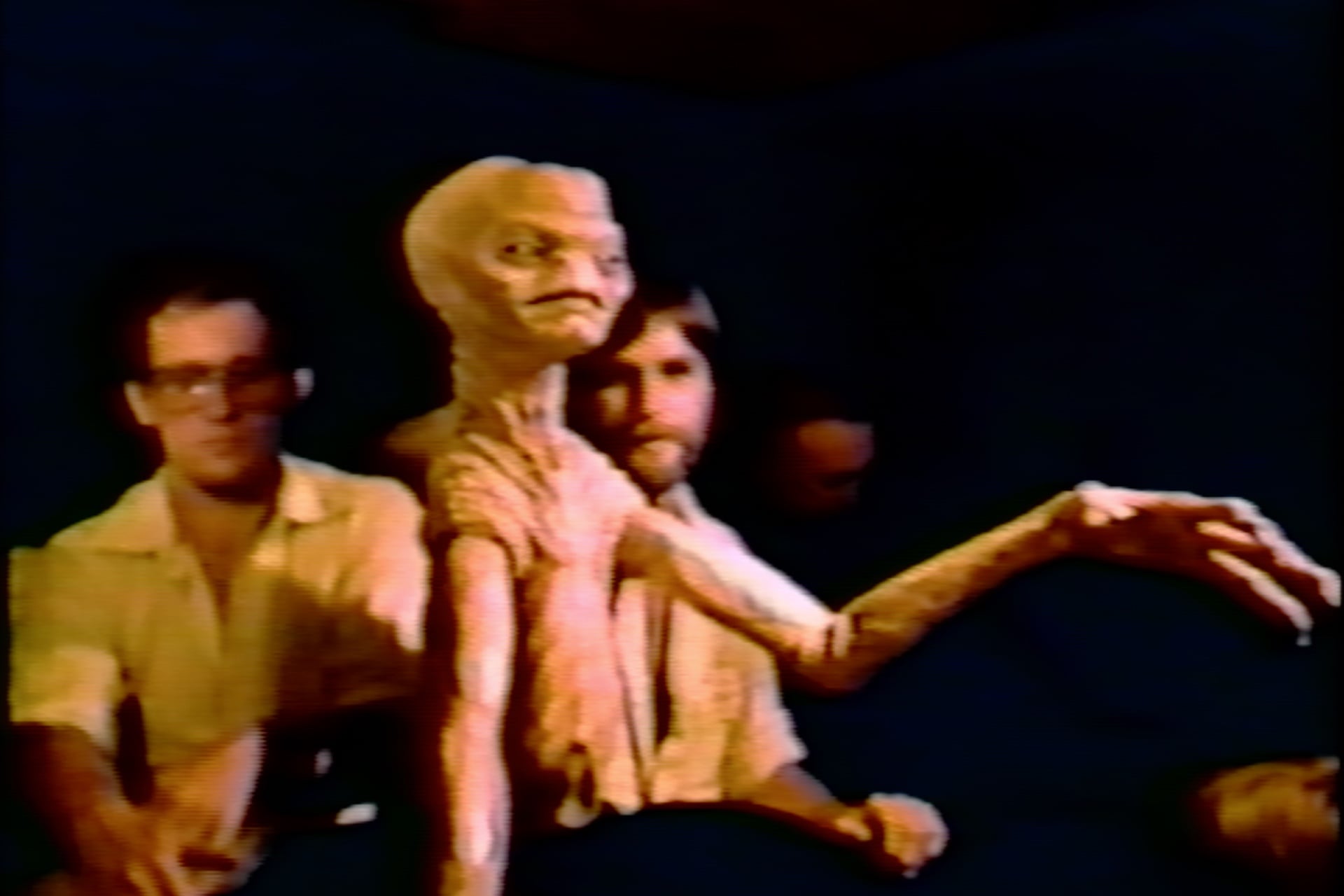
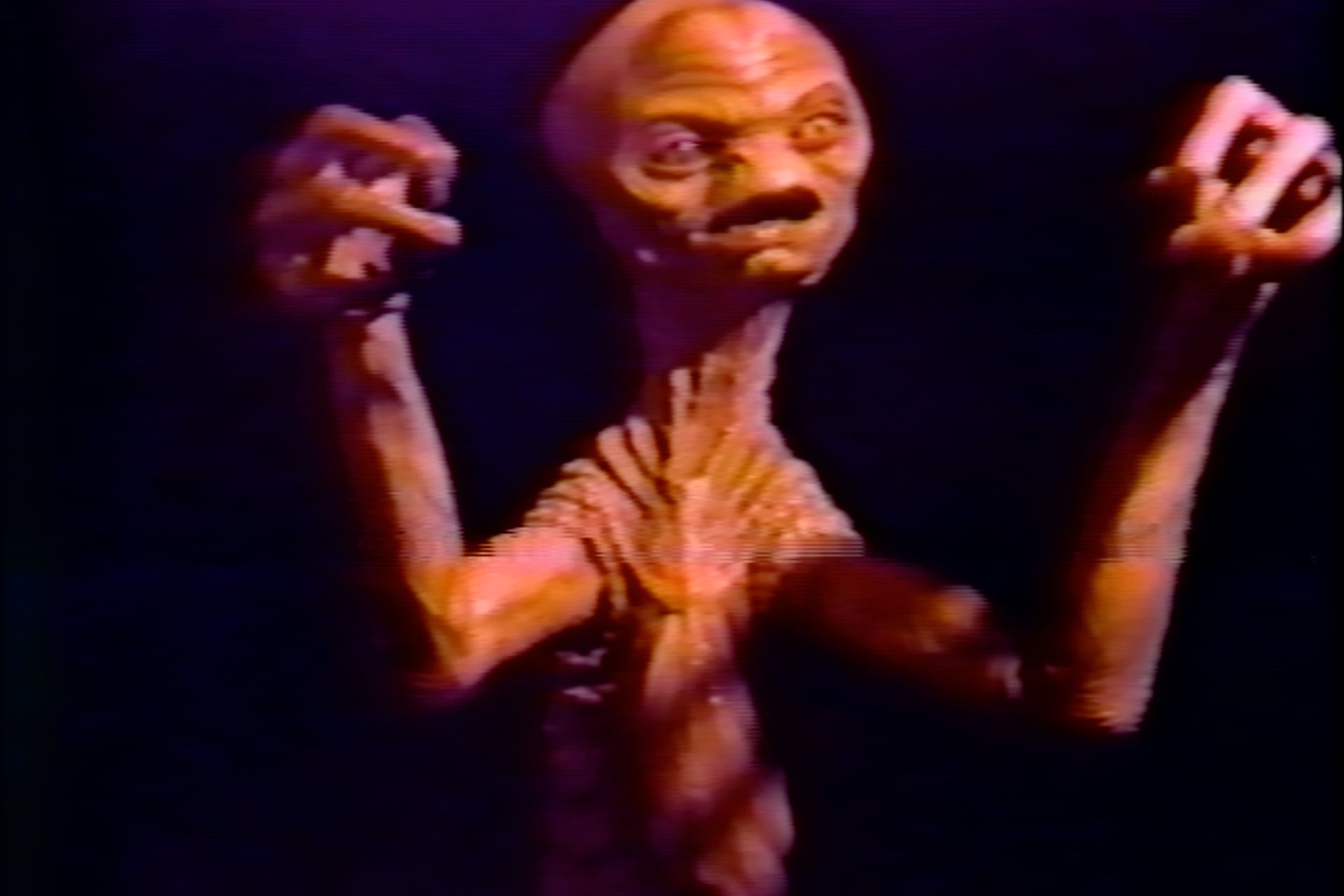
The weekend Disclosure Day came out in 2026, Baker released his own edit of this digital scan, stating, “I just turned on the camera and everybody started operating their parts. There was one monitor and the operators were under the puppet struggling to see what they were moving. I regret not planning out what we were going to shoot, but was excited and wanted to see it move.”
“When I came to help on the day of the test, that’s when I met Doug Beswick and Bill Sturgeon,” remembers Hester. “Bill had been building the mechanical stuff with Doug. We were all at Rick’s place to help puppeteer this thing. I was puppeteering an arm.”
Remembers Craig Reardon, “I drove over to Rick’s place, accidentally discovering the test in progress, and he put me to work operating one of the arms! It was a clever contraption that Rick’s buddy Doug Beswick helped out with in regard to the mechanical aspects, though Rick had a very good grasp of that himself. We all looked at playback and were caught up with enthusiasm for it. The alien utilized radio-controlled servos for the facial expressions, but a lot of it was done with slave mechanisms, where a puppet is motivated mirroring what you do with your own hand or arm.”
“It was primarily about different facial expressions,” continues Hester. “Doug had cable mechanisms in the arms. The arm would come into frame and come back. It was amazing to see this thing because it was brand new to me. I was blown away, to say the least.”
Says Cellitti, “When Tom Hester joined, everybody made fun of him because he was very insecure, but he made the most progress as a sculptor in the shortest amount of time of anybody I’ve ever seen. He went from being laughed at to a main sculptor overnight.”
Explains Hester, “Seeing Rick’s sculpted face and the detail he had on the arms… just seeing that upped my own ability. ‘Oh, wait a minute, you can do all this stuff? That’s cool.’ It’s a matter of focusing on those details. It was quite an eye opener.”
In a brief email exchange, Bill Sturgeon added, “As you can imagine, I saw Rick’s aliens when I was 19 so they had a huge impact on me. I only made finger parts for Doug Beswick at his house for the prototype.”
Kathleen Kennedy reportedly left an answering machine message telling Baker it “made Yoda look like a toy.”
“We did the test and then he sent it to Spielberg, and Spielberg evidently was over the moon… calling it ‘movie magic’ and all this other stuff,” confirms Cellitti.
The story continues in Stranded on Earth: How Night Skies Became E.T. the Extra-Terrestrial, out from 1984 Publishing on October 27 and now available for pre-order.
Want more io9 news? Check out the best movies and TV shows to stream this month and all the upcoming sci-fi, fantasy, and horror books that should be on your radar.