Scorpions
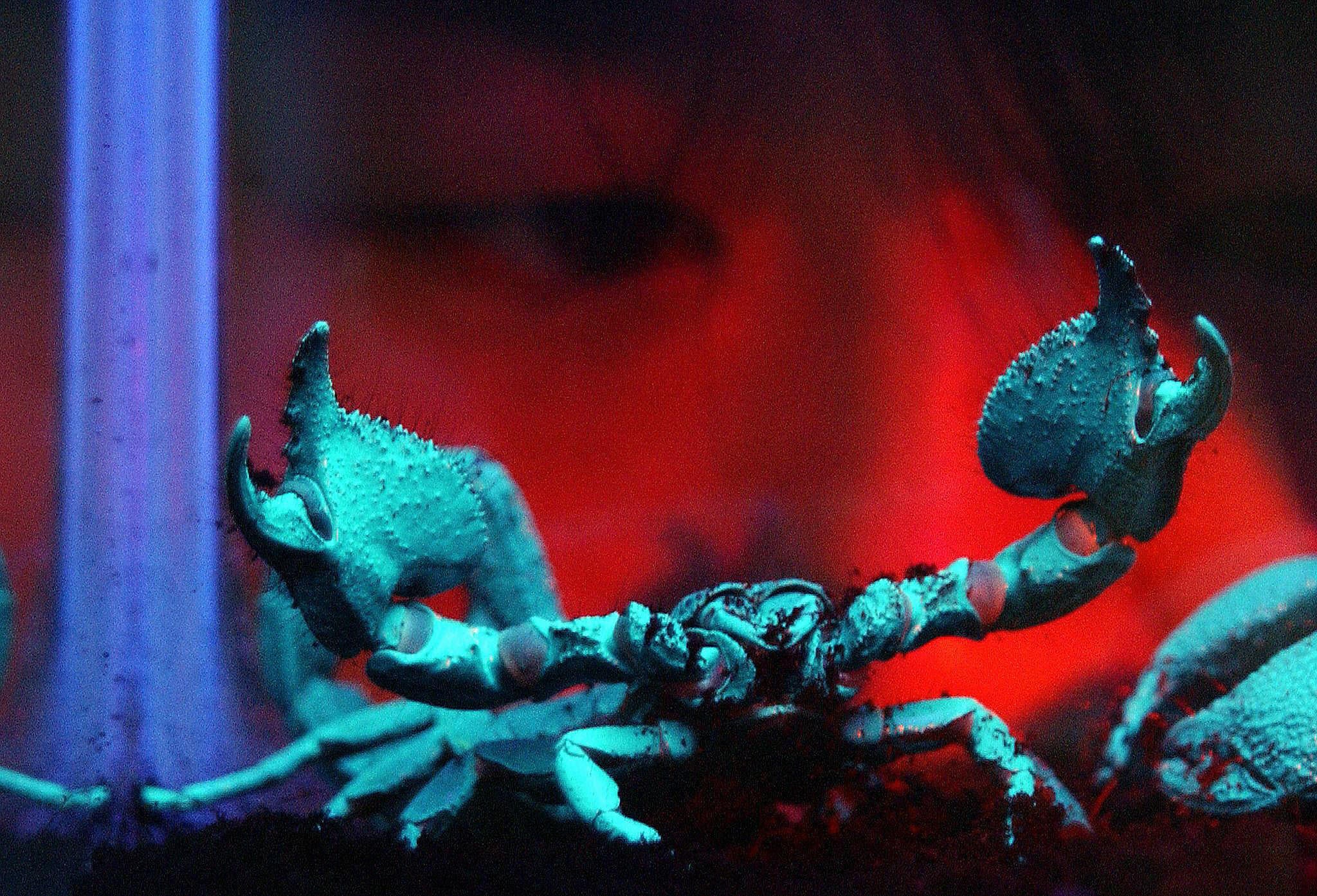
In the 1960s, numerous experiments put scorpions’ skills at handling radiation exposure to the test. They made good candidates. Similar to other extremophiles, scorpions can be frozen solid and survive, for example, and the invertebrates were known to handle UV radiation with ease, glowing from it as if to say, “Is that the best you’ve got?”
Thanks to these experiments, we know the radioresistance of a couple of scorpion species. How long each lasted depended on the doses they got—one species couldn’t make it a week after doses of 11,500 roentgen, but another species (the fattail scorpion) was reported to resist over 50,000 roentgen. According to the U.S. Nuclear Regulatory Commission, it would take about 450 rem (roentgen equivalent in man) to kill 50% of a human population from exposure over 30 days. So scorpions would certainly do better than humans after the warheads went off. I suppose we can leave it at that.