Tardigrades
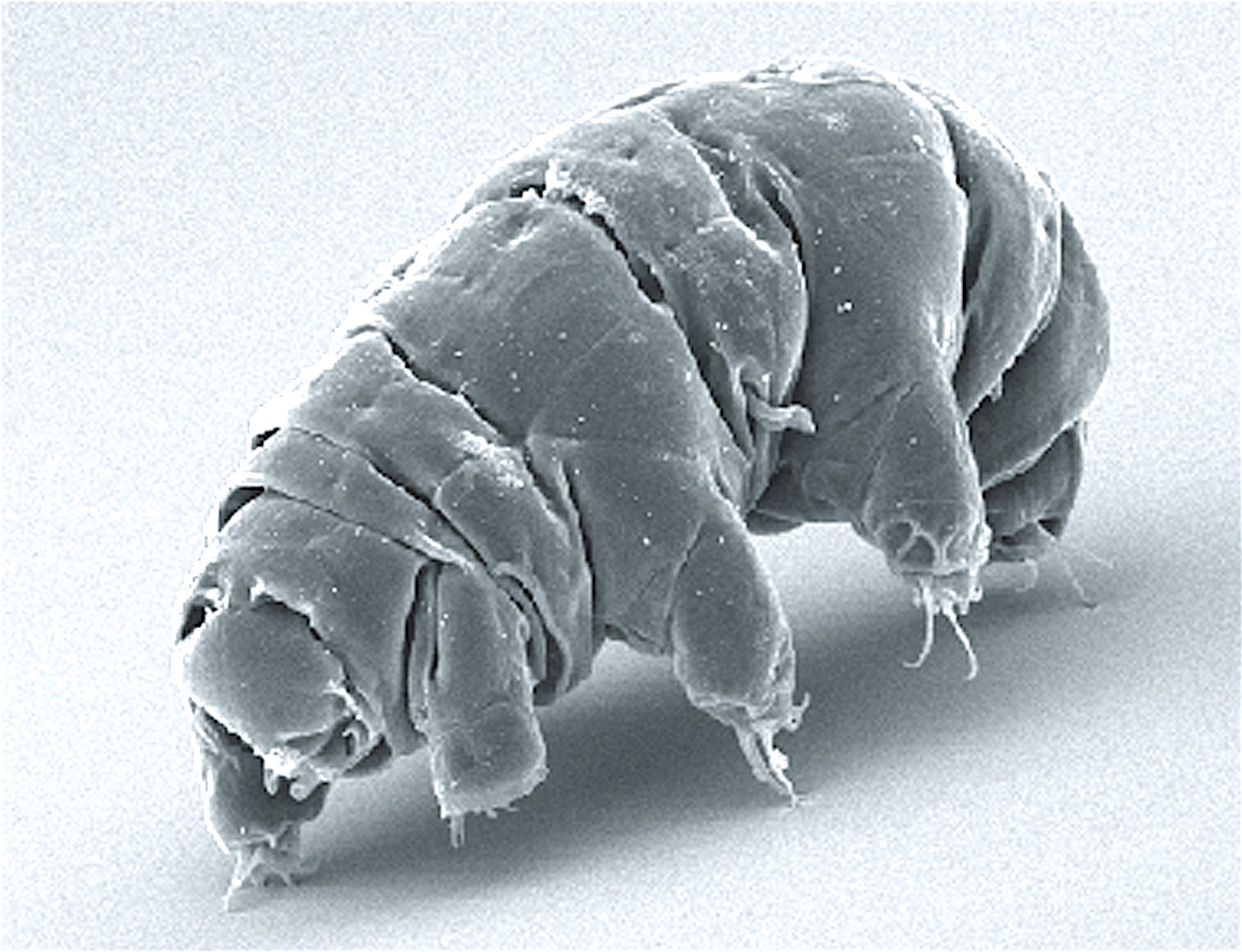
Tardigrades only broke into the mainstream discourse a few years ago, but since then, these water bears (also nicknamed moss piglets) have never ceased to amaze. While they endure extreme environments, these microscopic animals can be found most anywhere—one species was discovered in a parking lot. Just as insects are good at DNA repair, tardigrades are good at threat mitigation. As Thomas Boothby, an extremophile expert at UNC-Chapel Hill, told the BBC in 2015, it comes down to their ability to recover from dehydration, just as the sleeping chironomid larvae do. “Since water bears can survive drying,” Boothby said, “they must have tricks for preventing or fixing the damage that cells like ours would die from.”
In October, a new troupe of tardigrades were found to have a radiation shield that makes them even more resistant than the C. elegans nematode. Before that, a tardigrade protein was found to help human cells to resist X-ray radiation.
https://gizmodo.com/new-species-of-tardigrade-discovered-in-japanese-parkin-1823393554