The Two Types of Forams
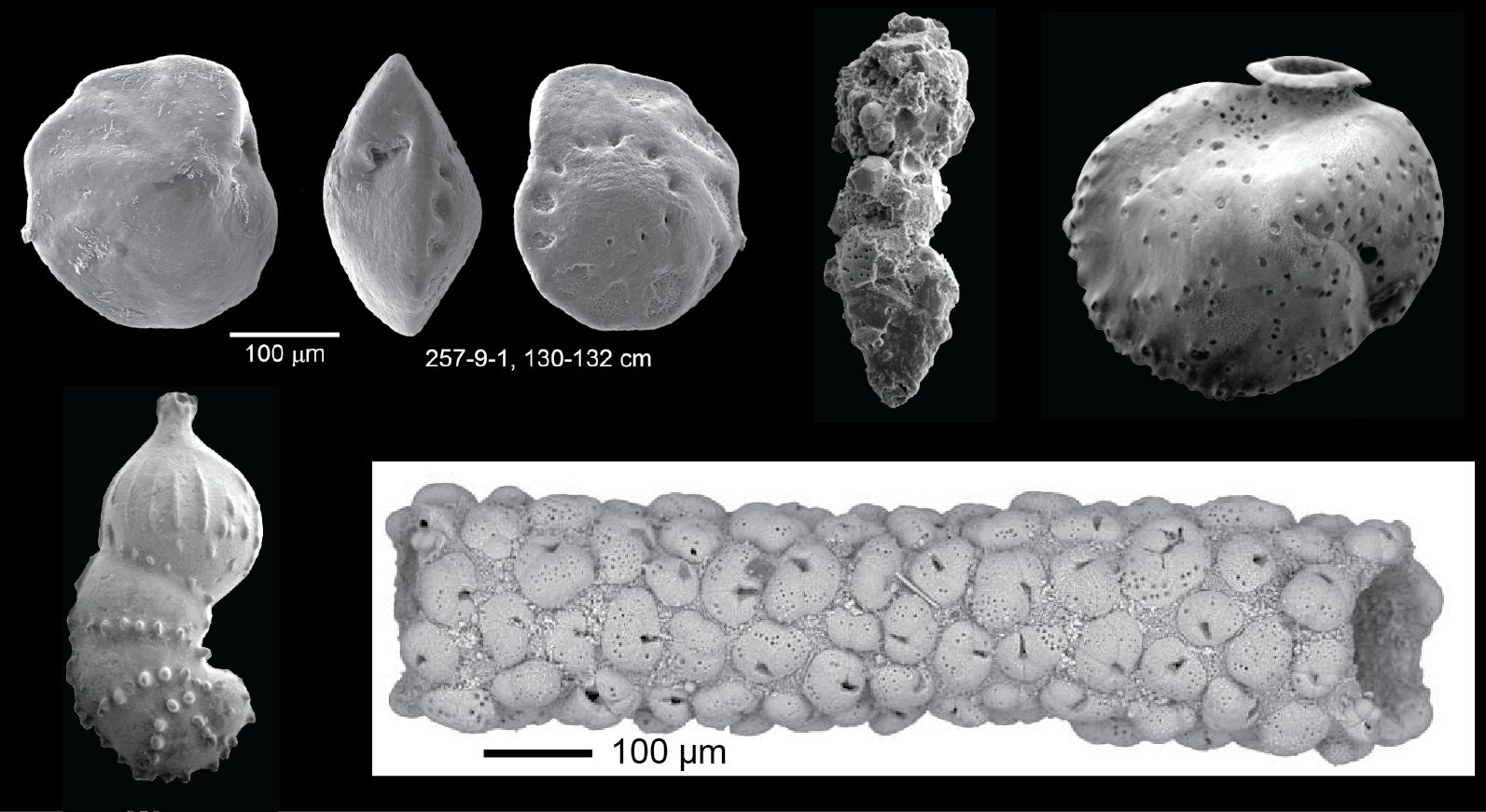
There are two types of forams: planktic and benthic. Planktic forams—which are all typically very small and fit on the head of a pin—live in open marine environments and float (these fellas don’t swim) in the upper part of the water column. Some planktic species live near the surface of the water, Lam said. Others have little friends in the form of photosynthesizing algae.
Benthic forams live on or within surfaces, sediments, and at the bottom of the ocean, as well as in freshwater, brackish water, and marine environments. They come in a variety of sizes, ranging from the size of a grain of sand to the size of a tennis ball. Hönisch said that to identify them, scientists study their shape, which help them classify each species. The little creatures have a quick life cycle, ranging from a few days to a few years. Experts still aren’t sure how many foram species there are living today, Lam said, with estimates running between 4,000 and 10,000.
Although many forams are very small, they don’t let that affect their appetite. Lam said forams use sticky appendages that extend from their shells called pseudopodia to trap and eat animals such as brine shrimp. Planktic forams eat animals that are up to 10 times bigger than the diameter of their shell, she said.
“It’s essentially the equivalent of if I were to throw a turkey at you and expect you to eat that turkey every other day.” Hönisch said. “ I mean they’re really voracious eaters. In some ways, they’re really kind of creepy creatures because what they do is they just stick all their filaments into their prey and they suck it out.”