Their Shells!
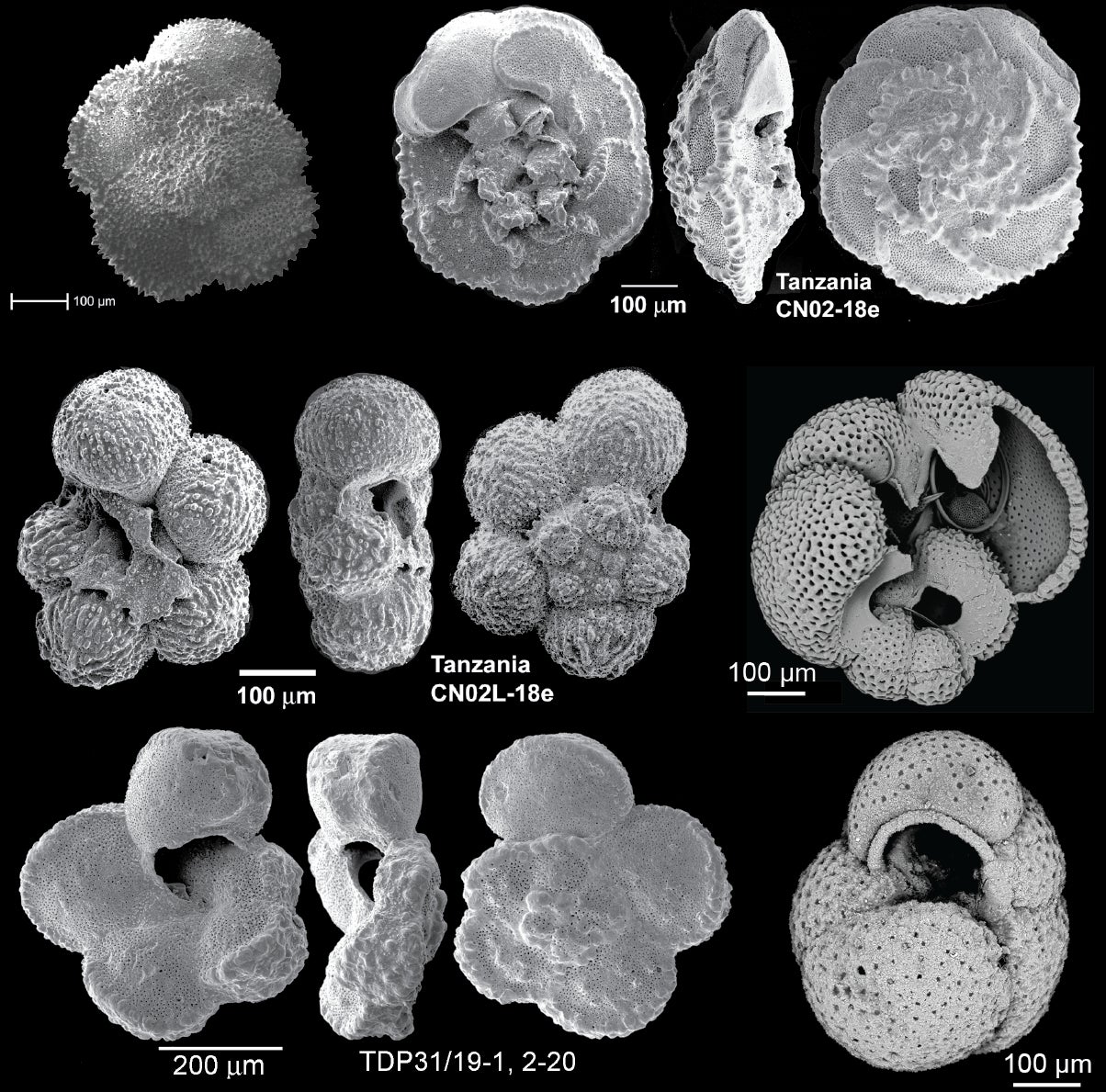
One of the most interesting characteristics about forams is their tests, or shells. Planktic forams grow their own shells using calcium carbonate, the material used to make the same shells you can find on the beach. Since planktic forams are so tiny, you need a microscope to see their shells. Benthic forams, on the other hand, make their shells out of calcium carbonate and other materials, Lam explained, such as organic material, pieces of sediment particles, and sometimes even small planktic forams, all of which are glued together with organic cements.
Inside, the shells are a series of hollow chambers. Forams continue adding more chambers throughout their lifetimes. From the outside, some of them also have spines that protrude from their shells. Their shells can also have pores or small holes.
The shells honestly look like little sculptures. It’s amazing to think that these unicellular organisms are able to create something so beautiful and complex, and that they’ve been doing it for millions of years.