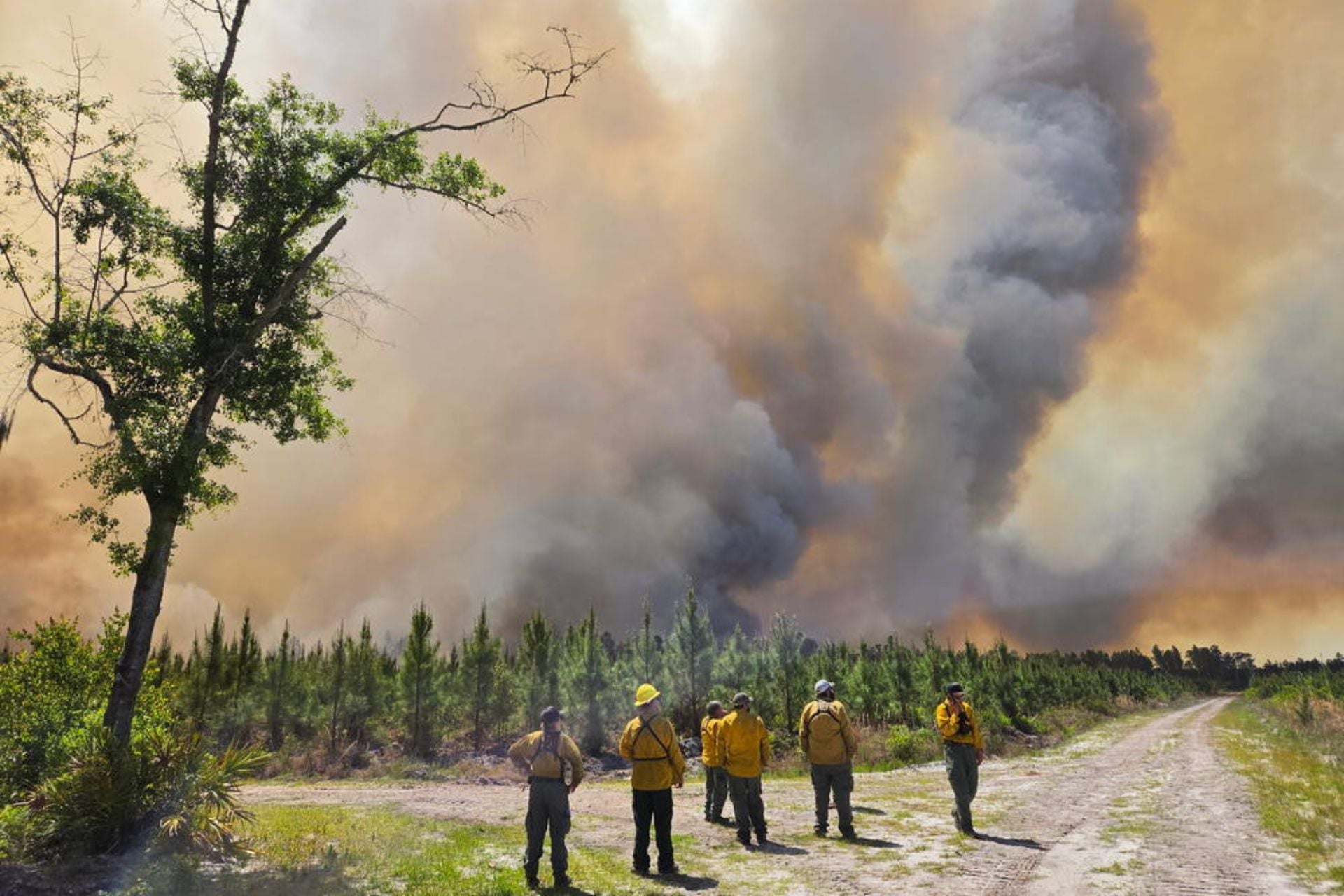
Spring in the southeastern U.S. is usually marked by heavy rain, thunderstorms, and high humidity, but this year firefighters in Florida and Georgia are battling starkly different conditions. Widespread drought and gusty winds are fueling large, destructive blazes in both states, but there’s also another factor at play: the lingering impacts of past hurricanes.
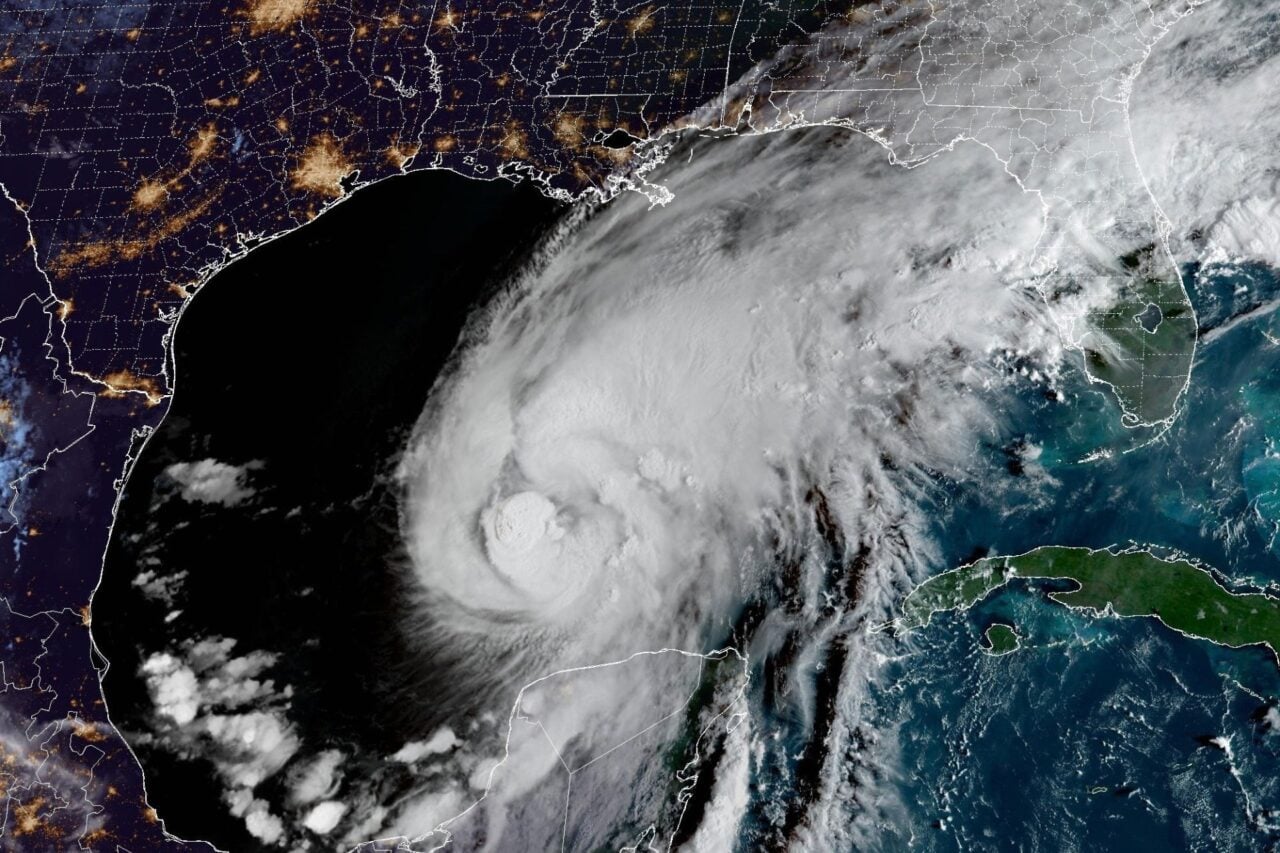
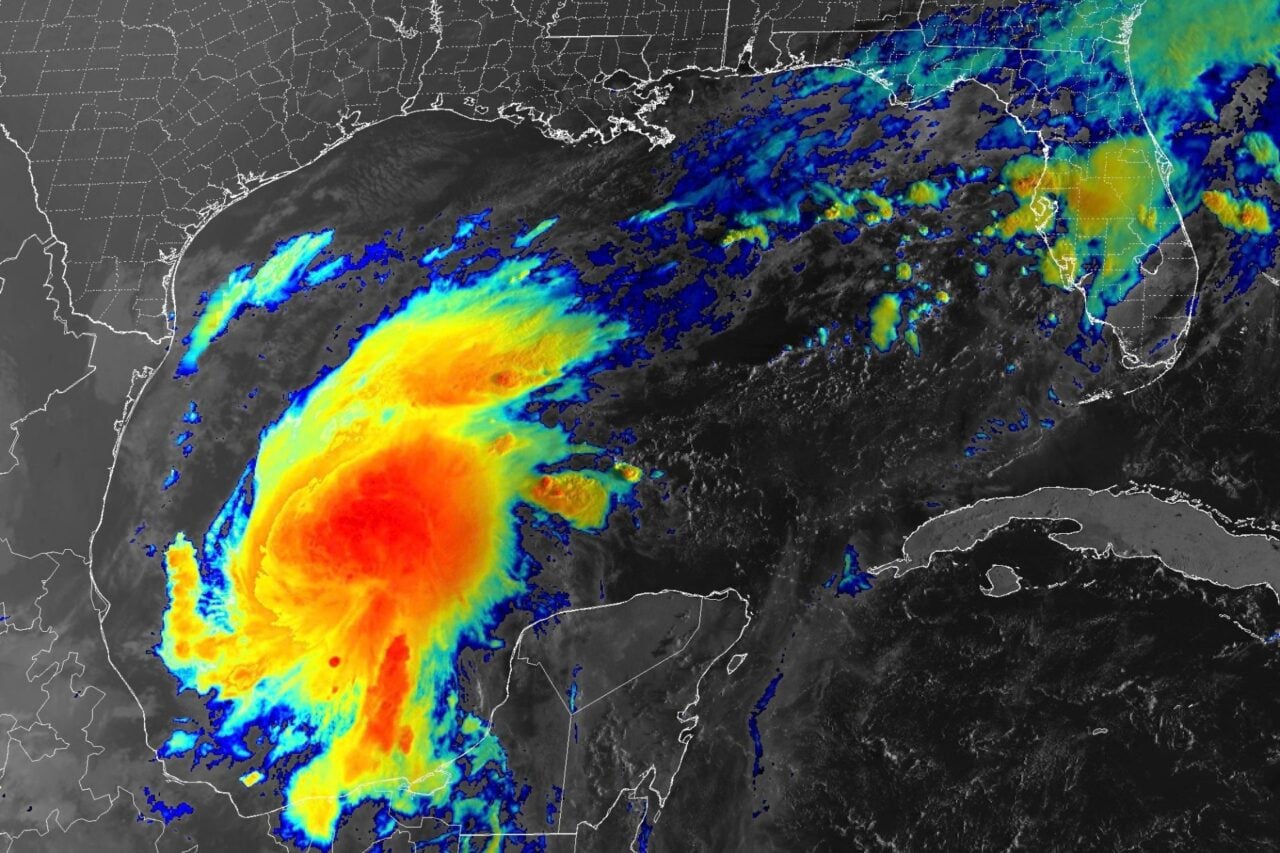
Some of the fires are feeding off fallen trees, branches, and other forms of wood debris left over from Hurricane Helene, which slammed into the coast of Florida as a Category 4 storm in September 2024. Georgia officials have said the storm turned the state’s southern forests into a “tinderbox.”
“The way Helene just threw everything down like matchsticks, there’s only so much you can do short of bulldozing everything,” Seth Hawkins, a Georgia Forestry Commission spokesperson, told local news outlet The Current. “There are big pockets of woods out there where people don’t walk around too much. So it just kind of gets left there.”
Interconnected extremes
This situation illustrates how weather extremes driven by climate change can compound each other. Global warming is worsening hurricane impacts by increasing their intensity and decreasing the speed at which they travel. That means catastrophic storms like Hurricane Helene are more likely to make landfall in the Southeast and generate massive amounts of debris.
At the same time, climate change is exacerbating drought conditions. Many parts of the Southeast have seen an increase in the average number of days with a maximum temperature greater than 95 degrees Fahrenheit (35 degrees Celsius). This is causing the landscape—and wood debris leftover from hurricanes—to dry out faster and stay dry longer.
As of April 16, a whopping 96.83% of the region was experiencing moderate to exceptional drought conditions, according to Drought.gov. It’s the largest drought the Southeast has seen in 26 years. When low relative humidity and dry fuels are present, wildfires can easily ignite. Extreme heat and gusty winds help them explode into large, fast-moving blazes, and the Southeast has had plenty of both these past few weeks.
An early, active southeastern fire season
Over the weekend, high winds fanned the flames of the “Highway 82” fire in southeastern Georgia, causing it to double in size overnight, according to Brantley County Manager Joey Cason. On Monday morning, the Georgia Forestry Commission reported that the fire spanned nearly 21,000 acres and was only 6% contained.
The Highway 82 fire is one of two major wildfires currently affecting the state, in addition to 10 new fires that ignited Sunday. The other is the Pineland Road fire, now estimated at more than 32,000 acres and 10% containment. Last week, Georgia Governor Brian Kemp declared a 30-day state of emergency in 91 of the state’s 159 counties as the fires destroyed more than 120 homes and forced evacuations.
Conditions aren’t much better in Florida, where more than 100 active blazes were tearing across a combined 15,600 acres Monday morning. Officials issued some localized evacuation orders and road closures last week, and most of the state remains under a mandatory burn ban. The entire state is experiencing some level of drought, with most of the north in “exceptional” drought, according to the U.S. Drought Monitor.
Seeing this level of fire activity in the Southeast before summer has even started is a bad sign. It’s highly unlikely that the drought will resolve before peak temperatures set in. It would take more than a foot of rain to end the region’s drought within the next two months, according to the National Oceanic and Atmospheric Administration. And the more resources firefighters use to contain these early blazes, the more strained resources will be this summer.
This is the danger of interconnected extremes: one disaster can set the stage for the next—and weaken the systems needed to confront it. As climate change compounds the hazards of storms, droughts, and wildfires, recovery will only get harder.