The results of last week’s midterm elections, in which Democrats took control of both chambers of Congress, have been brutal for crypto tokens and stocks tied to President Donald Trump and his family. Official Trump (TRUMP), MELANIA, and World Liberty Financial’s WLFI governance token all hit new all-time lows following the results. Additionally, shares of Trump Media & Technology Group (DJT) and American Bitcoin (ABTC), a publicly traded mining company tied to the family, sold off sharply and were still well below their pre-election levels on Tuesday.
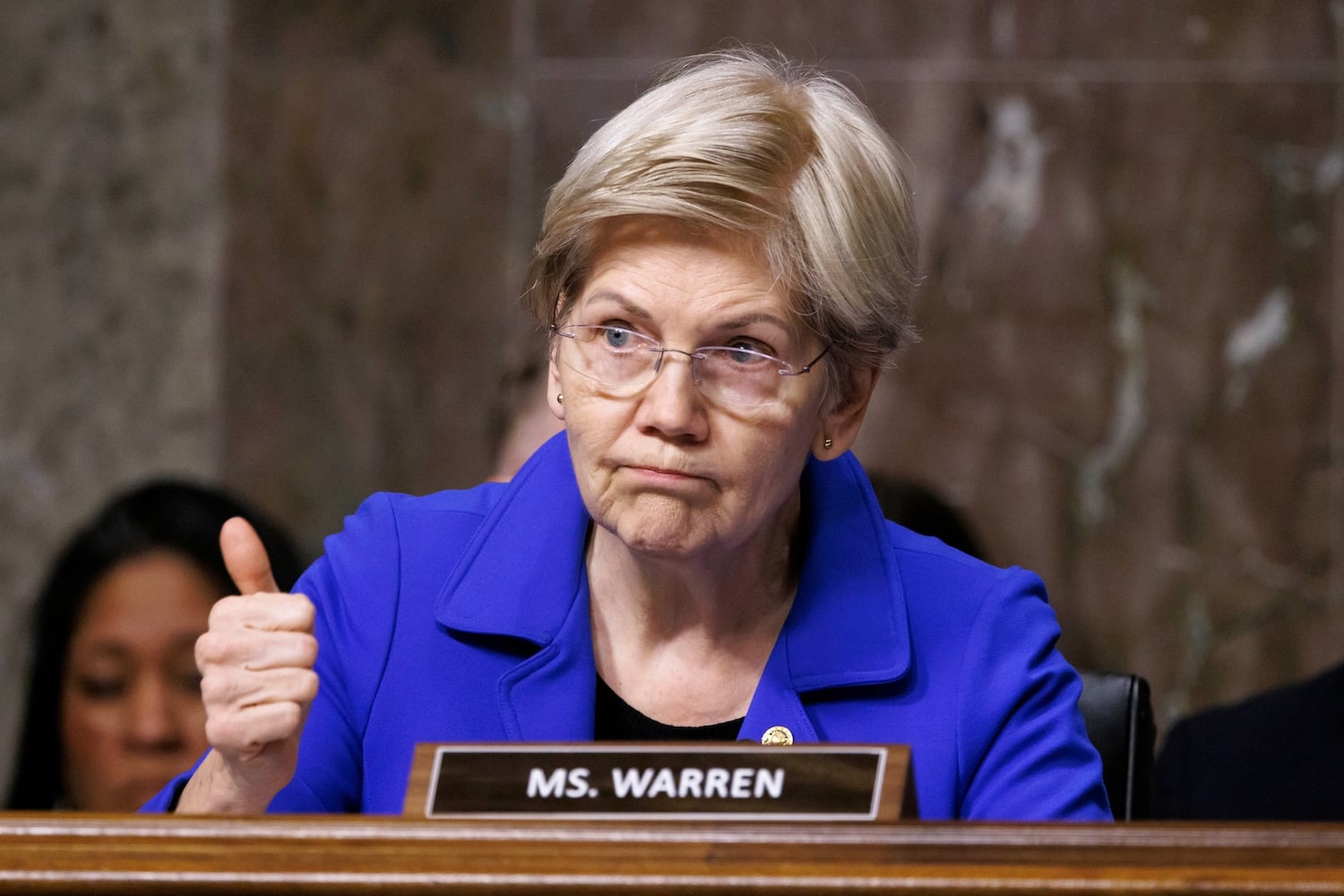
This market reaction is a preview of an uglier political problem for these businesses once the new Democratic-controlled Congress convenes next year. Senator Elizabeth Warren, who advertised a plan to build an “anti-crypto army” during her 2023 re-election campaign, is widely expected to chair the Senate Banking Committee in January, a post that comes with subpoena power and control of the committee’s hearing calendar. Two early signals of how she may use that gavel have already surfaced, and both point at Trump-linked crypto projects.
Democrats’ Plans for Trump’s Crypto Businesses
A person familiar with Warren’s thinking told Reuters she will likely probe the Office of the Comptroller of the Currency’s (OCC) August decision on a bank charter for World Liberty Financial. That decision was a preliminary, conditional approval to charter World Liberty Trust Company. The proposed bank would issue and redeem World Liberty’s USD1 stablecoin, hold reserves, and provide digital-asset custody, but final approval is still pending.
On Monday, an unnamed Warren Banking Committee aide also told Politico, “Big Tech CEOs, Administration officials, Trump family crypto businesses, Wall Street executives, and giant corporations should preserve their documents and prepare to answer tough questions.”
Warren and other Democrats have been sending letters about these projects for some time. In January 2025, days after TRUMP and MELANIA launched, Warren and Representative Jake Auchincloss, a Massachusetts Democrat, wrote to the Office of Government Ethics, the Treasury Department, the Securities and Exchange Commission (SEC), and the Commodity Futures Trading Commission (CFTC) about the tokens, asking how the agencies would address consumer risks, foreign influence, and the president’s conflicts of interest.
A year later, Representatives Maxine Waters, Sean Casten, and Brad Sherman wrote to SEC Chairman Paul Atkins about the agency’s retreat from crypto enforcement, including dismissed cases against Binance, Coinbase, and Kraken. “The unjustified decision by the SEC to walk away from these and other meritorious enforcement cases against crypto firms has created the unmistakable inference of a pay-to-play scheme,” the letter said.
This past September, Warren again asked Treasury Secretary Scott Bessent and Attorney General Todd Blanche to investigate national security risks posed by World Liberty Financial.
Senator Richard Blumenthal, the Connecticut Democrat expected to lead the Senate Permanent Subcommittee on Investigations, first opened an inquiry into Trump-linked crypto ventures in May 2025 and has now put a clock on those requests. In follow-up letters sent Thursday to World Liberty Financial, Fight Fight Fight LLC (the company behind the TRUMP memecoin), Binance, and Tether, Blumenthal asked the firms to start producing records by November 30th and set a voluntary deadline of January 4th of next year. He warned that failure to meet that date “will leave the Subcommittee with no choice but to consider alternative measures to obtain compliance.” The deadline falls just after Democrats are due to take control of the Senate.
Additionally, Representative Robert Garcia, the California Democrat expected to chair the House Oversight Committee, marked last week’s midterm results with a two-word message: “Lawyer up.” According to Fortune, Garcia has said his panel will focus on Trump family corruption, including the president’s crypto ventures, and that World Liberty Financial is likely to be first in line.
The Shitcoin President
The Trump family’s crypto businesses have produced a long list of corruption and conflict-of-interest allegations since the start of his second term, including the pardon of former Binance CEO Changpeng “CZ” Zhao, a $500 million United Arab Emirates-linked stake in World Liberty Financial, TRUMP memecoin dinners (there’s another one scheduled for later this month), and a $2 billion investment in Binance made using World Liberty’s USD1 stablecoin. There are too many to name them all.
In a 60 Minutes interview that aired Sunday, Trump confirmed he is a co-owner of World Liberty Financial. Asked about corruption concerns involving investors connected to the government of the United Arab Emirates, he said, “I know nothing about it.”
Trump campaigned on becoming the bitcoin president and making the United States the crypto capital of the world. However, early in his second term, it was already clear he was, in fact, the shitcoin president. A Reuters analysis found that the Trump family had generated at least $2.3 billion in profit from investors in these projects, while losses for the people who bought in roughly equaled those profits through the end of April of this year. Of course, those buyers would have less reason to worry about the losses if purchasing influence was the real goal.
The stablecoin-focused GENIUS Act did become law in the first year of Trump’s second term, but the crypto industry’s broader market-structure bill did not. The president’s crypto profiteering was seen as a central reason the Digital Asset Market Clarity Act, better known as the CLARITY Act, failed to reach the Senate floor this past September, falling short of the 60 votes needed to even begin debate.
It is unclear what any newly proposed crypto legislation will look like now that Democrats control Congress, but it is unlikely to be as friendly to the industry as it could have been a year ago. “I wouldn’t say it’s game over for Clarity, but passing it has become tougher,” Carlos Guzman, vice president of research at crypto trading firm GSR, told Decrypt. “Some Democrats support clearer crypto rules, but I wouldn’t expect it to be high on their agenda. Any agreement will likely require stronger provisions on things like consumer protection and conflicts of interest.”