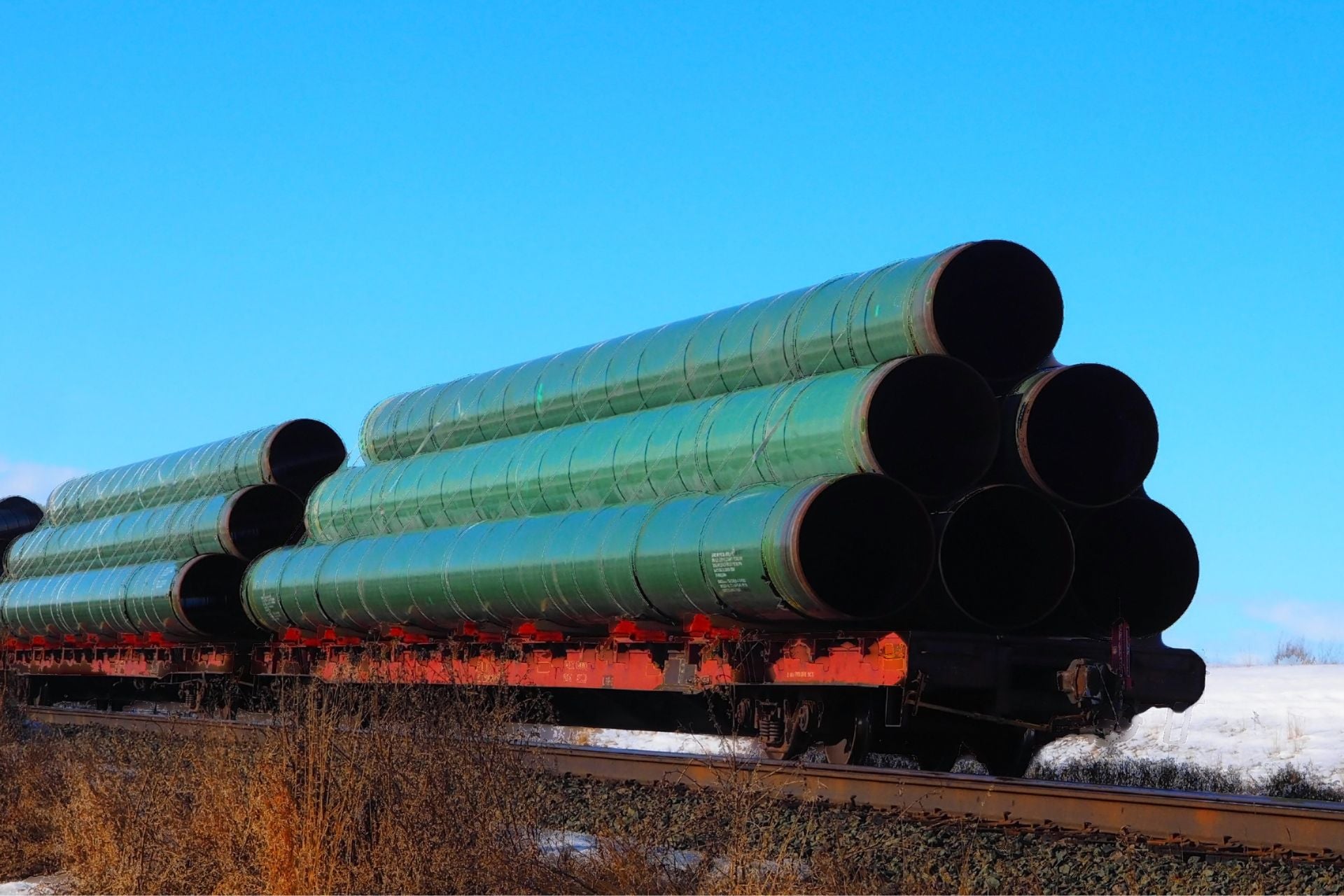
On his first day in office in 2021, then-president Joe Biden killed the Keystone XL Pipeline Expansion, a highly contentious project aimed at expediting transportation of crude oil from Alberta, Canada, into the United States. Now, the Trump administration has breathed new life into it.
On Thursday, the president signed an order authorizing the proposed Bridger Pipeline Expansion to revive parts of the Keystone XL pipeline. The new 650-mile-long (1,050-kilometer-long) pipeline, often referred to as “Keystone Light,” would funnel up to 550,000 barrels of oil per day from Canada through Montana and Wyoming, where it would connect with the Guernsey Hub.
To be clear, there are key differences between the Bridger Pipeline and the cancelled Keystone XL Pipeline. For one, Bridger will move less oil. Once finished, Keystone XL would have had the capacity to carry 830,000 barrels of crude oil per day. Bridger also won’t cross any Native American reservations, though it will run through some areas of tribal significance as well as 21.5 miles (35 km) of federally protected land in Montana and 6.1 miles (10 km) of protected land in Wyoming.
Still, the new pipeline’s oil source and strategic purpose will be the same as its predecessor’s. Environmentalists are just as alarmed as they were back in 2017, when the first Trump administration authorized Keystone XL.
“No matter what you call the project, the environmental concerns that animated the fight over Keystone XL are no less acute today,” Anthony Swift, a senior strategist for global nature at the Natural Resources Defense Council, said in a statement. “Keystone Light will threaten water supplies and exacerbate climate change. This is the moment to get off the oil roller coaster, not double down on the dirtiest oil on the planet.”
Here we go again
When Biden revoked Keystone XL’s border-crossing permit, it was a huge win for tribes and environmentalists who had opposed the project for years. The pipeline, they’d argued, posed a direct threat to indigenous lands and the nation’s climate goals.
The Bridger Pipeline would follow a shorter route that avoids Native American reservations, but it would still threaten ecosystems and water quality and drive up U.S. carbon emissions.
Bill Salvin, a company spokesperson for Bridger Pipeline LLC, told the Associated Press the pipeline would carry various grades of crude oil—including from Canada’s oil sands region—to the U.S. for exportation or refinement. Refining crude oil emits massive amounts of carbon dioxide and other greenhouse gases, contributing significantly to climate change. On a broader scale, this project would further the Trump administration’s aggressive pro-fossil-fuels agenda and reverse progress on the clean-energy transition.
Bridger Pipeline LLC and other subsidiaries of True Companies—a Wyoming-based conglomerate—have also been responsible for several major pipeline accidents, the AP reports.
A 2015 spill dumped 50,000 gallons (240 liters) of crude oil into the Yellowstone River, contaminating a Montana city’s water supply. The Little Missouri River and a tributary were contaminated by another spill in 2016 that released 600,000 gallons (2.7 million liters) of oil in North Dakota. And in 2022, there was a 45,000-gallon (170,000-liter) diesel spill in Wyoming.
Bridger Pipeline LLC and another True Companies subsidiary, Belle Fourche Pipeline Company, agreed to pay a $12.5 million civil penalty to resolve claims under the Clean Water Act and pipeline safety laws related to the spills in Montana and North Dakota.
A difficult battle ahead
It’s easy to see why environmentalists are once again up in arms, but proponents of the pipeline, both in Canada and the U.S., argue that it will create jobs and increase North American energy security amid the crisis caused by the U.S. war in Iran.
Even if environmentalists rally against the Bridger Pipeline as fiercely as they fought Keystone XL, derailing the project will likely be more difficult. The project already has White House support, can leapfrog off existing Keystone infrastructure, and avoids some of the Indigenous land conflicts that became central to Keystone XL’s downfall.
Still, the project isn’t a done deal. It needs to secure additional state and federal environmental approvals before construction, which Bridger Pipeline LLC expects. Environmentalists hope to derail this part of the permitting process over concerns that the pipeline could break and spill and threats to areas of tribal significance. Whether they can succeed again remains to be seen.