Graveyard orbits
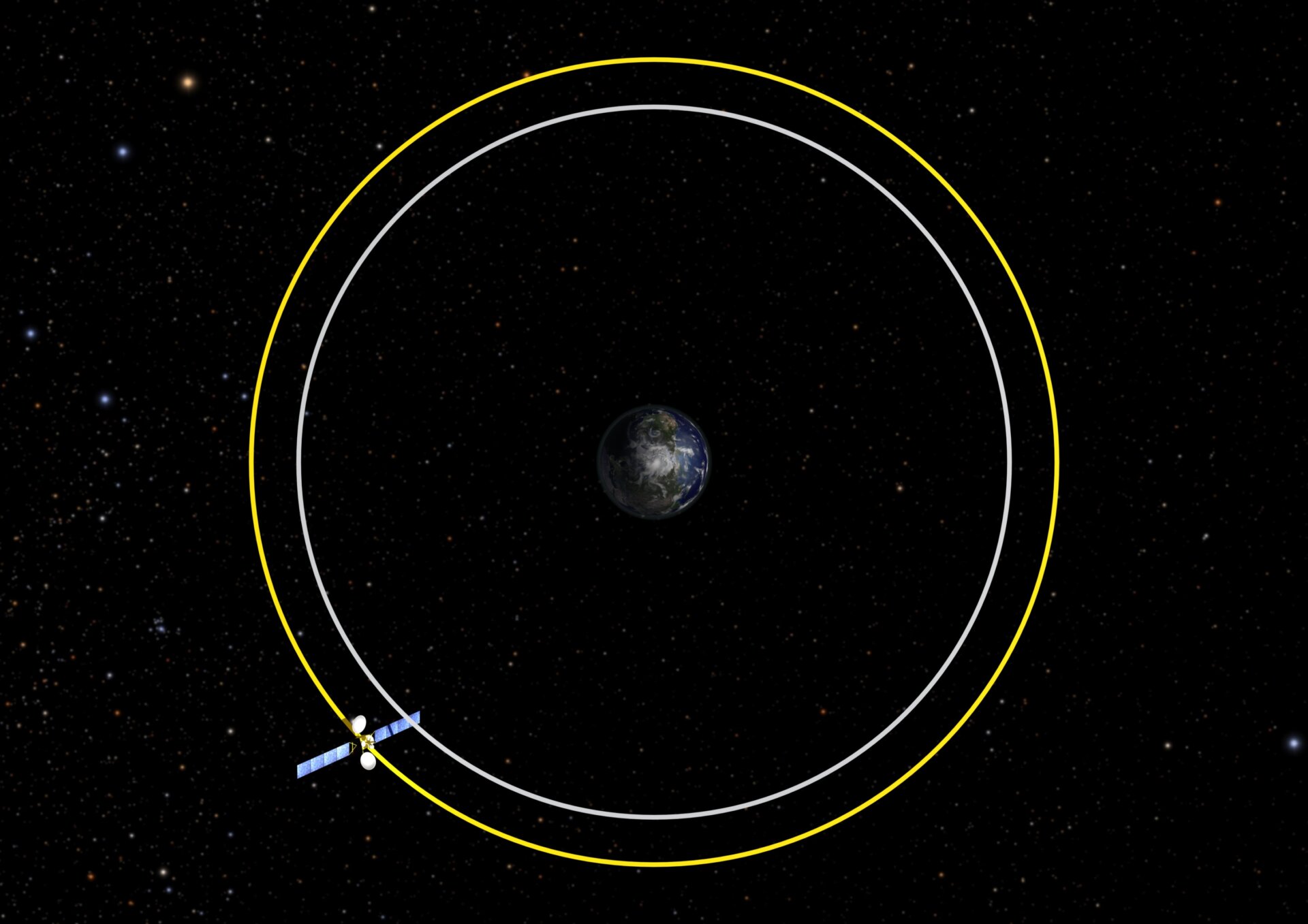
Current guidelines require satellite operators to dispose of their defunct satellites within 25 years (the Federal Communications Commission recently dropped this down to five years). In LEO, this is typically done by dropping decommissioned satellites down to the atmosphere, where they burn up on re-entry. It’s not always possible to do this, however; satellites in high orbits would need excess fuel to slow down, cutting their operational lives by a significant degree. That’s where the graveyard orbit comes into play, a band also known as the spacecraft cemetery or disposal orbit.
These satellites perform a final ascending fuel burn, sending them to the so-called graveyard. “Current U.S. guidelines require a spacecraft to be raised to an orbit at least 300 km [190 miles] higher, well out of the way of the busier operational orbits below,” according to NASA. As an example, the GOES-12 NOAA weather satellite entered into a graveyard orbit in August 2013 after 3,788 days in service.