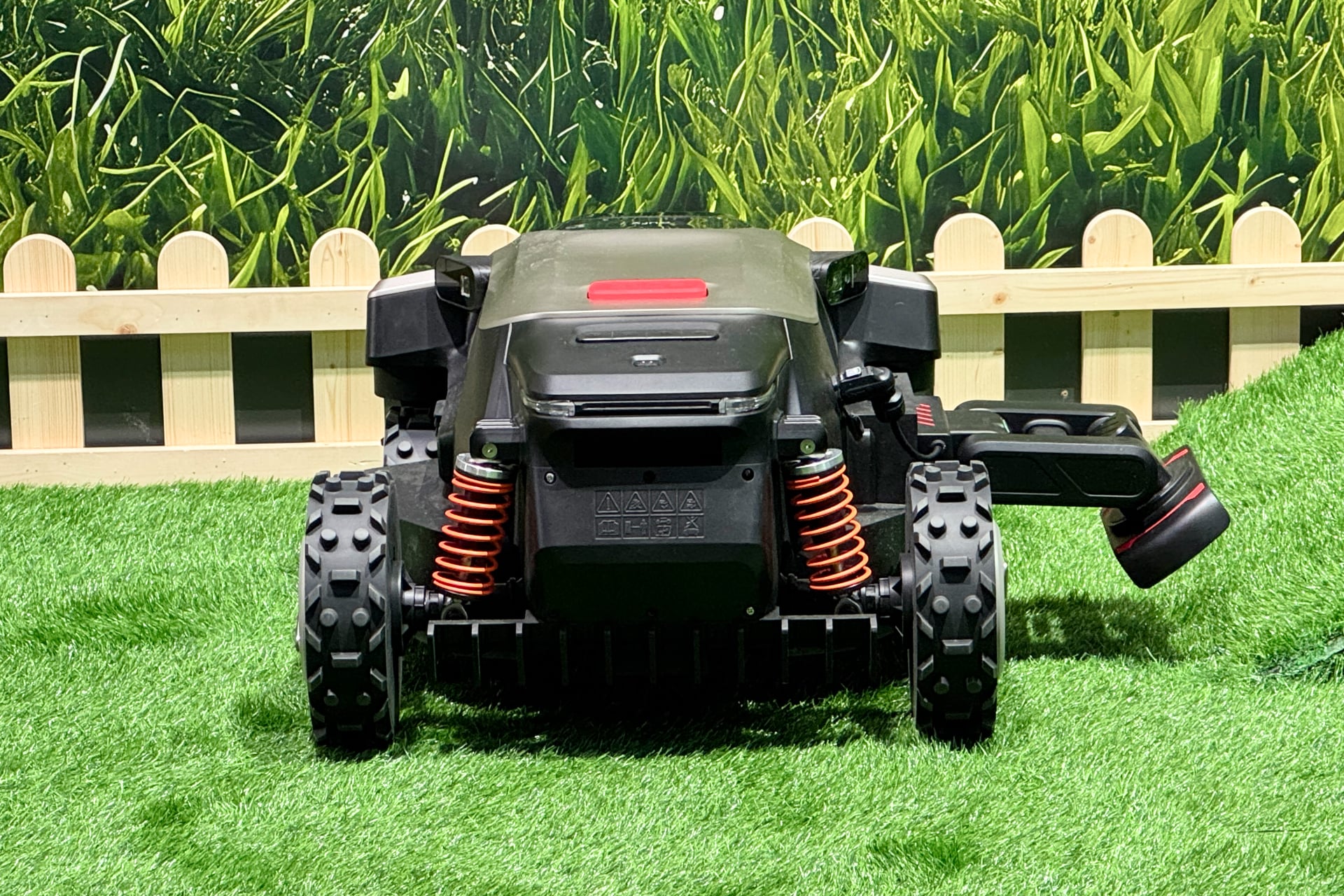
Robot mowers have gotten surprisingly good lately, thanks to smart use of onboard NRTK satellite connectivity, LiDAR navigation, and vision cameras that let the robots navigate without the need for installing satellite receivers in your yard or digging it up to bury guide wires. But they still can’t get up to the edges of buildings and sidewalks.
This year at IFA 2026, we’re seeing robot mowers with robotic arms that stick out to the side, a sudden trend that could fix this issue. The shame is that we won’t be getting any of these robomowers in the U.S. for quite some time, because, like foreign-made robot vacuums, they’ve been banned.
The ban on “advanced robotic devices” ostensibly exists, according to an FCC FAQ, to prevent “unacceptable risks to the national security of the United States” and targets those “capable of locomotion, obstacle avoidance, navigation, or movement on the ground.” That seems to include robot mowers, and no representative of a robot mower manufacturer I spoke with at IFA seemed especially confident that its device would make it to the U.S. In general, the responses I got when I asked about potential U.S. releases were along the lines of “we’re working to understand current U.S. regulations.”
The U.S. government taking steps to deal with the cybersecurity risks of connected devices like robots isn’t necessarily a bad thing—after all, security vulnerabilities are fairly common in them. Take that time that a hacker demonstrated that he could easily take over a Yarbo automower and drive it over The Verge reporter Sean Hollister’s body. It’s not clear how this ban will help with those issues, since any robot that has already been approved for sale here may continue to be imported and sold, and those living in the U.S. are free to keep the ones they already have.
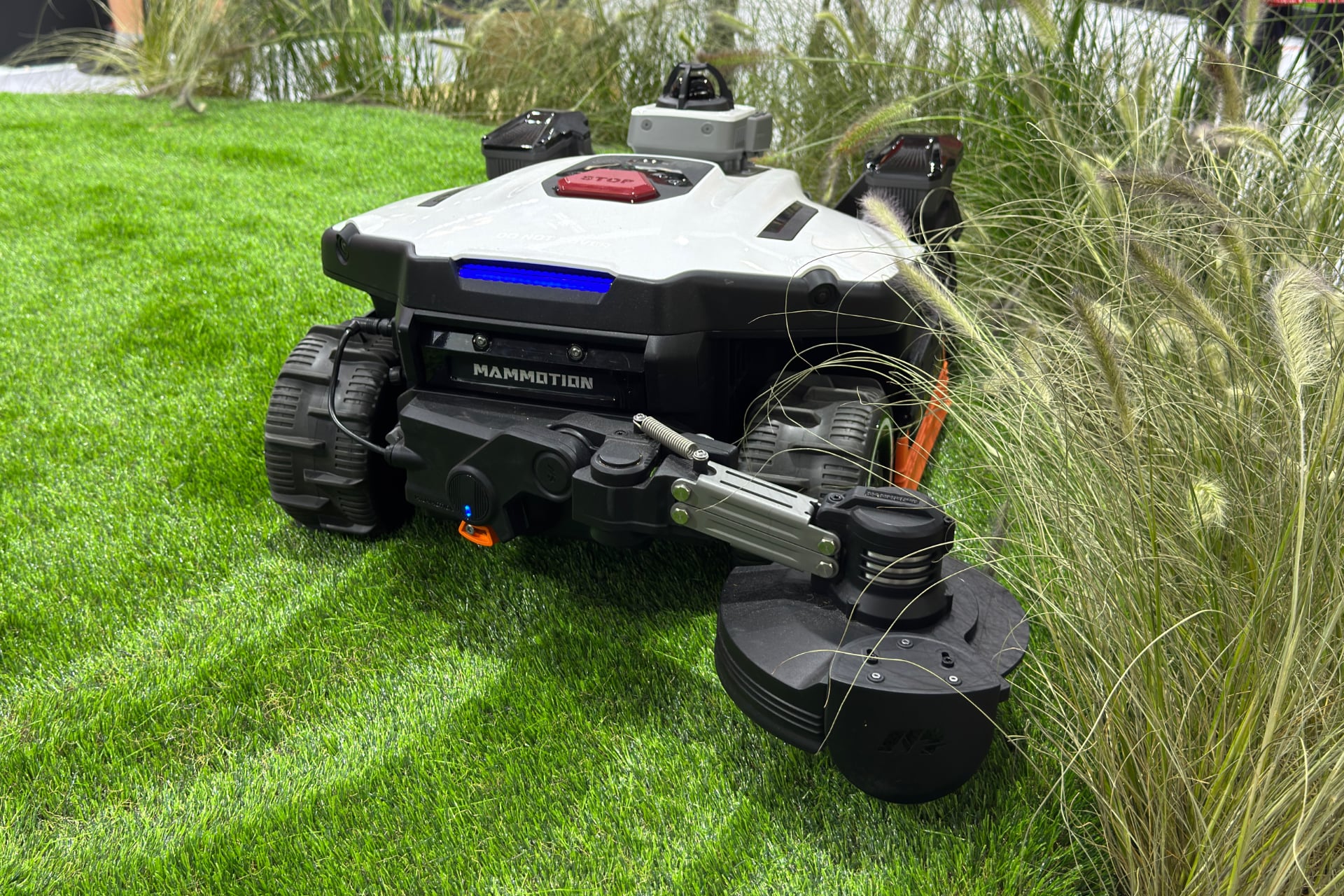
It’s a shame, because as much as robomowers have improved, they do a poor job with grass growing against buildings or over sidewalks. The best they’ve done, until now, is slide their mowing decks over to get close, as is the case with the Segway Navimow X4, but they’ll still leave you with the task of going back with a weed whacker to trim the vegetation growing against your house or edge the grass that flops over the concrete of your sidewalk.
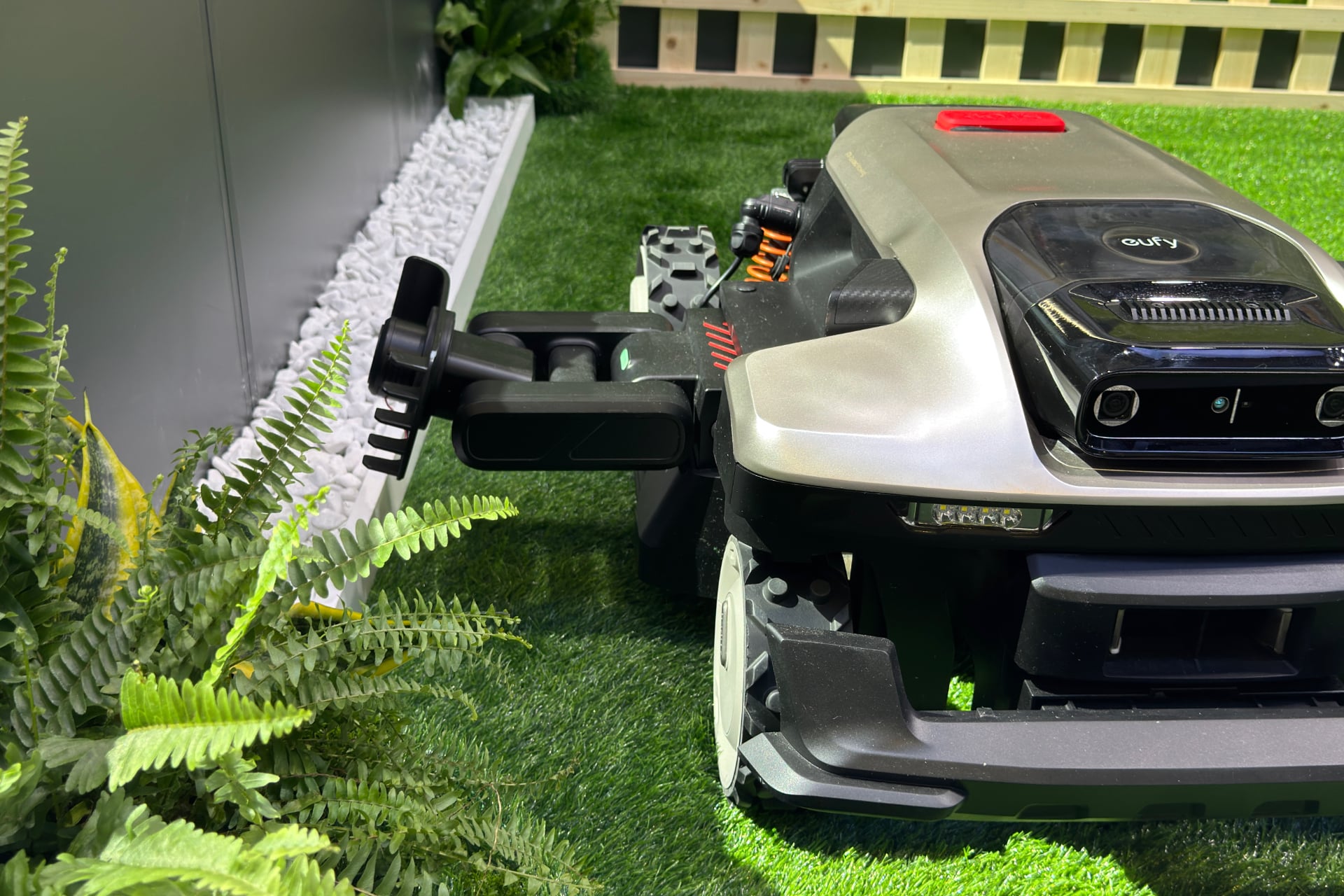
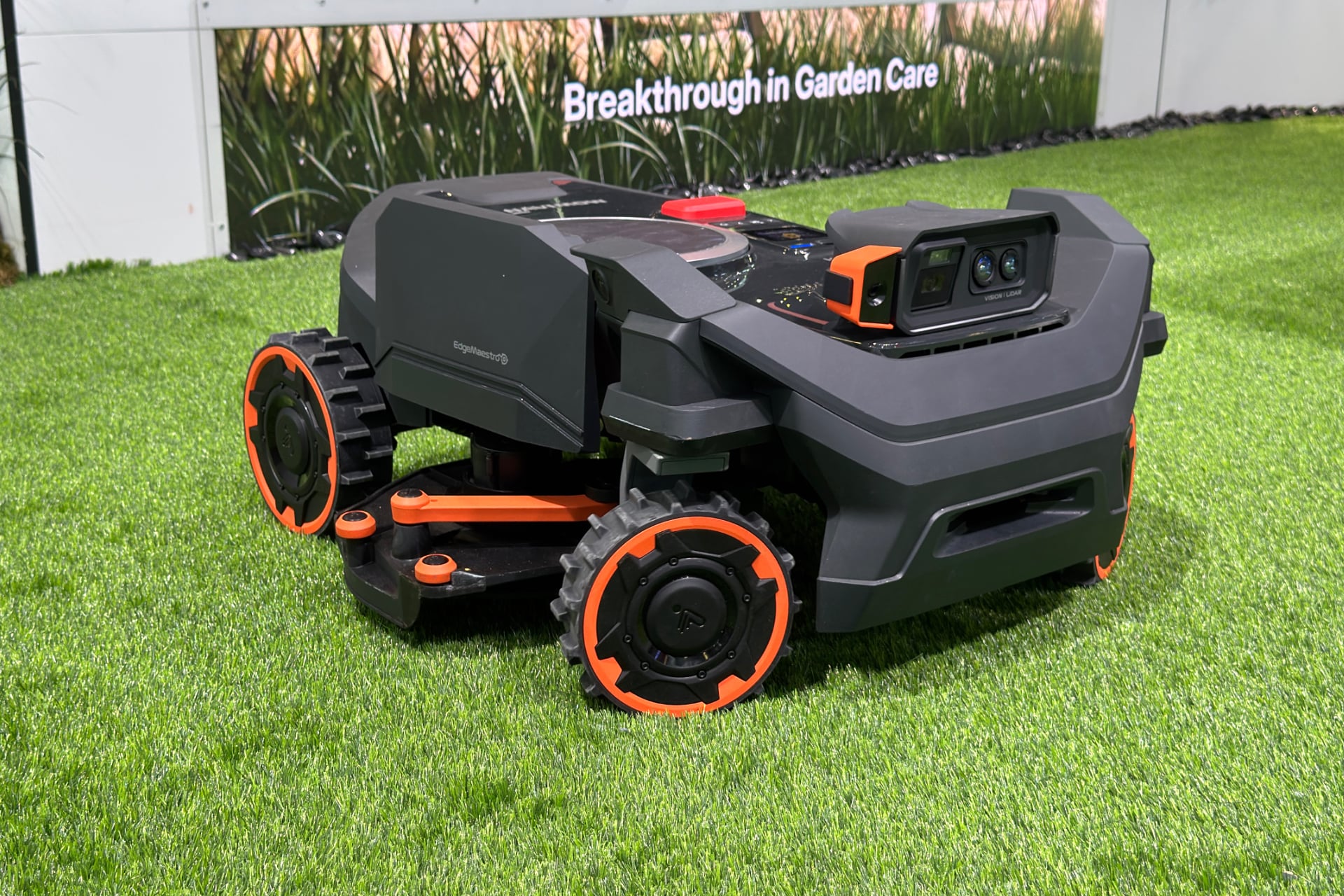
In general, the new robot mowers I saw at IFA 2026 are handling this the same way: they each have an articulating arm that can swing out away from the body of the mower to cut grass. In the case of the Segway Navimow H5 Pro, a panel on the side of the device opens up to bring the robot’s mowing blades out, while others, like the Dreame A4 AWD Pro, use a string trimming arm. The Mammotion Luba 4 AWD has an optional accessory that bolts onto the back. And the Eufy Lawn Mower S2 Max‘s string trimmer arm can be horizontal for cutting down grass near structures and vertical for edging a sidewalk.
It’s hard to say how long the U.S. will miss out on this trend. It could be that President Donald Trump has a change of heart—one Roborock representative I spoke with expressed hope that the president’s summit with Chinese President Xi Jinping in late September could favorably alter the ban. Or perhaps some manufacturers could get special exemptions. Barring those things or the U.S. November midterm elections yielding a Democrat-controlled Congress that swiftly and successfully pushes to reverse or alter the ban, it could take years. After all, it’s not like there is a vast, dormant American home robotics manufacturing industry awakening to fill the gap.