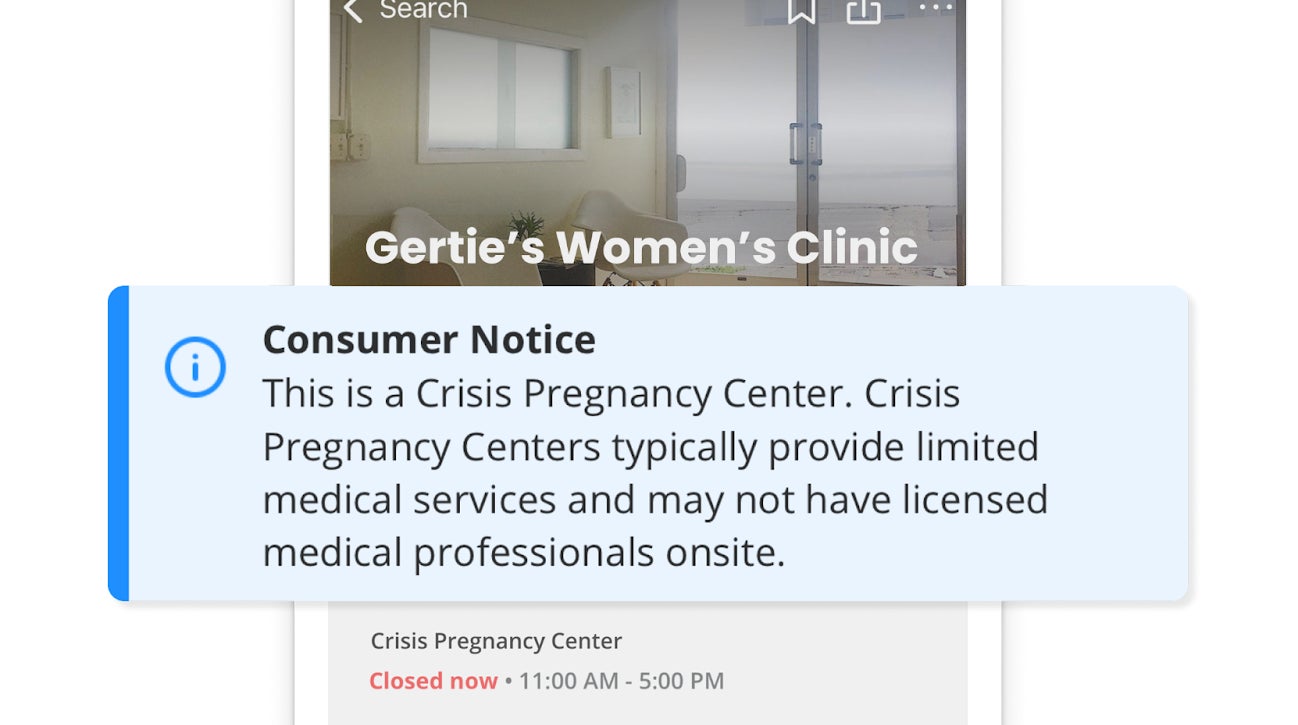
Yelp now shows a warning alongside every crisis pregnancy center (i.e. anti-abortion center) listing on its platform. The alert reads, “Consumer Notice: This is a Crisis Pregnancy Center. Crisis Pregnancy Centers typically provide limited medical services and may not have licensed medical professionals onsite.” It’s a move that comes amid a trend of tech companies and their workers reacting to the overturn ofRoe v. Wade.
The business review site already labels thousands of anti-abortion centers as distinct from actual clinics or abortion providers with the title “Crisis Pregnancy Center” or “Faith-based Crisis Pregnancy Center.” That change began in 2018, following a company-wide effort to manually sort through and recategorize all of the platform’s related listings, which the site says is ongoing.
“We’ve continued to regularly audit and investigate these businesses – in 2022 alone, we have proactively evaluated nearly 33,500 U.S. business pages and recategorized nearly 470 business pages as Crisis Pregnancy Centers or Faith-based Crisis Pregnancy Centers (as of August 8, 2022),” Yelp wrote in a Tuesday news release.
And the company also claimed that it’s made efforts to align reproductive health search results with what users are looking for. “Over the past several months…we’ve increased our efforts to protect our users and provide them with access to the information they’re looking for, which includes better matching them with reproductive health services that actually offer abortion when they are searching for abortion services and making it less likely they will see crisis pregnancy centers that don’t,” said the press statement.
But now, Yelp users will get just a little bit more, prominently displayed context about the risks of visiting anti-abortion centers.
Though, the disclaimer doesn’t address all of the common, major criticisms of these businesses. The issue of so-called crisis pregnancy centers isn’t just that their medical services are incomplete, but also that they purposely hinder abortion access.
These centers are places that market themselves to pregnant people and those seeking abortions by self-labeling as clinics, pregnancy care centers, pregnancy resource centers, or under many other, similar names.
They often provide some medical services like STI testing, ultrasounds, and pregnancy tests (along with things like diapers and parenting classes). However, their main purpose is generally not to provide comprehensive medical care, but to dissuade people from accessing abortion via any means they can: delay, misinformation, deceptive counseling, guilt, and shame are just some of the tools these centers rely on. (Fun fact: anti-abortion centers are funded, in part, with federal and state tax dollars.)
Other tech giants have also been grappling with how best to manage abortion-related content in the wake of June’s Supreme Court decision. Last month, YouTube (owned by Google/Alphabet) announced new efforts to combat abortion-related misinformation on its site, and TikTok enacted similar changes. Earlier this summer, Google also introduced some small changes to the disclaimers they put on anti-abortion center advertisements (though the company still allows these advertisements to persist, for now).
Yet some company’s efforts have been more successful than others. Facebook ended up removing lots of posts intended to provide information about medication abortion and abortion pills, and later admitted to “incorrect enforcement.” Not to mention all of the issues of abortion restrictions and privacy that Meta and other companies have been avoiding tough questions on. Earlier this month, Meta shared private messages with Nebraska police that aided in the arrest of a mother and daughter over an alleged illegal abortion. Pregnancy and period tracking apps have also come under fire for mishandling user data. And many data brokers even sell information specifically on pregnancy status.