Cross section, cutaway, or x-ray illustrations, call it whatever you want, but they’re the best way to understand how things work. They are fascinating. In this new Sploid series we will present some of the best cutaway drawings from around the world. The first collection includes 32 awesome spacecrafts.
Do you have any spacecraft cutaway favorite? Please add it to the comments following the same format: Title, image and credit with link to the original.
Artist’s concept of a two-man Gemini spacecraft in flight, 1965
Image: NASA
Mercury spacecraft with measurements and cutaway view, 1963
Image: NASA
An artist’s concept of the Skylab space station cluster in Earth’s orbit. The cutaway view shows astronaut activity in the Orbital Workshop (OWS), 1971
Image: NASA
An artist’s concept illustrating a cutaway view of the docked Apollo and Soyuz spacecraft in Earth orbit, 1975. This scene depicts the moment the two international crews meet in space for the first time
Image: Davis Meltzer/NASA
Artist’s concept reveals systems of the major components of a space shuttle vehicle, 1981
Image: NASA
North American Rockwell Corporation artist’s concept depicting the Apollo Command Module, reentering Earth’s atmosphere after returning from a trip to the moon, 1968
Image: NASA
An artist’s concept illustrating the Skylab 1 Orbital Workshop (OWS), 1973.
This artist’s rendering represents a cut-away concept of the Orion crew exploration vehicle’s crew module, from NASA’s cancelled Constellation Program, 2007
Image: NASA
An artist’s concept of Mercury: medical effects; develop technology, 1963
Image: NASA
Artist concept of Gemini spacecraft and Command Module with two astronauts seated at the controls, 1964
Image: NASA
An early space station concept drawing. The station was designed as a laboratory to study the physical and behavioral effects of prolonged space flight, and could have possibly been crewed by 50 people. This particular image appeared in the 1959 Space The New Frontier brochure produced by NASA
Image: NASA
This station was designed as a laboratory to study the physical and behavioral effects of prolonged space flight, and could have possibly been crewed by 5 people. This image appeared in the 1959 Space The New Frontier brochure produced by NASA
Image: NASA
This undated cutaway drawing illustrates the Saturn IB launch vehicle with its two booster stages, the S-IB and S-IVB
Image: NASA/MSFC
Illustration of the Apollo Spacecraft, 1967
Image: NASA/MSFC
1968: The Saturn V command module (CM) configuration
Image: NASA/MSFC
The Explorer I satellite was America’s first scientific satellite launched aboard the Jupiter C launch vehicle on January 31, 1958. The Explorer I carried the radiation detection experiment designed by Dr. James Van Allen and discovered the Van Allen Radiation Belt
Image: NASA/MSFC
1969: The Lunar Module (LM) with detailed callouts
Image: NASA/MSFC
1967: The Apollo Spacecraft with callouts of the major components. The spacecraft consisted of the lunar module, the service module, the command module, and the launch escape system
Image: NASA/MSFC
Cutaway illustration of the Saturn V launch vehicle with callouts of the major components, 1967
Image: NASA/MSFC
Spacelab was a cooperative venture of the European Space Agency (ESA) and NASA, a versatile laboratory carried in the Space Shuttle’s cargo bay for special research flights. Cutaway illustration from 1981
Image: NASA/MSFC
Space Shuttle cutaway showing astronauts working with ESA Spacelab, 1980
Image: NASA
Less than a year after its birth, NASA announced its first astronaut class, the Mercury Seven, on April 9, 1959. This drawing of the Mercury capsule was used by the Space Task Group at the first NASA inspection, on Oct. 24, 1959
Image: NASA
Space Shuttle orbiter cutaway view with callouts, 2001
Image: NASA/MSFC
1972: illustration of the Skylab with the Command/Service Module being docked to the Multiple Docking Adapter
Image: NASA/MSFC
Saturn V Apollo launch vehicle flight configuration from the “Saturn 5 launch vehicle flight evaluation report – AS-501 Apollo 4 mission”, 1968
Image: NASA
The European Space Agency’s Hermes space vehicle was designed to take three astronauts to orbits of up to 800 km altitude on missions of 30 to 90 days in space. Hermes was to have been launched atop an Ariane 5. The project was cancelled in 1992
Image: ESA
ESA’s Automated Transfer Vehicles (ATV) supply the International Space Station with fuel and cargo as well as boosting the Stations orbit
Image: ESA
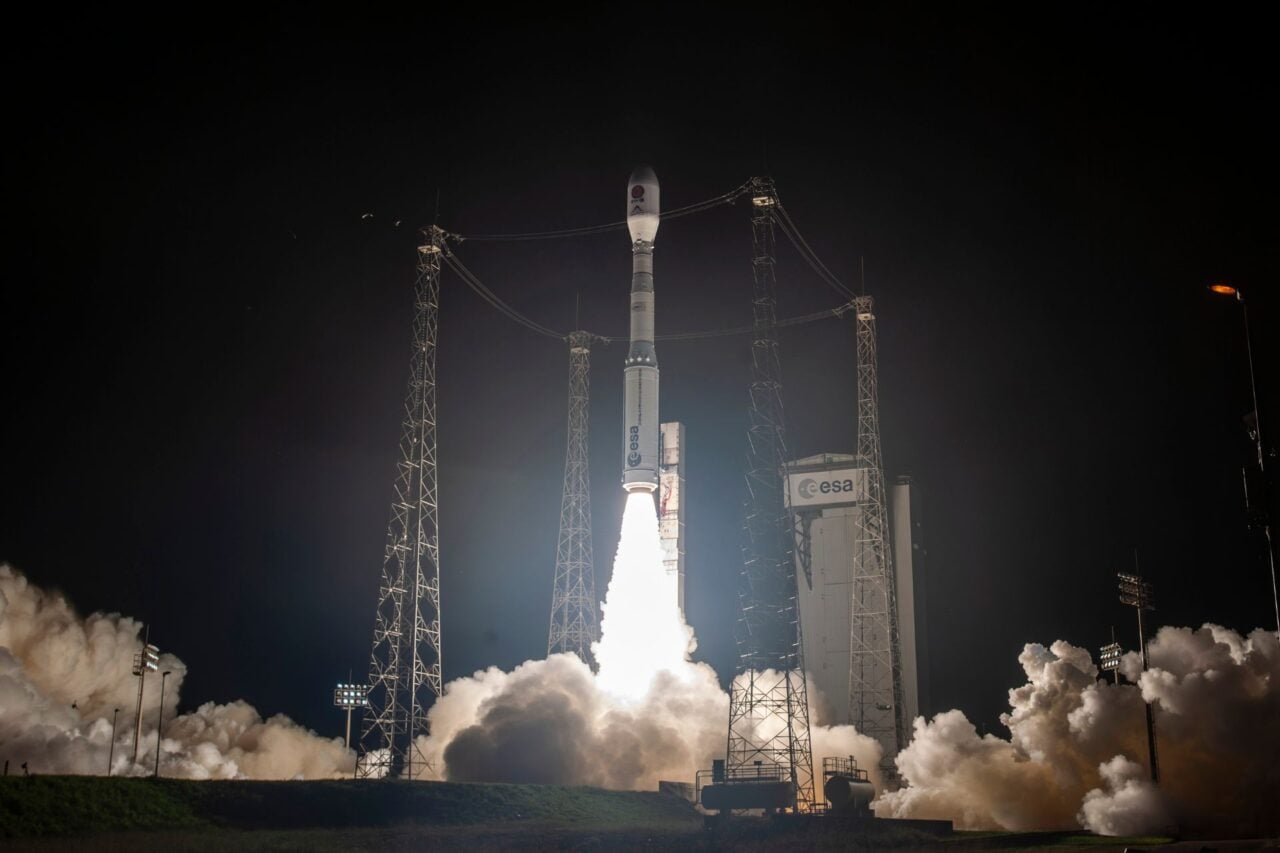
Ariane 5 on the launch pad. Ariane-5 is an ESA launch vehicle, managed by Arianespace at the ELA-3 launch site at the Guiana Space Centre, Europe’s Spaceport in French Guiana
Image: ESA/CNES/Arianespace-D.Ducros
Soyuz Spacecraft from Prelaunch Mission Operation Report No. M-966-75-01, July 7, 1975
Image: NASA
Salyut 4 Soviet space station
Image: NASA/Spacefacts.de
Skylab Configuration Detail from Skylab News Reference, March 1973
Image: NASA
X-Ray scheme of the Buran orbiter
Image: buran.ru
Do you have any spacecraft cutaway favorite? Please add it to the comments following the same format: Title, image and credit with link to the original.