NASA is testing a chip that could significantly enhance the computing power of upcoming missions, allowing spacecraft to respond in real time should something go wrong rather than wait for commands from ground control on Earth.
NASA’s High Performance Spaceflight Computing project began testing the next-generation processor in February, sending an email with the subject line “Hello Universe.” So far, the chip has shown promising results, operating at 500 times the computing power of the ones currently in use.
A computer chip built for space
Unlike standard computer chips, spacecraft need radiation-hardened processors that can withstand extreme temperatures and cosmic radiation that could scramble data.
NASA has been using chips on board its spacecraft that were developed years ago, which have proven hardy and reliable. However, it’s time for an upgrade to make way for autonomous spacecraft, as well as faster processing of data to accelerate the rate of scientific discovery and support upcoming astronaut missions to the Moon and Mars.
“Building on the legacy of previous space processors, this new multicore system is fault-tolerant, flexible, and extremely high-performing,” Eugene Schwanbeck, program element manager in NASA’s Game Changing Development program at the Langley Research Center, said in a statement. “NASA’s commitment to advancing spaceflight computing is a triumph of technical achievement and collaboration.”
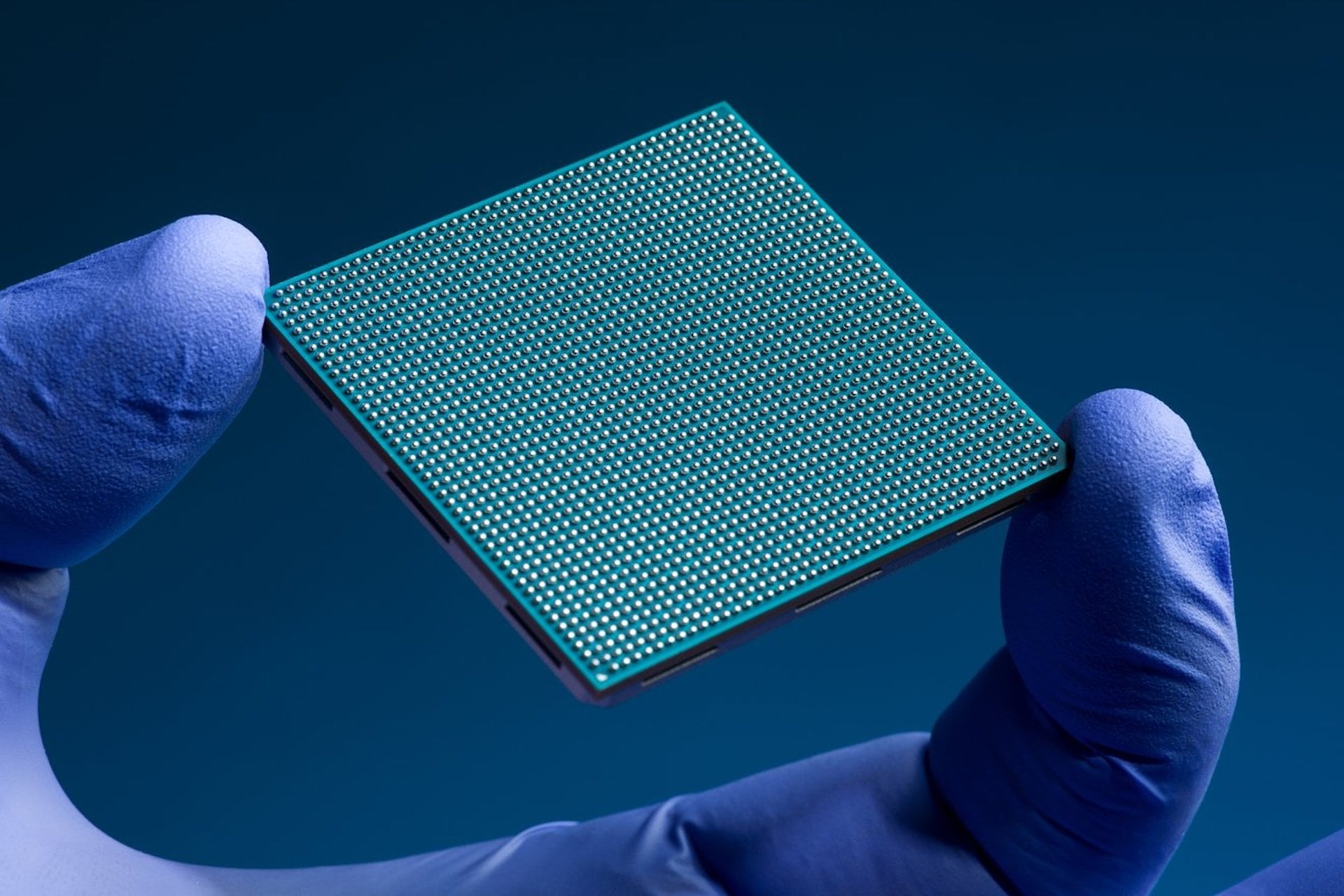
The next-generation chip, developed through a partnership with Microchip Technology, is a high-performance processor that’s designed to provide up to 100 times the computational capacity of current spaceflight computers. It’s also built to endure the challenging environment of space.
Known as a system-on-a-chip (or SoC), the new processor can fit in the palm of a hand. It includes all the key components of a computer, such as central processing units, computational offloads, advanced networking units, memory, and input/output interfaces.
The new technology is designed to support artificial intelligence systems aboard spacecraft, enabling them to autonomously respond to unexpected situations without the help of mission teams. It is also designed to help deep space missions analyze, store, and transmit troves of data to Earth.
Hello, universe
The new processor is currently being tested at NASA’s Jet Propulsion Laboratory (JPL) in Southern California, where engineers are replicating the challenges often faced by missions in space. Those challenges include electromagnetic radiation and extreme temperature swings, which can degrade electronics.
The Sun also releases high-energy particles, which can cause a spacecraft to go into a dreaded safe mode whereby all non-essential operations are shut down until mission operators on Earth send commands to resolve the issue.
“We are putting these new chips through the wringer by carrying out radiation, thermal, and shock tests while also evaluating their performance through a rigorous functional test campaign,” Jim Butler, High Performance Space Computing project manager at JPL, said in a statement.
The chips must also endure the challenges associated with landing on a planetary body. “To simulate real-world performance, we are using high-fidelity landing scenarios from real NASA missions that would typically require power-intensive hardware to process huge volumes of landing-sensor data,” Butler said.
Testing of the new chip will continue for several more months. Once it’s certified for flight, NASA plans on incorporating the processor into the computing hardware of Earth orbiters, rovers on other planetary surfaces, crewed habitats, and deep space missions.
“This is an exciting time for us to be working on hardware that will enable NASA’s next giant leaps,” Butler said.