A trip to the nearest star
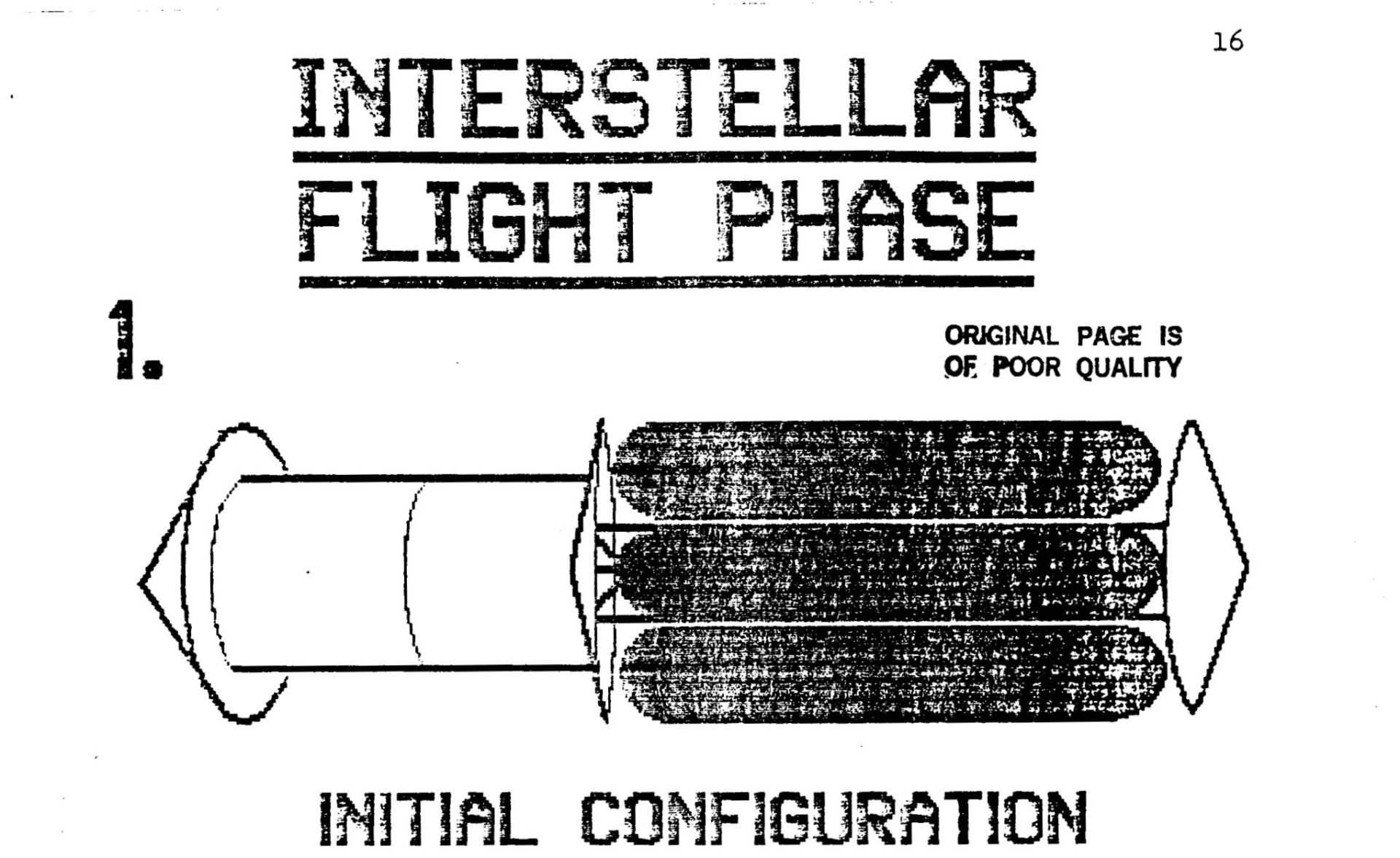
In 1988, NASA, along with the Universities Space Research Association, presented a preliminary design for a probe that would explore Alpha Centauri—a triple star system located 4.37 light-years from Earth. The uncrewed, 440-ton probe would take just 100 years to reach the closest star system to our own, but “several technologies must be developed in order for this mission to be possible,” as the authors of the proposal admitted. This included a “pulsed fusion microexplosion drive” and a long-life fusion reactor capable of outputting 300 kW of power. The probe’s reactor would also power its communications system, allowing it to transmit data on the properties of the interstellar medium, unseen features of Alpha Centauri, and more precise astrometric readings pertaining the stars’ position, motion, and luminosity. Unfortunately, Project Longshot, as it was called, was exactly that—a long shot, and the technology needed for the mission remained out of reach.